The short answer
A chimney sweep removes soot, creosote and debris from your flue so the fireplace or stove vents safely and the flue's condition can be checked. The NFPA 211 standard calls for chimneys, fireplaces and vents to be inspected once a year, and a clean flue is what makes a real inspection possible.
A fireplace or wood stove that gets regular use leaves soot and creosote on the inside of the flue. Over time that buildup narrows the passage, holds odors, and can catch fire. Our chimney sweep service removes the buildup, checks the flue once it is clean, and tells you plainly what we found. We work in houses, townhouses, co-ops and apartment buildings across New York and nearby neighborhoods. We treat your living room the way we would want ours treated: covered, contained and left clean. Below are the signs that it is time, what a sweep includes, how our certified technicians work, and what affects the cost.
Signs you need a chimney sweep
Most homeowners call us after they notice something at the fireplace itself. Any of these is a reason to have the chimney swept and looked at, even if it has been less than a year since the last visit.
- A campfire or burnt smell in the room, especially on humid days or when the air conditioning is running
- Black flakes, soot or crumbled debris landing in the firebox or on the hearth
- Smoke rolling into the room instead of drawing up the flue
- Fires that are hard to start or keep going, which often points to weak draft
- Shiny, tar-like or crusty deposits on the damper or the walls of the firebox
- Twigs, leaves, nesting material, or the sound of birds or animals in the chimney
- Water stains or rust near the damper after a storm
- A new stove, insert or fuel type, or a home you are buying or selling
What a chimney sweep includes
A standard sweep covers one flue from the firebox to the top of the chimney. Here is what that means in practice.
If we find glazed creosote that a brush cannot remove, cracked flue tiles, or a missing cap, we show you the photos or footage and explain your options. We do not start extra work without your approval.
- Protecting the hearth, floor and nearby furniture before any tool comes out
- Opening and checking the damper and removing loose debris from the smoke shelf
- Brushing the flue with rotary brushes sized to the liner, from below, from above, or both, depending on access
- Cleaning the firebox, smoke chamber and damper area
- Capturing loosened soot and creosote with a HEPA vacuum running under negative pressure
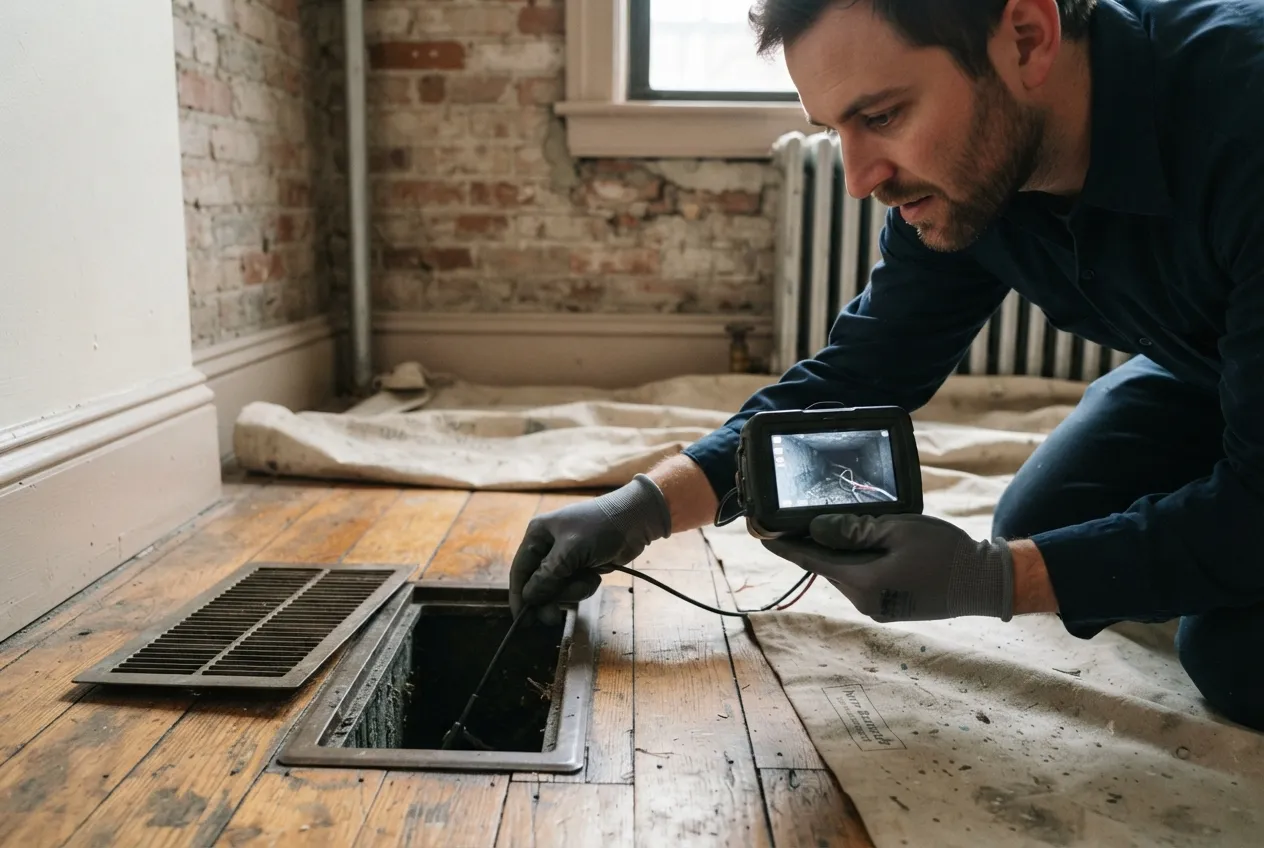
- A camera inspection of the flue where the liner and access allow it
- A visual check of the cap, crown and visible masonry when the roof can be reached safely
- Clearing nesting material or debris at the top of the flue
- A plain written summary of what we cleaned, what we saw, and anything that needs attention
How our crew works inside your home or apartment
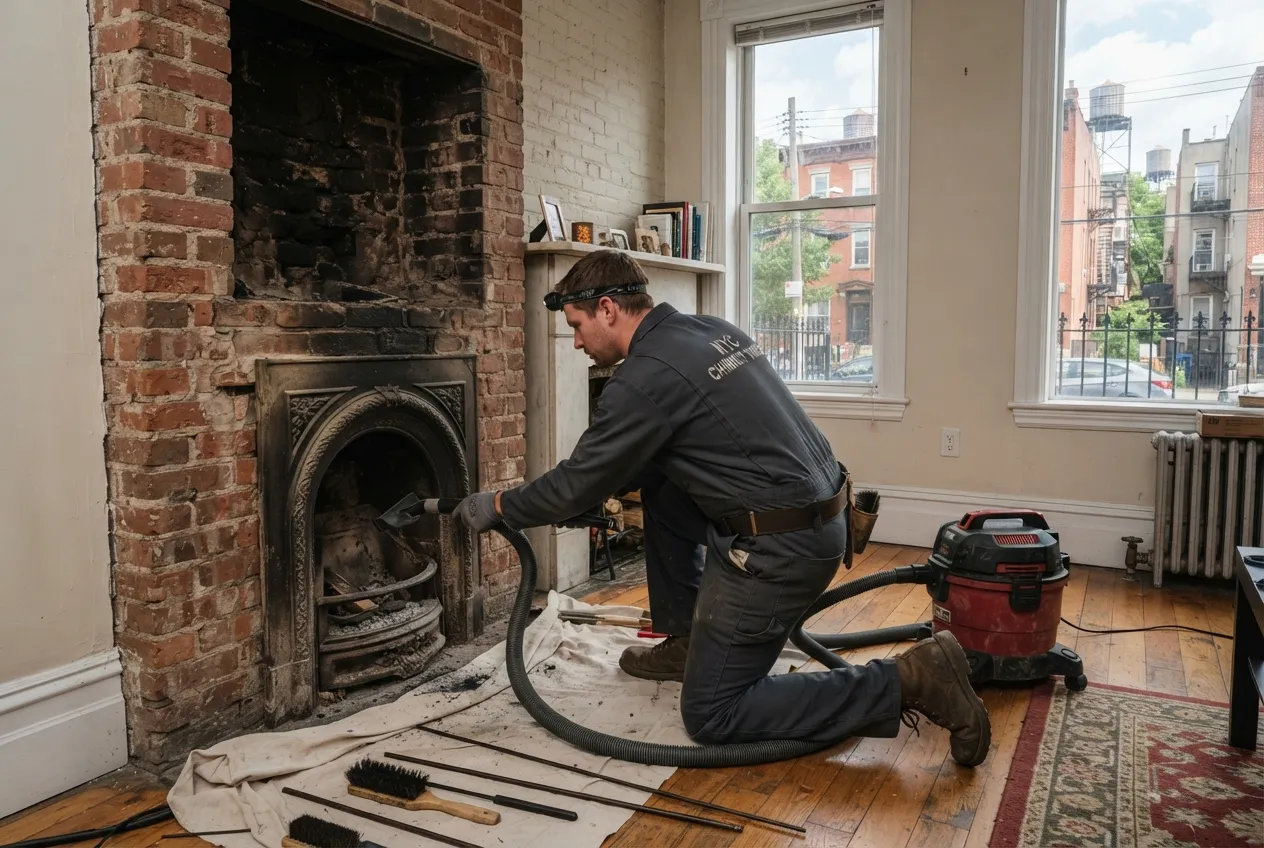
Chimney soot is fine, oily and hard to get out of fabric, so containment comes first. Our crew lays drop cloths from the door to the hearth and covers furniture near the fireplace. We seal the fireplace opening around the vacuum hose so the area stays closed off while we brush.
The HEPA vacuum runs the whole time, pulling air into the flue rather than out into the room. That negative pressure keeps soot from drifting into your home as the rotary brushes break deposits loose. For tight bends, the smoke chamber and the area around the damper, we use air whips and hand tools. When the liner allows it, we run a camera up the flue so you can see the condition of the joints and tiles for yourself.
In apartment and co-op buildings, we coordinate with the super or management on elevator use, roof access and work hours, and we keep hallways covered and clear. If old deposits or animals have left a smell behind, we can treat it, but only with products registered for that use and only when there is a clear reason, such as a lingering odor, pests or visible growth.
Ready for cleaner ducts?
What NFPA 211 says about yearly inspections
The NFPA 211 standard calls for chimneys, fireplaces and vents to be inspected once a year. Chimney professionals use three inspection levels. Level 1 fits when nothing about the system has changed. Level 2 applies when the system changes, for example a new appliance or a switch of fuel, or when the home is sold. Level 3 is for cases where a hidden hazard has to be reached by opening part of the chimney or building.
Sweeping and inspecting go together, because a flue has to be clean before anyone can see its true condition. Many owners schedule both before New York City's heat season, which runs from October 1 through May 31, so fireplaces and heating flues are ready before daily use.
If your building is converting its boiler from oil to gas, the chimney has to be evaluated as part of that work. A new liner is often needed, because gas exhaust produces acidic condensate that can corrode a masonry flue. We can sweep and inspect the existing flue so you know where it stands.
What affects the price
Every chimney is different, so we quote once we know what we are working on. We explain the scope before work starts so there are no surprises on the day. The main factors are:
- The number of flues and connected appliances, such as a fireplace plus a boiler or furnace flue
- Chimney height, roof access, and how easily the top can be reached safely
- The amount and type of buildup, since glazed creosote takes more time than loose soot
- The condition of the liner, damper and cap
- Building type: a detached house, a townhouse, or an apartment or co-op with building rules
- Whether a camera inspection or odor treatment is needed
How a visit works
When you contact us, we ask about the fireplace or appliance, how often you use it, when it was last swept, and what type of building you live in. If you are in an apartment or co-op, tell us about any access rules so we can plan around them. Please stop using the fireplace at least a day before the visit so the firebox is cool.
On the day, the crew walks through with you, sets up protection, and does the sweep. Before we leave, we take up the covers, vacuum the work area, and go over what we found. You get a written summary along with any photos or camera footage we took, so you have a record for your next inspection or a building manager.
Chimney Sweep by city
- Chimney Sweep in SoHoLocal service & repairs
- Chimney Sweep in Little ItalyLocal service & repairs
- Chimney Sweep in Hudson SquareLocal service & repairs
- Chimney Sweep in Greenwich VillageLocal service & repairs
- Chimney Sweep in TribecaLocal service & repairs
- Chimney Sweep in Civic CenterLocal service & repairs
- Chimney Sweep in West VillageLocal service & repairs
- Chimney Sweep in ChinatownLocal service & repairs
- Chimney Sweep in Two BridgesLocal service & repairs
- Chimney Sweep in East VillageLocal service & repairs
- Chimney Sweep in Lower East SideLocal service & repairs
- Chimney Sweep in GramercyLocal service & repairs