The short answer
Have your chimney inspected once a year, as the NFPA 211 standard calls for. Book sooner if you notice smoke, smells, debris or water damage, or if you change your heating system. Our certified technicians inspect the flue, liner, damper and exterior with protection in place and give you a written report with photos.
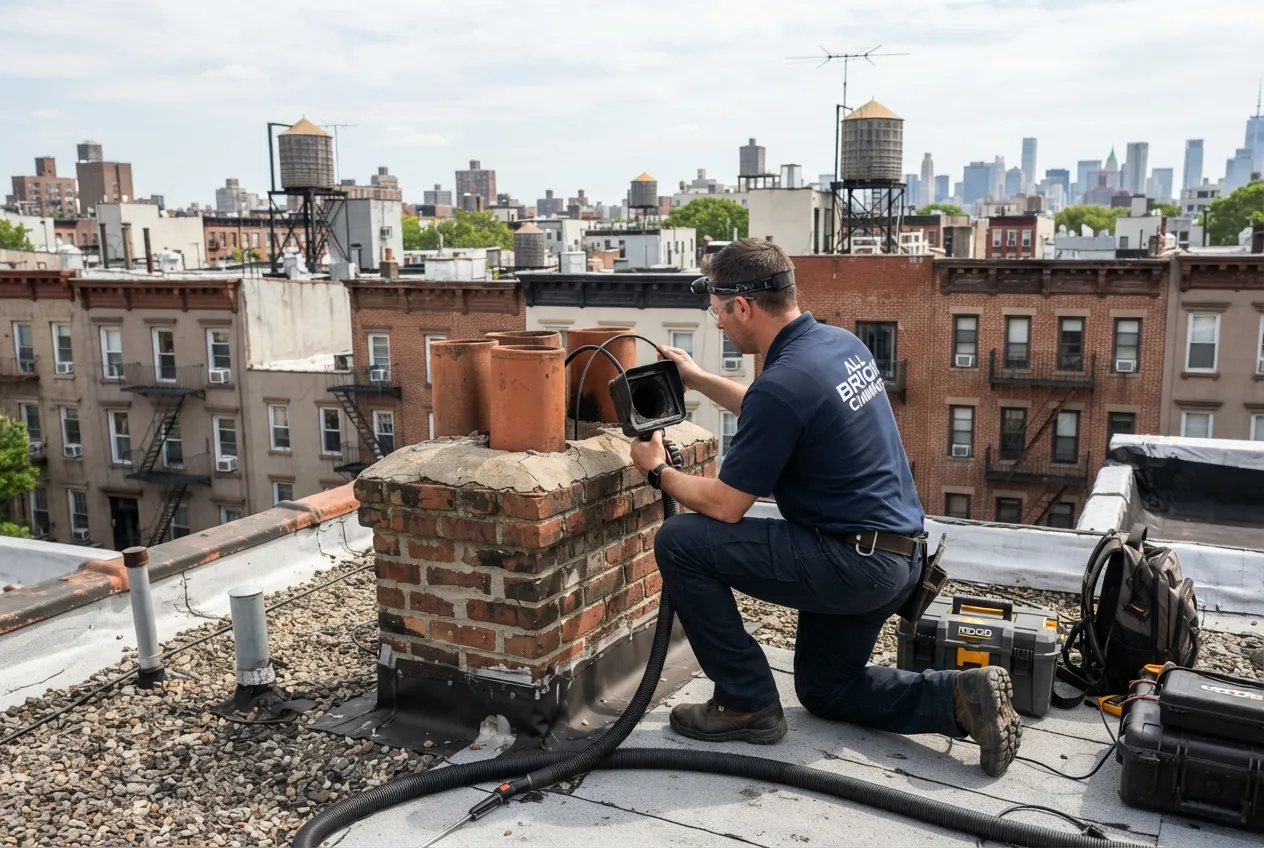
A chimney works out of sight, so problems inside it often go unnoticed until smoke drifts into the room or a smell won't go away. NYC FreshAir Solutions inspects wood-burning fireplaces, gas fireplace flues, and boiler and furnace chimneys for homeowners in New York and nearby neighborhoods. We work in brownstones, townhouses, co-ops and single-family houses. Our certified technicians check the flue, liner, damper, smoke chamber and the parts of the chimney visible from the roof. They record what they find with photos or camera footage and explain it in plain terms. You get a clear picture of what is safe to use, what needs attention, and what can wait.
Signs you need a chimney inspection
Many homeowners book an inspection on a yearly schedule, but the chimney often gives warning signs first. If you notice any of the following, have the system looked at before the next fire or before the heat comes on for the season.
- Smoke drifting back into the room instead of drawing up the flue
- A musty, smoky or burnt smell from the fireplace, especially on humid days or after rain
- Soot, flakes of flue tile or bits of mortar falling onto the hearth or damper
- Debris, nesting material, or the sound of birds or animals in the flue
- Water stains on walls or ceilings near the chimney, or rust on the damper or firebox
- Cracked, loose or missing bricks, or a damaged crown or cap you can see from the street or roof
- A new boiler, furnace, insert or stove, or a switch from oil to gas
- You are buying or selling a home with a working fireplace or chimney
What's included in every inspection
A standard inspection covers the readily accessible parts of the chimney system, inside and out. Here is what we check on every visit:
- Firebox, hearth and surrounding masonry, checked for cracks, gaps and heat damage
- Damper operation and seal
- Smoke chamber and smoke shelf, checked for creosote, debris and deterioration
- Flue liner condition, including cracked or missing tiles, open joints, and corrosion in metal liners
- Creosote and soot levels, with a note on whether cleaning is needed
- Connections and vent pipes for boilers, furnaces, water heaters and inserts
- Clearances to nearby wood framing and other combustible materials, where they can be seen
- Chimney cap, crown, flashing, and exterior brick and mortar, viewed from the roof where safe access exists
- Signs of water entry, animal entry or blockages
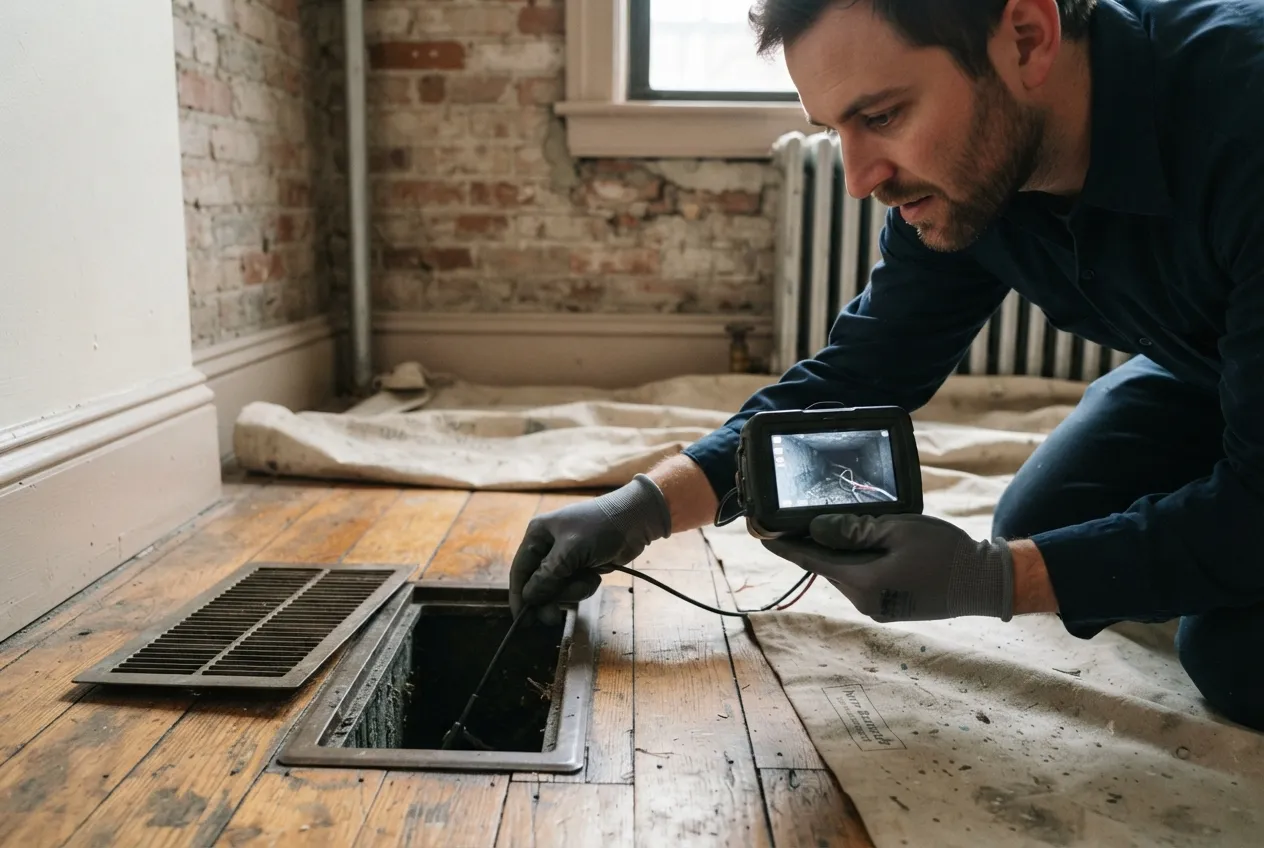
- Video camera scan of the flue, where the inspection level and access call for it
- A written report with photos and our recommendations
What NFPA 211 says, and which inspection level you need
The NFPA 211 standard calls for chimneys, fireplaces and vents to be inspected once a year. That applies whether you light a fire every weekend or only a few times a winter. It also covers the flues that serve boilers and furnaces, not just fireplaces. New York City's heat season runs from October 1 through May 31, so late summer and early fall are a practical time to have heating flues checked before the boiler runs every day.
Chimney professionals use three inspection levels. A Level 1 inspection fits when nothing about the system has changed and you are using it as before. A Level 2 inspection is the right choice when the system changes, such as a new appliance or a switch of fuel, or when the home is being sold. For Level 2 visits, we run a camera through the full flue and look at accessible areas such as attics and basements. A Level 3 inspection is only needed when a hidden hazard has to be reached by opening part of the chimney or building. We recommend it only when an earlier inspection points to a real concern.
If your building is converting its boiler from oil to gas, the chimney has to be evaluated as part of the work. A new liner is often needed. Gas exhaust produces acidic condensate that can corrode a masonry flue, even one that handled oil without trouble.
Ready for cleaner ducts?
How we work inside your home or apartment
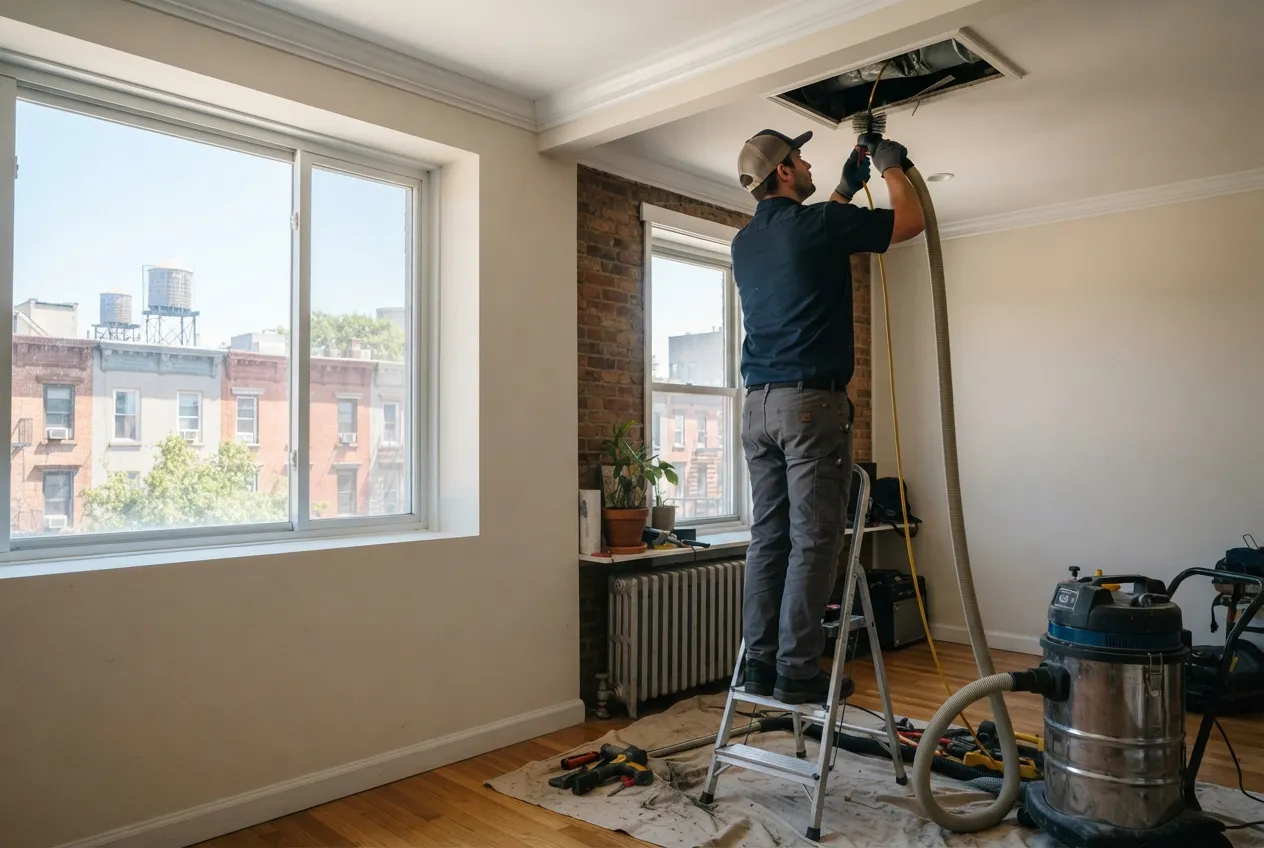
Most chimney work in New York happens in finished living rooms and apartments, so we set up before anything is opened. The crew lays drop cloths from the door to the fireplace and covers nearby furniture. We seal the fireplace opening or the appliance connection so soot stays inside the system. A HEPA vacuum runs under negative pressure while we work, pulling loose dust and debris into its filter instead of into your room.
For the inspection itself, we use lights, mirrors and a video camera that travels up the flue. The camera shows liner joints and other areas no one can see from the firebox. If the inspection shows that cleaning is needed and you approve it, we remove creosote and soot with rotary brushes sized to your flue, with the same protection in place. In buildings with doormen or management offices, we can work around elevator reservations and access rules if you tell us about them when you book.
If we find an animal nest or a lingering odor, we will talk through your options. When a sanitizing or deodorizing treatment makes sense, we only use products registered for that use. We apply them only when there is a reason, such as odor, pests or visible growth.
What affects the price
Every chimney is different, so we quote after asking a few questions about your home. The main factors are:
- The number of flues and connected appliances being inspected
- The inspection level, since Level 2 includes a full camera scan and Level 3 involves opening part of the structure
- Chimney height and roof access, including whether we reach the roof through a building or bulkhead
- The condition of the system, such as heavy creosote, blockages or debris that must be cleared before we can see the flue
- Building type, from a single-family house to a townhouse, co-op or multi-unit building with access rules
- Whether cleaning or other work is added to the visit
How a visit works
When you contact us, we ask what kind of fireplace or appliance you have, when the chimney was last inspected, and what prompted the call. We confirm which inspection level fits and schedule a time, including any building access arrangements.
Please let the fireplace cool completely before we arrive. Ideally, don't light a fire for at least a day beforehand. On the day of the visit, the technicians walk through the space with you, set up protection, and complete the inspection. When we finish, we show you the photos or footage, explain what we found, and clean up the work area. You receive a written report with recommendations sorted by urgency. Nothing beyond the inspection is done without your approval.