The short answer
A Greenwich Village chimney sweep cleans soot and creosote from the firebox, smoke chamber and flue, and checks the damper, liner, crown and cap for damage. The NFPA 211 standard calls for a chimney inspection once a year. For boiler chimneys, the best time to schedule is before the city's heat season starts on October 1.
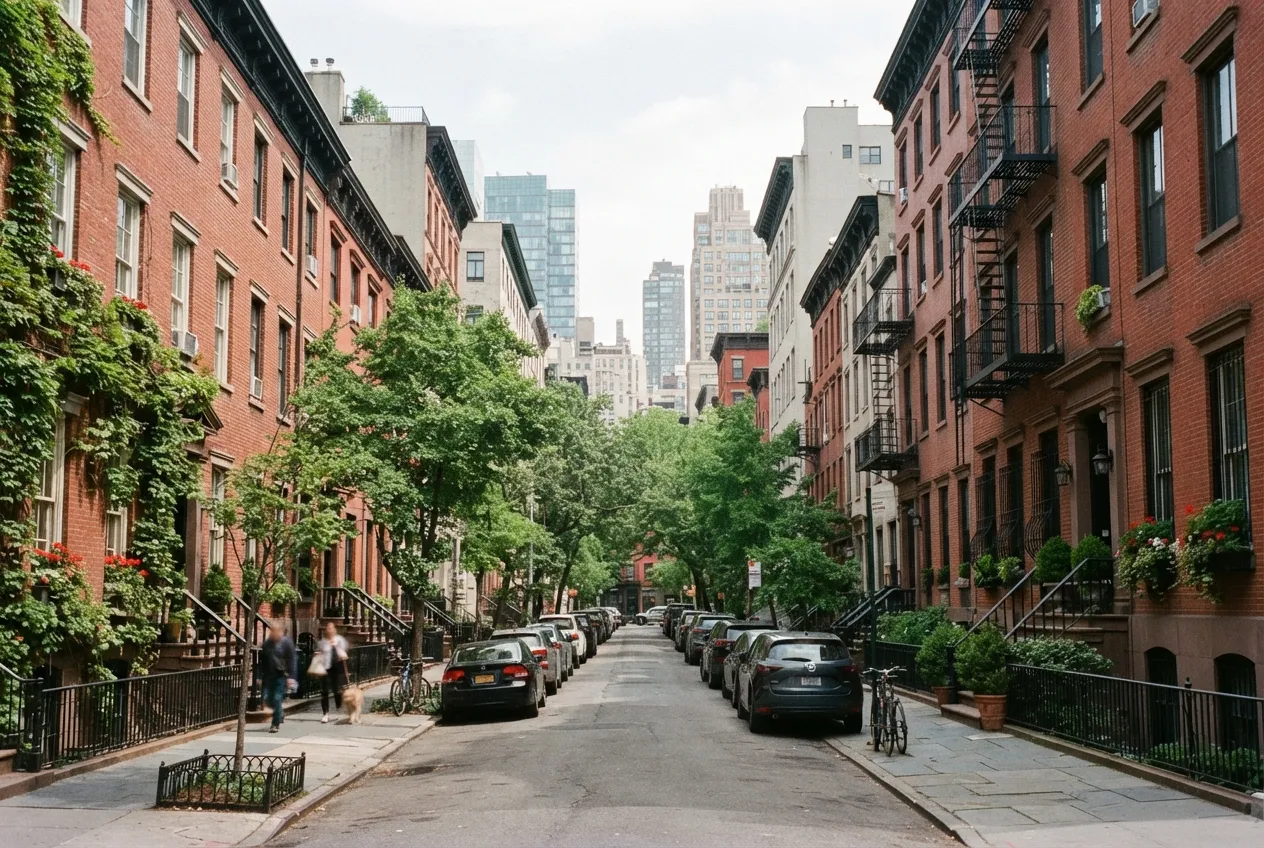
Greenwich Village still has a lot of working chimneys. There are wood-burning fireplaces in brownstones and rowhouses, boiler flues in pre-war apartment buildings, and older masonry stacks that have served several generations of heating equipment. NYC FreshAir Solutions sweeps and inspects these chimneys from our office at 110 Prince St, so our certified technicians are close by when you need them. You might light a wood fire a few evenings each winter, or you might rely on a building boiler from October through May. Either way, a clean, inspected flue is what sends smoke and exhaust up and out instead of back into your home.
What a Chimney Sweep Visit Includes
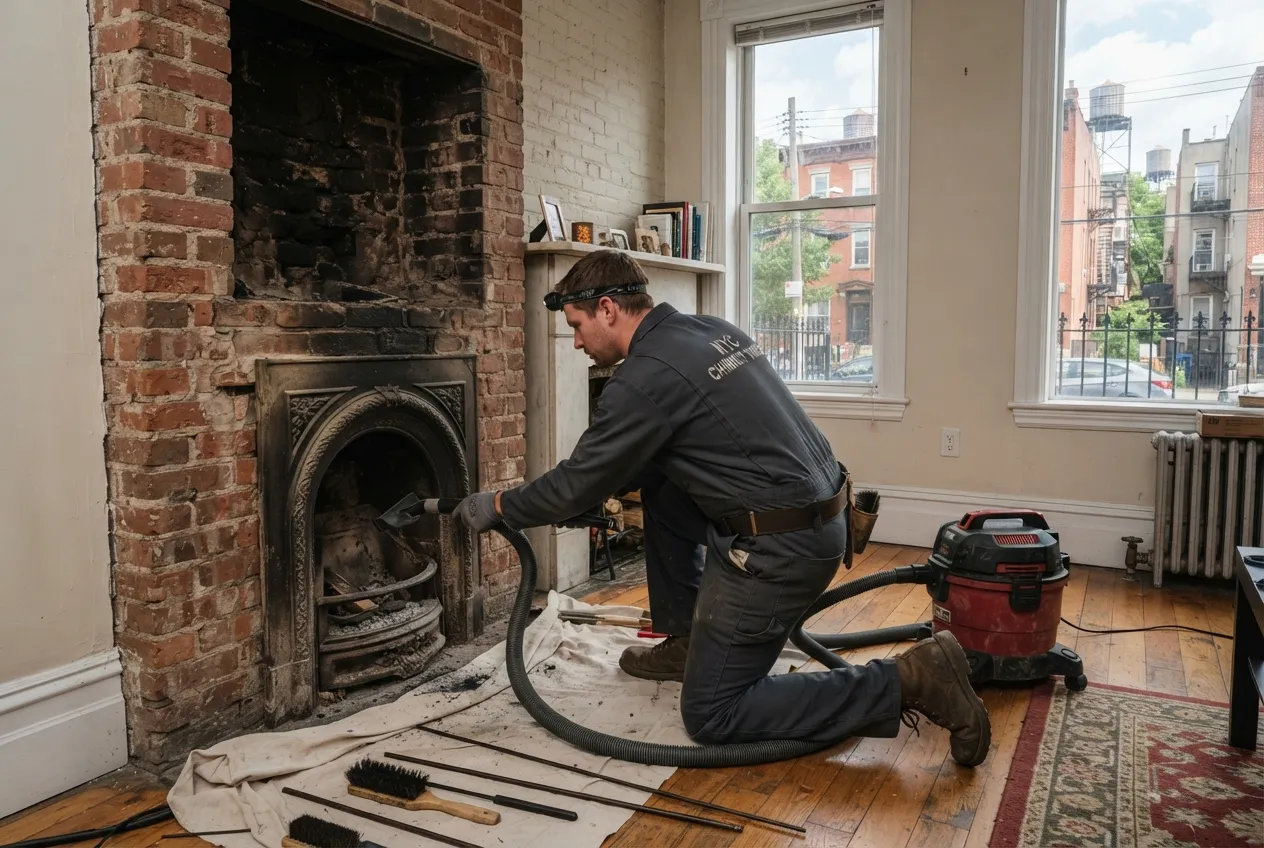
A sweep is more than running a brush up the flue. We start by covering the floor and furniture around the fireplace or appliance. Then we clean the firebox, smoke chamber and flue to remove soot and creosote, the tar-like residue that wood smoke leaves behind. Creosote burns, and a thick layer can ignite inside the chimney.
While we work, we check the parts of the system that tend to wear out in older Manhattan buildings:
When we finish, we explain what we found in plain terms and share photos when they help. We also tell you clearly if anything should be repaired before your next fire.
- The damper, to confirm it opens fully and closes snugly
- Flue tiles and mortar joints, looking for cracks, gaps or missing pieces
- The chimney crown and cap, which keep out rain, birds and debris
- The smoke chamber, where creosote tends to collect
- Signs of water entry, such as rust on the damper, stained plaster or crumbling brick
Brownstones, Rowhouses and Pre-War Buildings
Many Village homes were built when most rooms had a fireplace. Over the decades, some of those fireplaces were sealed, some were fitted with gas logs, and some still burn wood. In attached rowhouses, flues often run side by side through shared walls. A cracked liner in one flue can let smoke or gases move where they shouldn't, so it pays to know the condition of every flue in the stack, including the ones you don't use.
In pre-war apartment buildings, the main chimney usually serves the boiler. When a New York City building converts its boiler from oil to gas, the chimney has to be evaluated as part of the work. A new liner is often needed, because gas exhaust produces acidic condensate that can corrode a masonry flue. We can sweep and inspect a boiler chimney before a conversion or after one, so owners and boards know what condition the flue is in.
The city's heat season runs from October 1 through May 31. During those months, building owners must keep apartments heated to the city's minimum temperatures. Because of that, late summer and early fall are the practical time to clean and check a boiler chimney, before a problem can take the heat down.
How Often to Sweep and Inspect
The NFPA 211 standard calls for chimneys, fireplaces and vents to be inspected once a year. Chimney professionals use three levels of inspection, depending on the situation:
How often a chimney needs sweeping depends on how much you burn and what you burn. A fireplace used every weekend with seasoned hardwood builds up creosote differently than one lit twice a year. Damp or soft wood speeds up buildup. The annual inspection tells us whether a sweep is due now or can wait.
- Level 1: for a system that hasn't changed and is used the same way as before
- Level 2: when something changes, such as a new appliance or a switch of fuel, or when the home is sold
- Level 3: when a hidden hazard can only be reached by opening part of the chimney or the building
Ready for cleaner ducts?
Signs Your Chimney Needs Attention
Call us if you notice any of the following:
If you hear a loud roaring or popping from the chimney while a fire is burning, or you see dense smoke or flames coming from the top, call 911. Don't use that fireplace again until it has been inspected.
- A smoky or tar-like smell from the fireplace, especially in humid weather
- Smoke rolling into the room instead of drawing up the flue
- Black, flaky deposits falling into the firebox
- Scratching or chirping sounds from animals nesting in the flue
- Water stains on the wall or ceiling near the chimney breast
- White, powdery staining on the outside brick
Serving Greenwich Village and Nearby Neighborhoods
Our office is right here, so getting to a Greenwich Village job is quick. We also sweep chimneys in SoHo, Little Italy, Hudson Square, the West Village and Gramercy. We're used to tight stairwells and narrow parlor floors, and we coordinate roof access with superintendents and building managers. When you book, tell us how you get to the roof and which flues you use, and we'll plan the visit around it.
More services in Greenwich Village
- Air Duct Cleaning in Greenwich VillageLocal service & repairs
- Dryer Vent Cleaning in Greenwich VillageLocal service & repairs
- HVAC System Cleaning in Greenwich VillageLocal service & repairs
- Duct Sanitizing & Odor Removal in Greenwich VillageLocal service & repairs