The short answer
Duct odors usually come from material sitting inside the ducts: dust, renovation debris, pest contamination or visible growth. We find the source, clean the ducts under negative pressure with a HEPA vacuum and rotary brushes, and apply a registered sanitizing or deodorizing product only when there is a reason for it.
If your heat or air conditioning pushes a smell into the room every time it turns on, the source is often inside the ductwork. It could be settled dust, debris left from a renovation, a pest that got in, or moisture that let growth start. Our Duct Sanitizing & Odor Removal service begins by finding that source and physically removing it. A sanitizing or deodorizing product comes after cleaning, and only when there is a specific reason for it. Our certified technicians work in houses, townhouses and apartments across New York and nearby neighborhoods.
Signs you need it
Odors in ductwork rarely appear out of nowhere. Most homeowners call us after noticing one or more of these:
A burnt smell at the start of the heating season is often just dust burning off the heating equipment, and it fades within a short time. If it keeps coming back, or smells like melting plastic or wiring, shut the system off and call your HVAC contractor before scheduling any cleaning.
- A musty or damp smell when the heat or air conditioning first starts up
- A burnt or dusty smell that lingers well beyond the first few minutes of running
- Dust blowing out of supply registers or collecting quickly on furniture near vents
- Fine renovation dust that settled into the system after drywall, sanding or demolition work
- Signs of rodents or insects in or near the ducts, such as droppings, nesting material or a dead-animal odor
- Weak airflow from some registers, which can point to a blockage or a disconnected section
- Visible growth on register covers, around the blower or inside a duct opening
What's included
Every visit follows the same core checklist, adjusted to what we find in your system.
If we find a problem that cleaning will not fix, such as a crushed duct, a leaking condensate line or an open pest entry point, we show it to you and explain which kind of trade usually handles that repair.
- A walk-through with you to locate where the odor is strongest and which rooms are affected
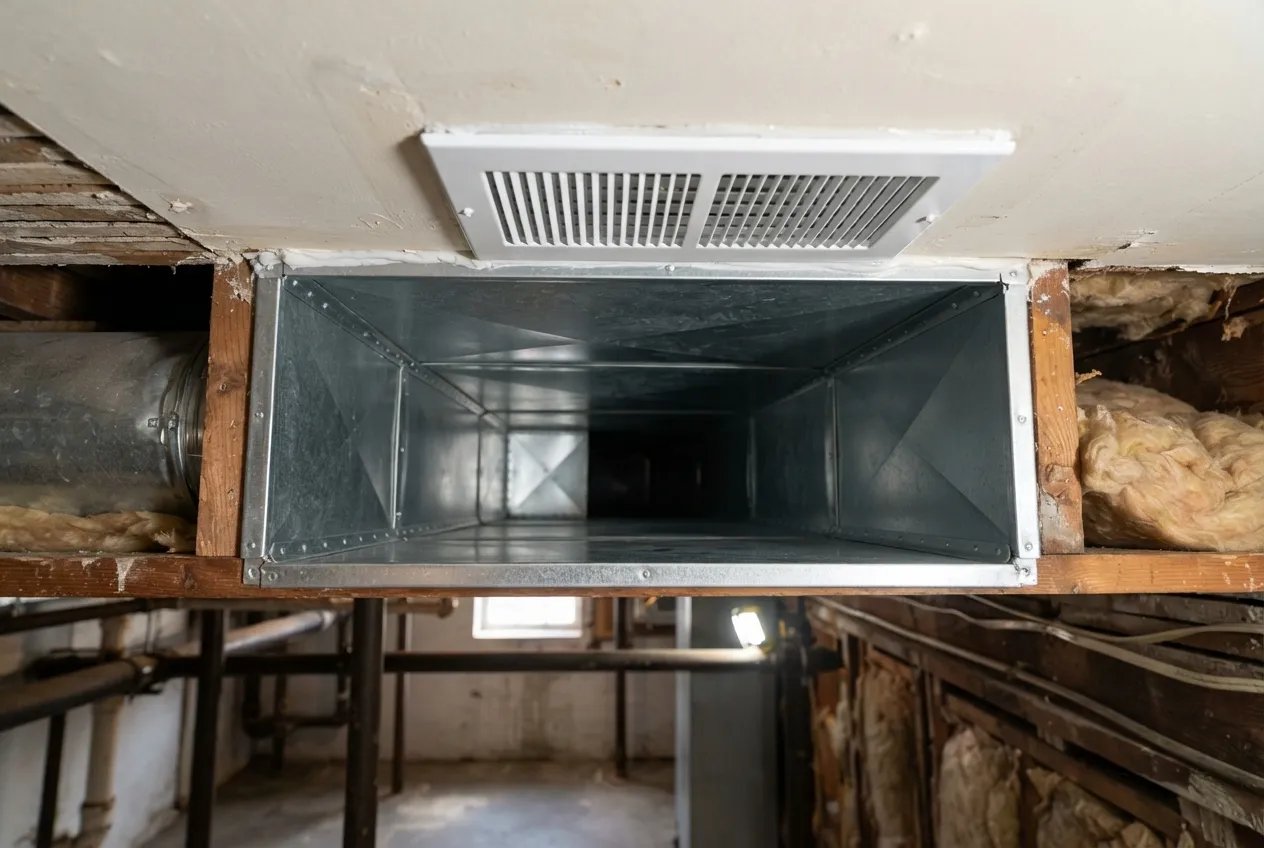
- A camera inspection of accessible duct runs before cleaning
- Removal and washing of supply and return register covers
- Mechanical cleaning of supply and return ducts with rotary brushes and air whips
- Collection of loosened debris with a HEPA vacuum under negative pressure
- Cleaning of the return plenum and accessible areas around the blower
- Removal of pest debris, nesting material and other foreign objects we can reach
- A sanitizing or deodorizing product applied only where the inspection shows a reason for it
- Before-and-after photos and a short written note of what we found
How our crew works inside your home or apartment
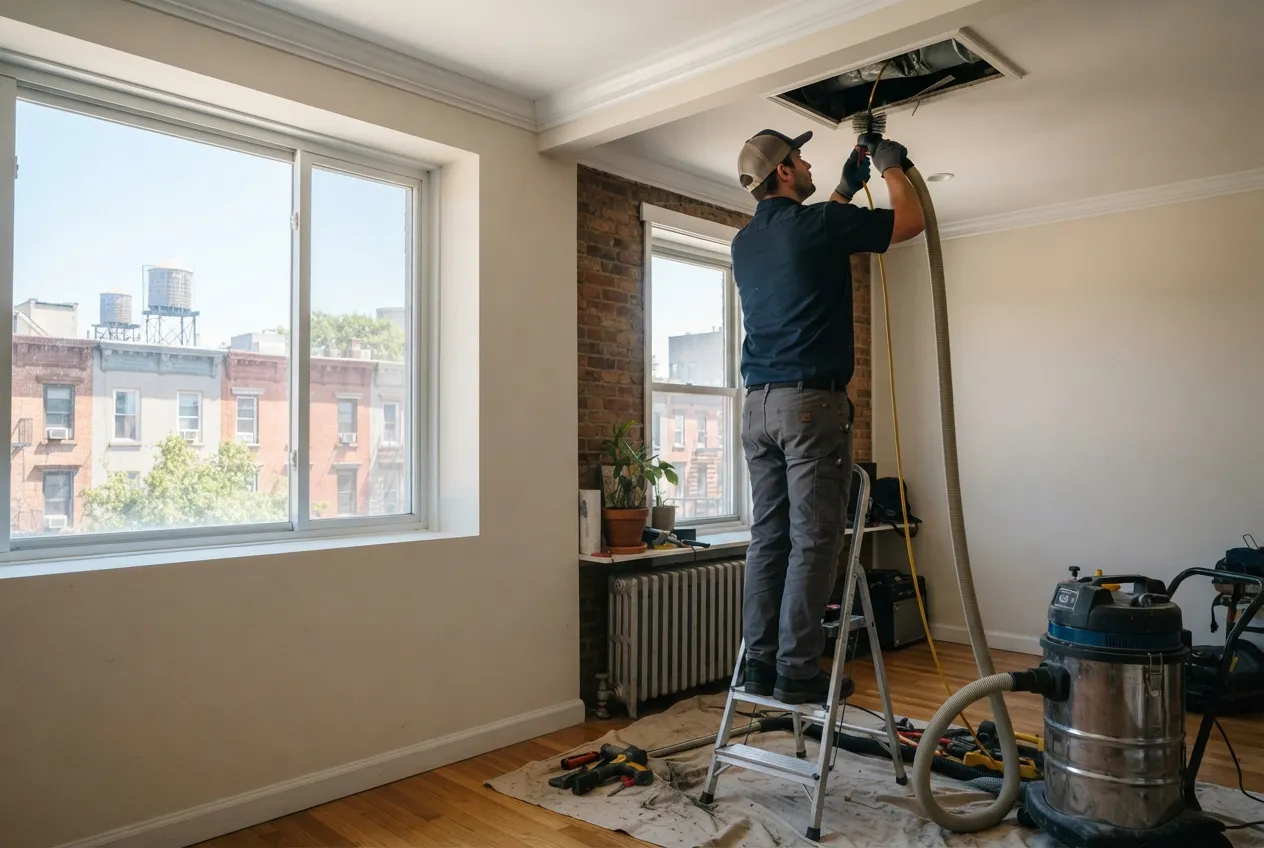
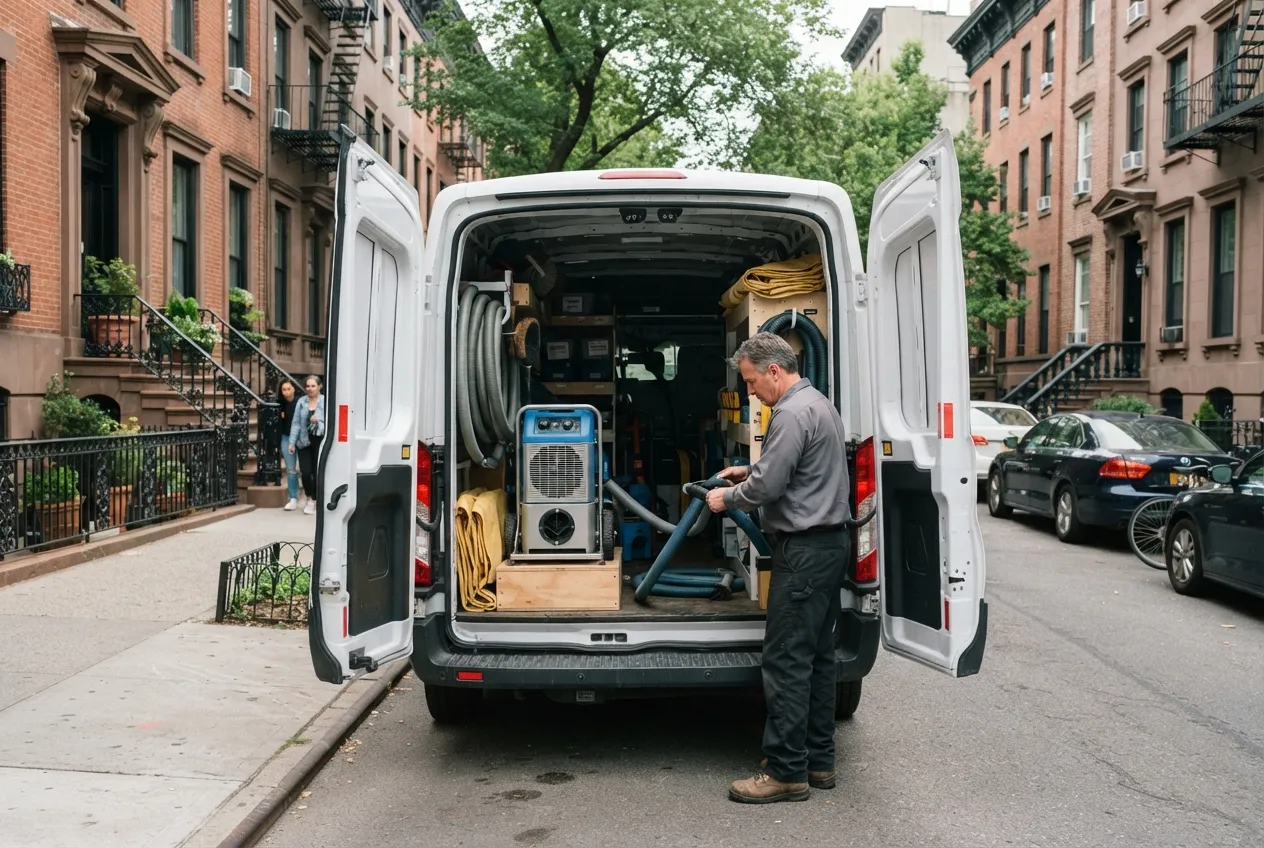
We treat the inside of your home as part of the job. Before any tools come out, the crew lays drop cloths along the path from the door to the equipment and around each register we will open. In apartment buildings, we also protect hallway floors and elevators when the building asks for it.
The HEPA vacuum is connected to the duct system and switched on first, so the ducts are under negative pressure. That means air pulls toward the vacuum instead of pushing dust into your rooms. We seal the registers we are not working on so the suction stays focused where we are cleaning.
Then we work each duct run with rotary brushes and air whips, which knock settled dust and debris loose from the duct walls so the vacuum can carry it away. Where a run is long or hard to see into, we use a camera to check it before and after. When we finish, registers go back in place, drop cloths come up carefully, and we clean the work areas.
Ready for cleaner ducts?
When sanitizing makes sense
The U.S. EPA advises cleaning air ducts when there is substantial visible mold growth, vermin, or excessive dust and debris. It also says duct cleaning has not been shown to prevent health problems, and it urges consumers to be careful with chemical treatments. We follow the same thinking.
Cleaning is the main event, because removing the material that holds the odor does most of the work. We only apply a sanitizing or deodorizing product when there is a specific reason: an odor that remains after cleaning, pest contamination, or visible growth. When we do, we use only products registered for use in HVAC duct systems, follow the label directions, and tell you beforehand what we plan to apply and where. We do not make claims about health effects.
If visible growth keeps returning, there is usually a moisture source behind it, such as condensation or a leak. That source needs to be fixed, or the problem is likely to come back.
What affects the price
We quote after seeing the system, because no two duct layouts are alike. The main factors are:
The EPA suggests researching how duct cleaning will be done before responding to very cheap advertised offers. We are glad to walk you through our process before you book.
- The number of supply and return vents
- Total duct length and how easy the runs are to reach
- The condition of the ducts, including heavy debris, pest contamination or visible growth
- Whether a sanitizing or deodorizing product is needed and how much of the system it covers
- Building type, such as a single-family house, townhouse, co-op or condo, plus any building rules on work hours, elevators or access
How a visit works
You contact us and describe the smell, when you notice it and what type of home you have. We ask about recent renovations, pets, pest problems and the age of the system, then schedule a time. For apartments, we can coordinate with your building's management on access and any paperwork they require.
On the day of the visit, the crew walks through with you, inspects the system, and confirms the scope and price before starting. Most of the visit is cleaning. If a product is warranted, we explain it before applying it. Afterward, we review the photos with you and point out anything that needs a different trade. Run your system normally afterward, and if the odor persists, let us know so we can look at what else might be causing it.
Duct Sanitizing & Odor Removal by city
- Duct Sanitizing & Odor Removal in SoHoLocal service & repairs
- Duct Sanitizing & Odor Removal in Little ItalyLocal service & repairs
- Duct Sanitizing & Odor Removal in Hudson SquareLocal service & repairs
- Duct Sanitizing & Odor Removal in Greenwich VillageLocal service & repairs
- Duct Sanitizing & Odor Removal in TribecaLocal service & repairs
- Duct Sanitizing & Odor Removal in Civic CenterLocal service & repairs
- Duct Sanitizing & Odor Removal in West VillageLocal service & repairs
- Duct Sanitizing & Odor Removal in ChinatownLocal service & repairs
- Duct Sanitizing & Odor Removal in Two BridgesLocal service & repairs
- Duct Sanitizing & Odor Removal in East VillageLocal service & repairs
- Duct Sanitizing & Odor Removal in Lower East SideLocal service & repairs
- Duct Sanitizing & Odor Removal in GramercyLocal service & repairs