The short answer
Gramercy chimneys should be inspected once a year under the NFPA 211 standard, and swept whenever creosote, soot or debris has built up. Our certified technicians clean and inspect fireplaces in brownstones, rowhouses and pre-war buildings throughout ZIP 10010, ideally before heat season begins October 1.
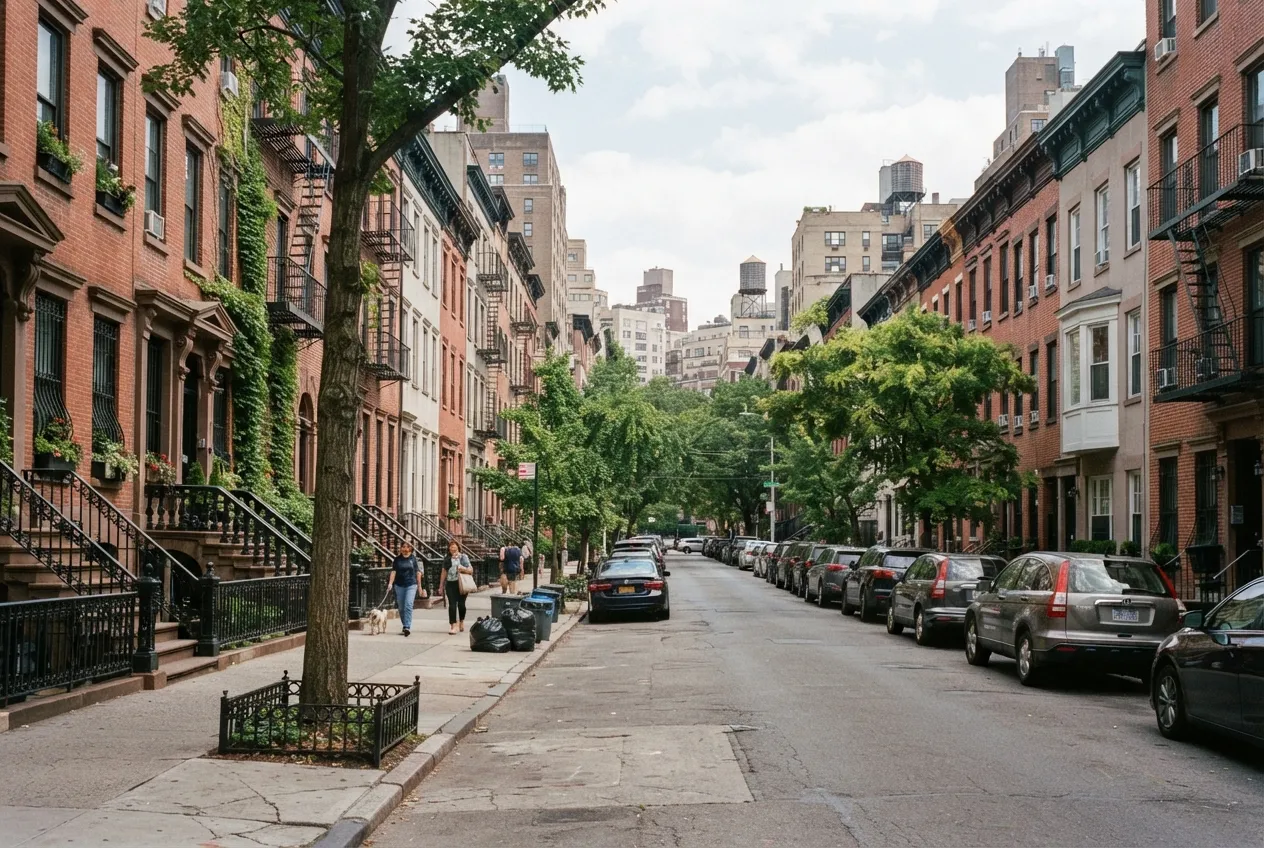
Gramercy has a lot of working fireplaces in brownstones, rowhouses and pre-war apartment buildings, and many were built long before modern venting standards. Our certified technicians sweep and inspect those chimneys for homeowners, co-op residents and building owners in ZIP code 10010. Our Manhattan office is about a mile from the neighborhood, so getting to you is a short trip. Below is what a sweep involves, what we look for in older Gramercy flues, and how to tell when it's time to book.
Why Gramercy Chimneys Need Regular Attention
Many Gramercy homes have masonry chimneys that have been in service for generations. In a brownstone or rowhouse, one stack may hold several flues serving fireplaces on different floors, and those flues often share walls with the house next door. In pre-war apartment buildings, fireplaces may have been closed off, converted or reopened over the years, and the condition of the flue behind them isn't always known.
Burning wood leaves creosote on the inside of the flue. A thin layer is normal, but heavier buildup is a fire risk and can restrict draft, which pushes smoke back into the room. Older clay tile liners can crack, and mortar joints wear down after decades of heating and cooling. A sweep removes the deposits and gives us a clear look at what's underneath.
What Our Chimney Sweep Covers
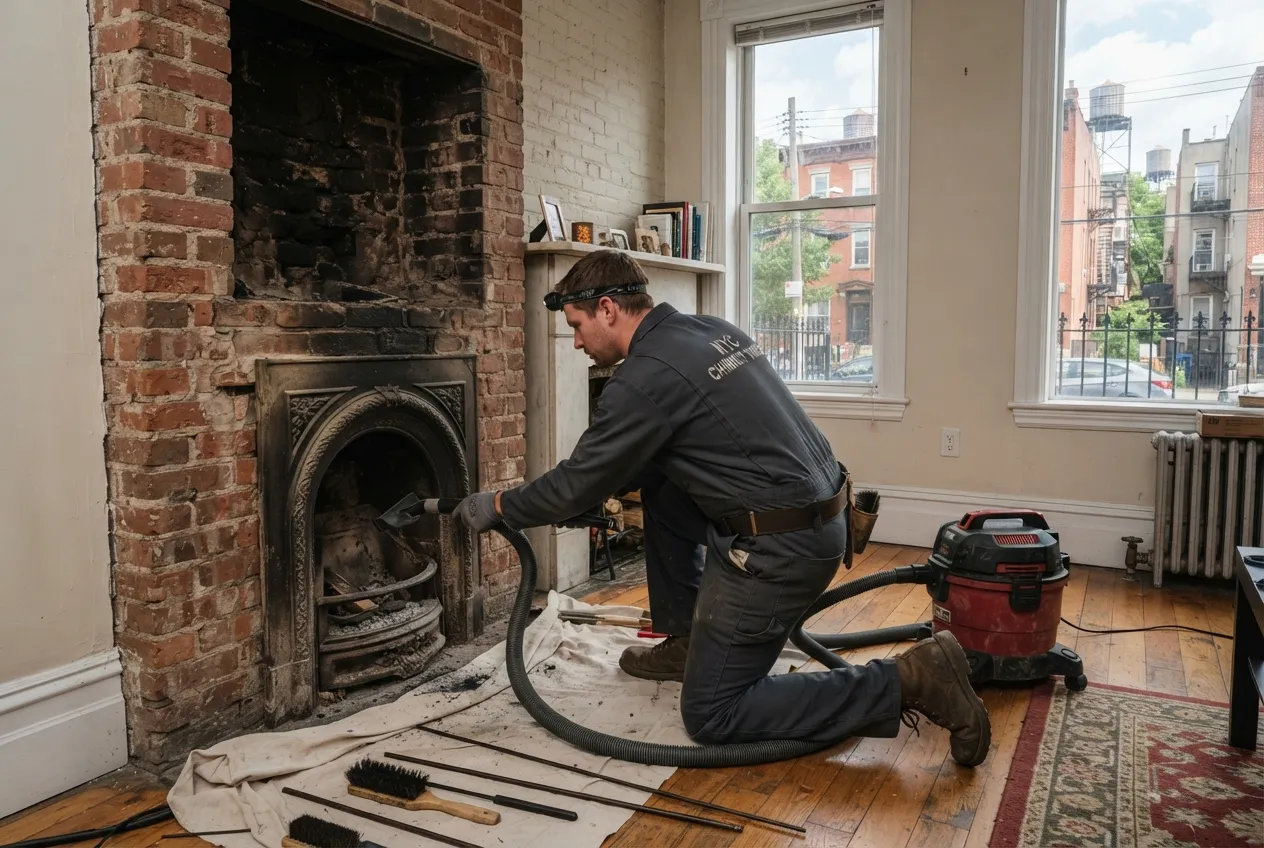
A sweep is more than running a brush up the flue. In a finished living room, keeping soot contained matters as much as the cleaning itself, so we set up before we start and leave the space the way we found it.
If we find something that shouldn't wait, we'll explain what it is, show you what we saw, and tell you plainly whether it's safe to keep using the fireplace.
- Drop cloths and a contained work area around the fireplace opening
- Brushing the flue and removing creosote and soot from the liner, smoke chamber and smoke shelf
- Cleaning the firebox and checking the firebrick and mortar joints
- Testing the damper to make sure it opens, closes and seals
- Checking the cap and crown, where accessible, for damage, debris or nesting animals
- Notes and photos of anything that needs attention
Inspections, Conversions and When a Sweep Isn't Enough
The NFPA 211 standard calls for chimneys, fireplaces and vents to be inspected once a year, even if you rarely light a fire. Chimney professionals use three inspection levels. Level 1 fits a system that hasn't changed and pairs naturally with a routine sweep. Level 2 is called for when something changes, such as a new appliance or a switch in fuel, or when the home is sold. Level 3 is reserved for cases where a hidden hazard has to be reached by opening part of the chimney or building.
Older Gramercy buildings also see boiler conversions. When a New York City building converts its boiler from oil to gas, the chimney has to be evaluated as part of the work, and a new liner is often needed because gas exhaust produces acidic condensate that can corrode a masonry flue. If your building is planning a conversion, we can sweep and evaluate the flue so the owners know where it stands.
Ready for cleaner ducts?
Scheduling Around Heat Season
New York City's heat season runs from October 1 through May 31, when building owners must keep apartments heated to the city's minimum temperatures. That's also when fireplaces see the most use, so late summer and early fall are the easiest times to book a sweep and take care of any repairs before cold weather arrives.
In co-ops and condos, check with your managing agent or board about roof access and any rules for contractors. We can coordinate with doormen, freight elevators and scheduled access windows so the visit goes smoothly.
Signs Your Fireplace Needs a Sweep
If you own or manage homes nearby, we also serve Greenwich Village, East Village, West Village, SoHo and Little Italy.
- Smoke drifts into the room instead of drawing up the flue
- A strong smoky or tar-like smell, especially on humid days
- Black, flaky or glossy deposits visible above the damper
- Bits of tile, brick or mortar falling into the firebox
- Fires that are hard to start or keep going
- Sounds of birds or animals in the chimney
- A year or more since the last sweep and inspection
More services in Gramercy
- Air Duct Cleaning in GramercyLocal service & repairs
- Dryer Vent Cleaning in GramercyLocal service & repairs
- HVAC System Cleaning in GramercyLocal service & repairs
- Duct Sanitizing & Odor Removal in GramercyLocal service & repairs