The short answer
Commercial duct cleaning makes sense when the ducts have heavy dust and debris, pests, or visible growth, not on an automatic schedule. We seal the registers, put the system under negative pressure with a HEPA vacuum, and clean each run with rotary brushes and air whips. The price depends on the number of vents, duct length and access, the condition of the system and the building type.
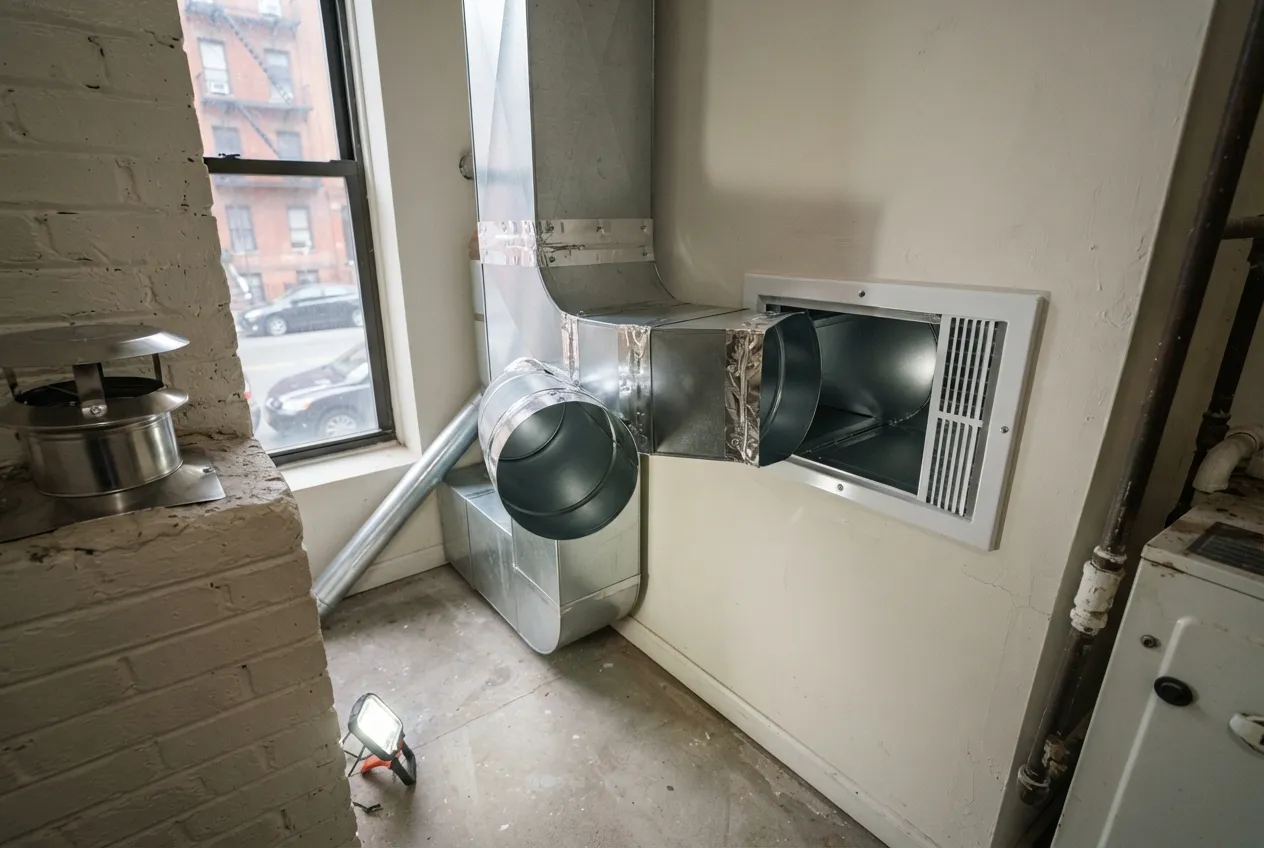
Many New York homeowners also own or manage more than a single apartment: a brownstone with a ground-floor storefront, a small mixed-use building, a multi-unit rental, or a home with an office suite. These spaces often run on larger or shared HVAC systems with long trunk lines, rooftop units and many more vents than a typical house. NYC FreshAir Solutions cleans commercial-style duct systems in occupied buildings across New York and nearby neighborhoods. Our certified technicians work around tenants, customers and family members. This page covers when cleaning makes sense, what we do, how we keep your space clean while we work, and what shapes the cost.
Signs you need it
Not every system needs duct cleaning on a schedule. The U.S. EPA advises it when there is substantial visible mold growth, vermin, or excessive dust and debris in the ducts. In mixed-use and small commercial spaces, these are the signs owners and tenants usually notice first:
- Dust blowing out of supply registers when the system turns on, or settling on surfaces soon after cleaning
- Fine dust after a renovation, build-out or tenant fit-out, especially if the system ran while the work was going on
- Debris, droppings, nesting material or other signs of pests inside registers or in visible duct sections
- A musty smell when the system starts, or a burnt, dusty smell at the start of heating season
- Weak airflow at some registers while others blow normally, which can point to a blockage or a disconnected run
- Visible growth on register grilles, around the coil, or inside duct sections you can see
What's included
Every job starts with a look at the system and ends with a walk-through of the results. A standard commercial duct cleaning includes:
- A walk-through of the system with you, covering the air handler or rooftop unit, the trunk lines, and every supply and return vent we can reach
- Drop cloths and covers over floors, furniture, merchandise and equipment along the work path
- Sealing all registers and grilles so loosened debris stays inside the ducts
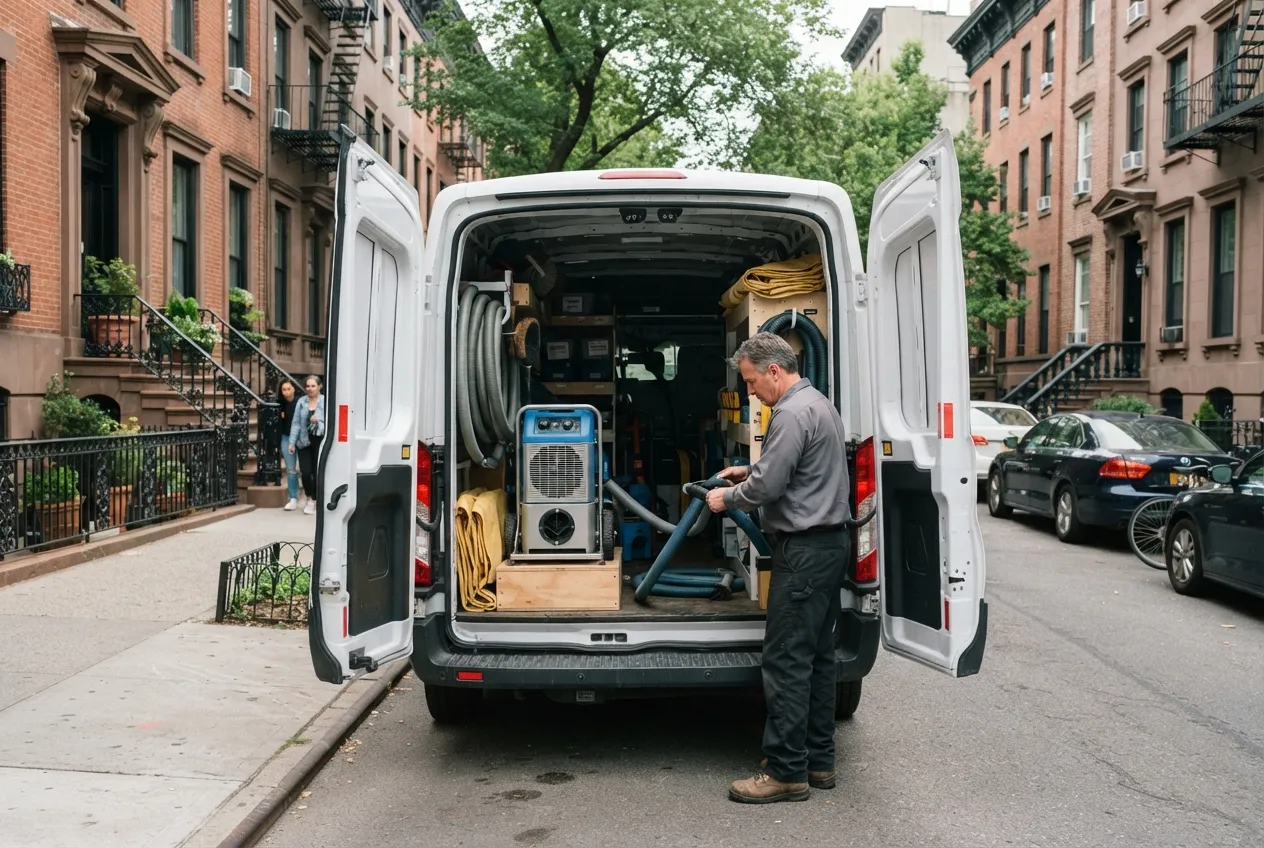
- Connecting a HEPA-filtered vacuum to the trunk line to hold the system under negative pressure
- Cleaning supply and return runs branch by branch with rotary brushes and air whips
- Removing, washing and reinstalling register covers and return grilles
- Cleaning the blower compartment and the accessible parts of the air handler
- Installing a new system filter, either one you provide or one sized to your unit
- Camera inspection of runs where access allows, with before-and-after images
- A short written summary of anything we found, such as disconnected sections, damaged duct or pest entry points
How the crew works inside an occupied building
Most buildings we work in stay in use while we clean. Tenants live upstairs, a shop runs on the ground floor, or you work from home. We plan each job so the space stays usable and clean.
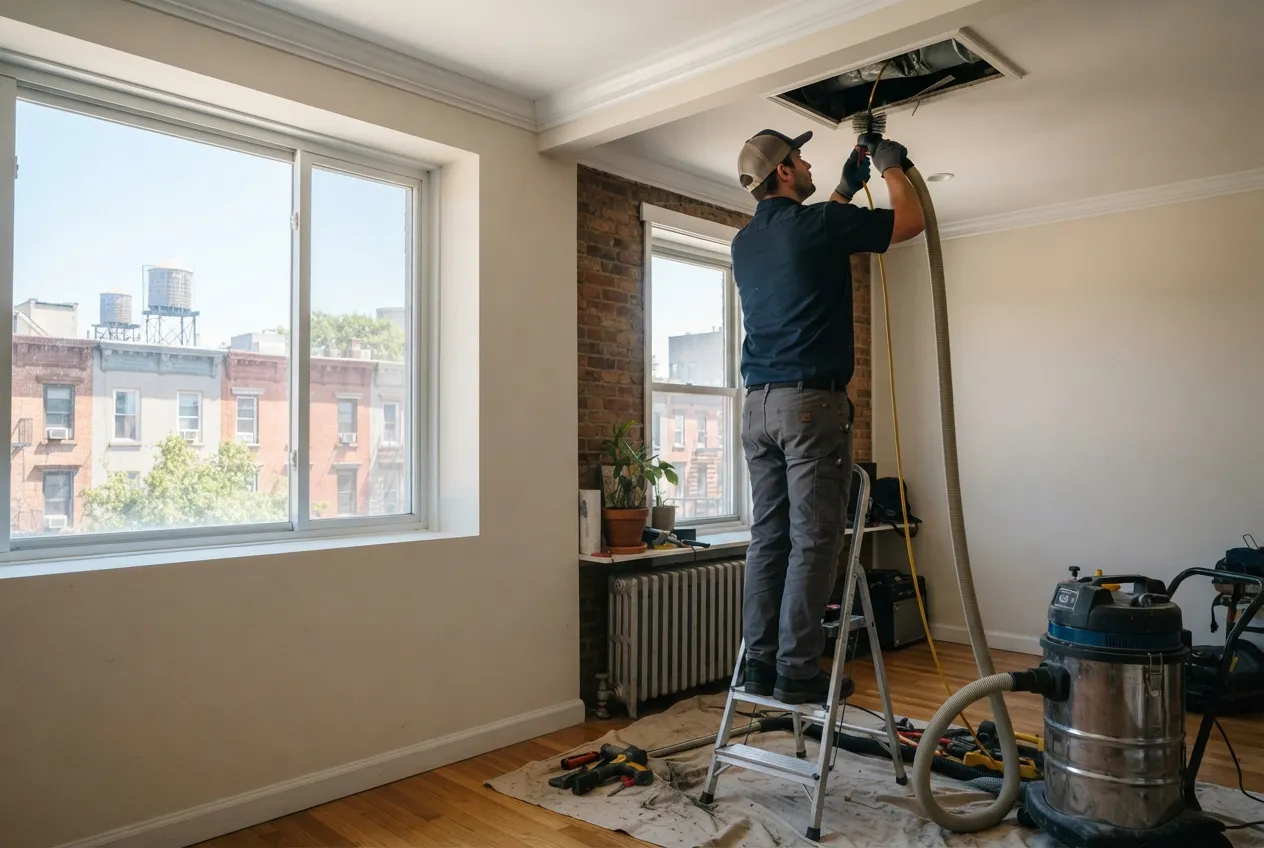
Before any tool goes into a duct, the crew lays drop cloths along the work path and covers nearby furniture or stock. We cover and tape every register and return grille so debris has nowhere to go but the vacuum. The HEPA vacuum connects to the main trunk and pulls the whole system under negative pressure, so air moves inward toward the collection unit instead of out into the rooms.
With the system under suction, technicians work through each run. Rotary brushes go into rigid metal duct, and air whips handle flex duct and tight bends. Where a run is long or hard to see, we use a camera to check the inside before and after cleaning. In apartment buildings we can work unit by unit, around the access times you arrange with your tenants.
Ready for cleaner ducts?
What the EPA says, and how we handle sanitizing
We follow the U.S. EPA's guidance on duct cleaning. The EPA recommends cleaning when there is substantial visible mold growth, vermin, or excessive dust and debris. It also says duct cleaning has not been shown to prevent health problems. For that reason we don't promise better health or fewer allergy symptoms. What cleaning does is remove the dust, debris and contamination you can see.
The EPA also warns consumers to research the process before responding to very cheap advertised offers, and to be careful with chemical treatments. We don't add sanitizers or coatings by default. We only use products registered for that use, and only when there is a reason, such as a lingering odor, pest contamination or visible growth. If we recommend one, we'll tell you what it is and why before we apply it, and you can say no.
With visible growth, cleaning is only part of the fix. The moisture behind it, such as a leaking coil or condensation on uninsulated duct, needs attention too, and we'll point out what we see.
What affects the price
Commercial and mixed-use systems vary a lot, so we price each job after we understand the system. The main factors are:
- The number of supply and return vents
- Duct length, the number of branches, and how easy the trunk lines and air handler are to reach
- The condition of the system, including heavy debris, renovation dust or pest contamination
- The building type: a single storefront, a mixed-use brownstone, a multi-unit building, or a space served by a rooftop unit
- Whether access panels need to be added to reach closed-off sections
- Scheduling needs, such as after-hours work so a business can stay open
How a visit works
Most visits follow the same steps, so you know what to expect from the first conversation to the final walk-through.
Many owners book before New York City's heat season, which runs from October 1 through May 31. During that time building owners must keep apartments heated to the city's minimum temperatures, so it helps to have the ducts cleaned and any problems found before the system is in daily use.
- You tell us about the building, the system and what you've noticed
- We set a time that works around you, your tenants or your business hours
- On arrival, the crew walks the system with you and confirms the scope
- We protect the work area, seal the registers and set up the HEPA vacuum
- Technicians clean each run, the registers and the blower area
- We remove the protection, clean up, and walk you through what we found