The short answer
If your dryer vent is crushed, disconnected, too long or full of bends, we repair or reroute it so lint and hot air exit your home. Every visit includes a full inspection, cleaning of the existing run, replacement of damaged sections and an airflow check before and after the work.
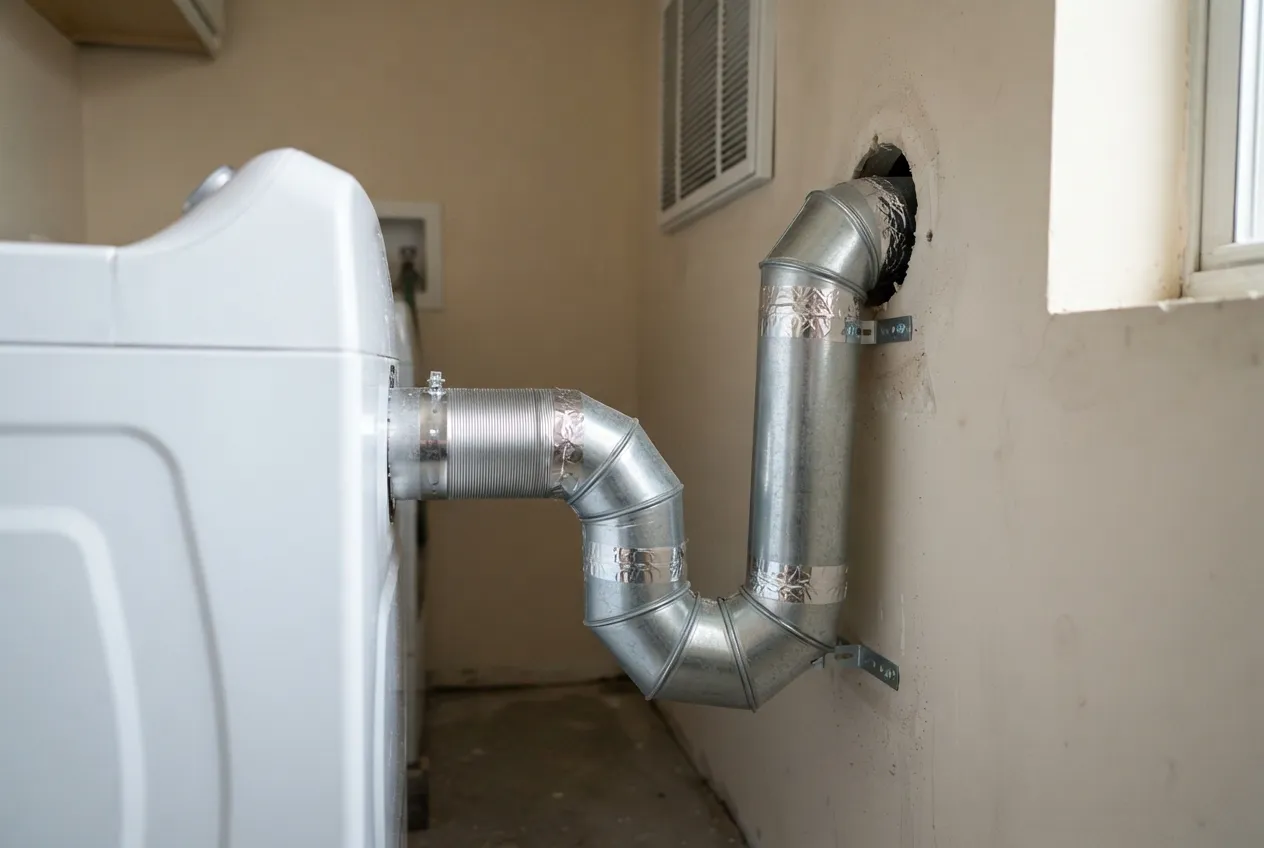
A dryer vent should be a short, smooth path from the back of the dryer to the outside. In many New York homes and apartments it isn't. Vents get crushed behind machines, pulled apart during renovations, run through closets with too many bends, or left as loose foil hose that sags and collects lint. NYC FreshAir Solutions repairs damaged dryer vents and reroutes ones that were installed poorly, so warm, damp air and lint leave the house the way they should. Our certified technicians work in houses, townhouses, co-ops and condos across the city and nearby neighborhoods.
Signs you need it
Most owners call us because the dryer stopped doing its job, not because they looked at the vent. These signs usually point to a damaged, disconnected or badly routed vent rather than a problem with the dryer itself.
- Clothes take more than one cycle to dry, or come out hot and still damp.
- The top of the dryer or the laundry area gets noticeably hot while it runs.
- A burnt or scorched smell during a cycle, or a musty smell in the laundry area afterward.
- Weak airflow at the outside hood, or a flap that barely moves when the dryer is on.
- Lint collecting behind the dryer, on the floor or around the wall connection.
- Debris, nesting material or signs of birds or rodents at the exterior hood.
- Renovation dust in the vent, or a vent that was disturbed when the laundry area was remodeled.
- A transition hose that is crushed, kinked or pulled loose when the dryer is pushed back.
What's included
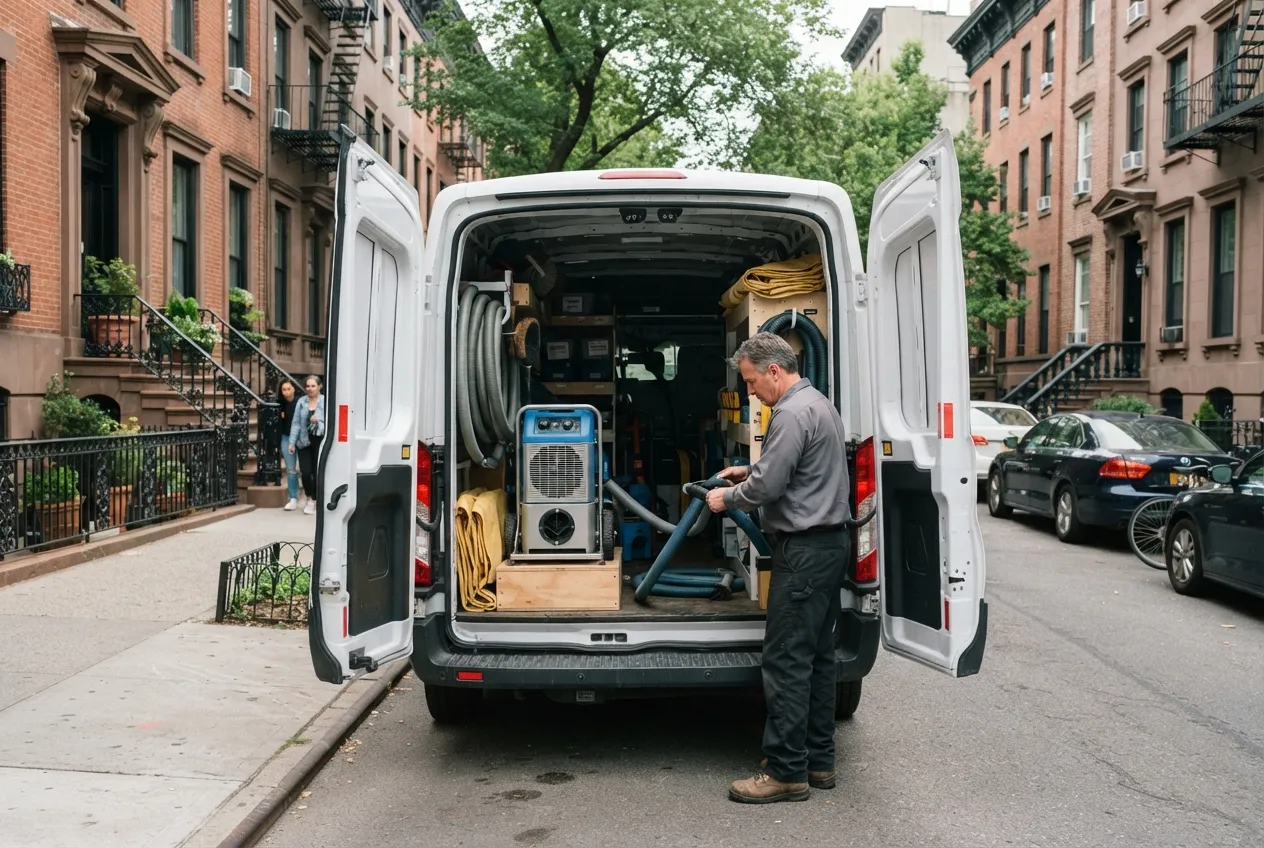
Every repair or rerouting visit includes the items below. If we find a problem outside this list, we explain it and ask before doing any extra work.
- Inspection of the full vent run from the dryer connection to the exterior termination, with a camera where the duct is hidden in walls or ceilings.
- An airflow check at the outside hood before and after the work.
- Cleaning of the existing run with rotary brushes and air whips, so built-up lint is removed before any section is replaced.
- Replacement of crushed, torn or disconnected sections, including plastic or foil hose that has been run inside walls or ceilings.
- Rerouting the run to cut unnecessary length and bends where the layout allows.
- Joints sealed with foil tape instead of screws that reach into the duct and catch lint.
- Repair or replacement of the exterior hood or damper so the flap opens and closes freely.
- Reconnecting the dryer with a transition connector that won't crush against the wall.
- A short written summary with photos of what we found and what we changed.
How we work inside your home or apartment
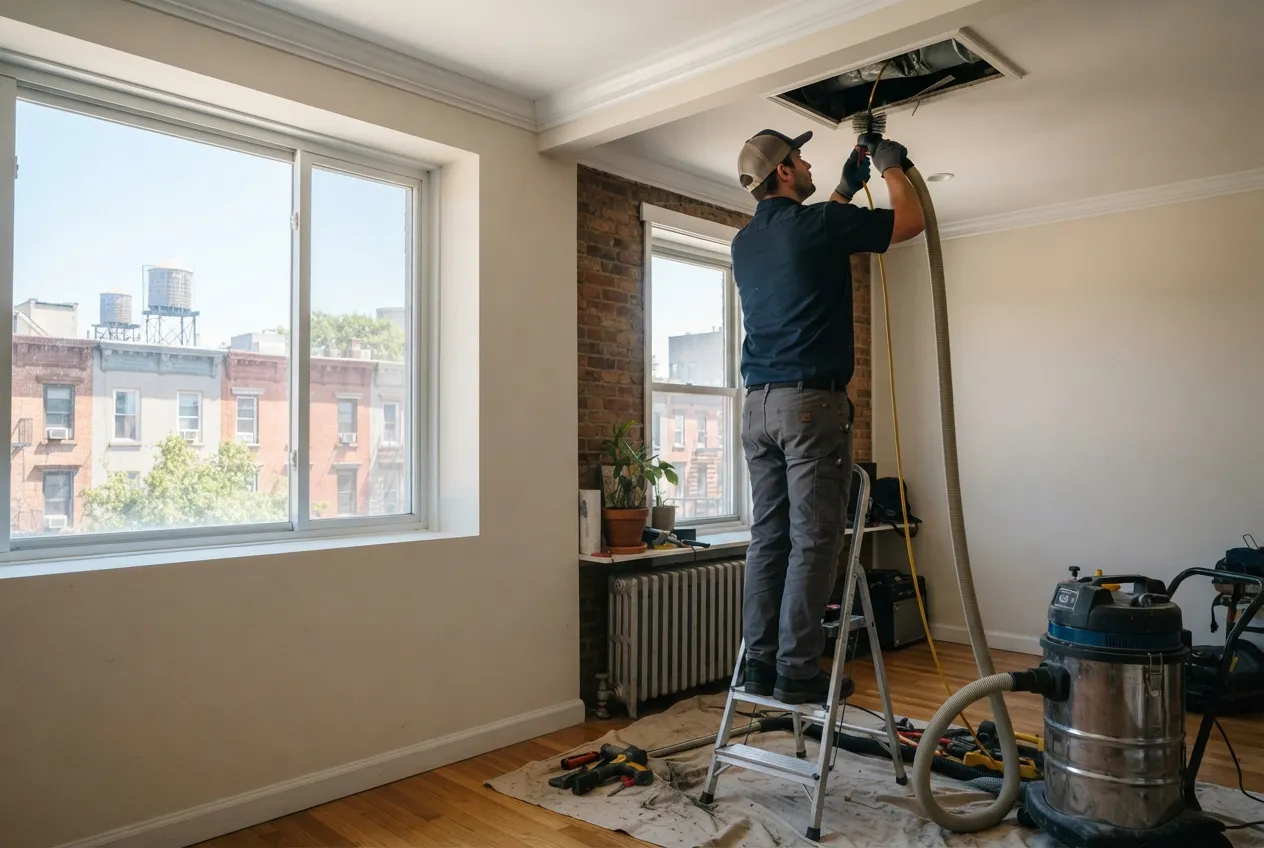
We lay drop cloths from the entrance to the laundry area and around the dryer before anything is moved. Nearby supply and return registers are sealed so loosened lint and dust don't travel through your heating and cooling system. While we clean the existing run, a HEPA vacuum holds the duct under negative pressure, pulling debris toward the vacuum instead of into the room. Rotary brushes and air whips loosen lint from the duct walls, and where part of the vent is hidden, a camera shows us its condition and route before we decide what to replace.
If we find signs of pests, a strong odor or visible growth, we will tell you what we saw. We only use products registered for that specific use, and only when there is a clear reason for them. We don't treat ducts by default.
Ready for cleaner ducts?
Why a sound, clean vent matters
According to the U.S. Fire Administration, failure to clean is the leading factor contributing to clothes dryer fires in homes. A damaged or badly routed vent makes that problem worse. Sags, kinks and long runs with many turns slow the air down, and lint settles wherever the air slows. Over time the dryer runs hotter and longer, pushing heat into a duct that is already lined with lint.
Repairing and rerouting the vent addresses the cause, not just the symptom. A shorter, smoother path with sealed joints and a working hood stays cleaner between visits and lets the dryer move air the way it was designed to.
What affects the price
We give you a firm quote once we have seen the vent, because every run is different. The main factors are:
- The total length of the run and the number of turns between the dryer and the outside.
- Access to the duct and the exterior termination: a nearby wall, a closet, a ceiling space or a roof.
- The condition of the existing duct and how much of it can be kept.
- Whether walls or ceilings need to be opened to replace or reroute hidden sections.
- Building type: a single-family house, a townhouse, or an apartment building where management rules, roof access or approvals apply.
- Stacked units or tight laundry closets that take extra time to move and reconnect safely.
How a visit works
You tell us what you have noticed, and we ask a few questions about your building and where the vent ends outside. In an apartment, we can coordinate with your super or management office ahead of time if the work touches a shared wall, roof or exterior.
On the day of the visit, the technician protects the area, pulls the dryer out, inspects the run and checks airflow. We then walk you through what we found and what we recommend, and do the agreed work. Before we leave, we reconnect the dryer, run it, check airflow at the hood again and clean up. You get photos and a written summary for your records.