The short answer
A Tribeca chimney sweep removes creosote, soot and debris from your fireplace or appliance flue and checks the chimney for damage. The NFPA 211 standard calls for a yearly inspection, and late spring or summer is the easiest time to book one in Manhattan.
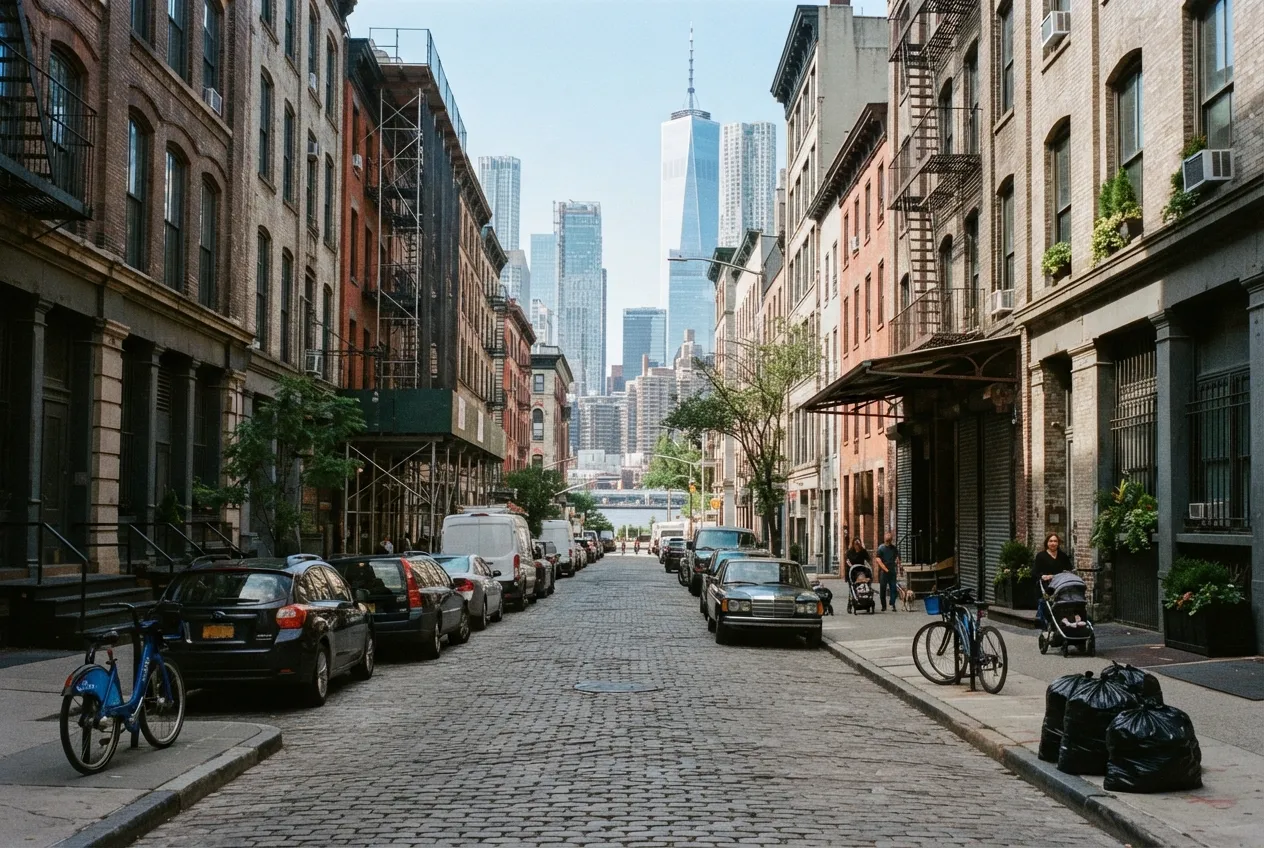
Many Tribeca homes have a fireplace that gets heavy use in the cold months and then sits untouched for most of the year. These fireplaces are often in converted loft buildings, pre-war apartment buildings and townhouses, where the flue may run up through several floors of older masonry before it reaches the roof. NYC FreshAir Solutions sends certified chimney sweeps from our Manhattan office, about a mile northeast of the neighborhood. We clean and inspect wood-burning fireplaces, gas fireplace vents, and the flues that serve boilers and other heating appliances. The goal is simple: a chimney that draws properly, carries smoke and exhaust out of your home, and has no buildup or damage hiding inside it.
What Makes Tribeca Chimneys Different
Much of the housing in Tribeca started out as commercial or industrial space and was later converted to homes. When a building is converted, fireplaces are sometimes added, relined or connected to existing flues in ways that are hard to see from inside the apartment. A fireplace that looks original may be a factory-built unit with a metal flue. A masonry chimney may serve more than one unit or appliance.
Older brick and mortar also wear with age. Freeze-thaw cycles, moisture and years of combustion byproducts can loosen mortar joints, crack flue tiles and damage the crown at the top of the chimney. In a tall building, that damage is often several stories above you. A sweep with a camera can see what you can't.
What a Chimney Sweep Visit Includes
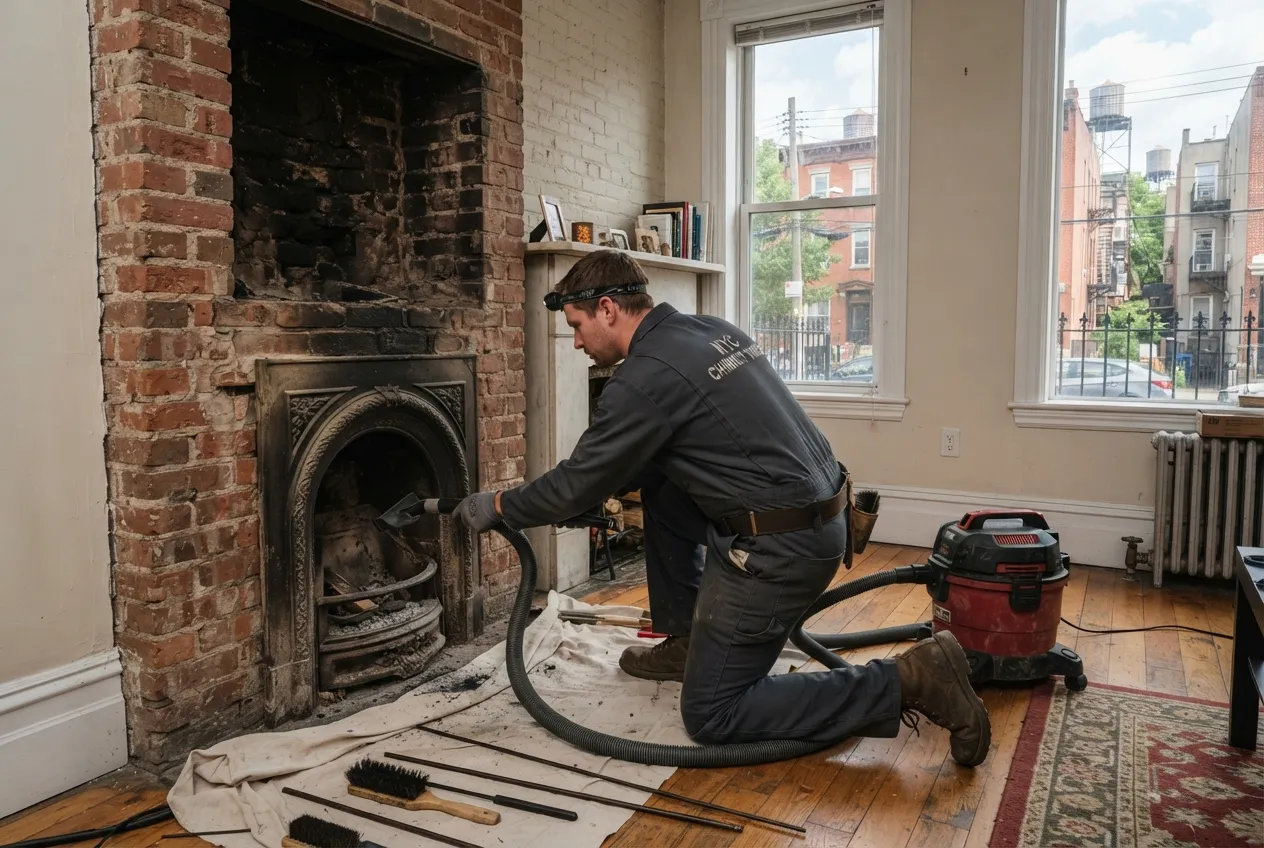
Every visit starts with protecting your floors and furniture, since soot travels easily in an open loft layout. From there, the technician works through the firebox, the smoke chamber and the flue.
- Brushing and vacuuming creosote and soot from the flue, smoke chamber and firebox
- Checking that the damper opens, closes and seals properly
- Looking for cracked flue tiles, gaps in the liner and deteriorated mortar
- Clearing nests, leaves and other blockages
- Checking the chimney cap and crown where they can be safely reached
- Confirming that gas fireplace and appliance vents are clear and connected
- Walking you through what we found, with photos or camera footage when the flue was scoped
Which Inspection Level Your Chimney Needs
The NFPA 211 standard calls for chimneys, fireplaces and vents to be inspected once a year. Chimney professionals use three inspection levels, and the right one depends on what has happened since the last visit.
A Level 1 inspection fits a chimney that is used the same way it was last year, with no changes. A Level 2 inspection is called for when the system changes, such as a new appliance or a switch of fuel, or when the home is being sold. Since many Tribeca apartments and townhouses change hands or get renovated, Level 2 comes up often here. A Level 3 inspection applies only when a hidden hazard has to be reached by opening part of the chimney or building. We explain why before recommending it.
Ready for cleaner ducts?
Oil-to-Gas Conversions and Chimney Liners
When a New York City building converts its boiler from oil to gas, the chimney has to be evaluated as part of the work. Gas exhaust produces acidic condensate that can corrode a masonry flue, so a new liner is often needed. If your building or townhouse is planning a conversion, or finished one recently, we can inspect the flue, report on its condition, and tell you whether the existing liner is suitable for gas.
Scheduling Around the Heat Season
New York City's heat season runs from October 1 through May 31, when building owners must keep apartments heated to the city's minimum temperatures. Boilers run hard during those months, and fireplace use peaks at the same time. That makes late spring and summer the most practical time to sweep and inspect, so any repairs are done before you need heat.
In multi-unit buildings we can coordinate with your superintendent or managing agent about roof access, elevator use and shared flues. We serve Tribeca addresses in ZIP codes 10007, 10013, 10278 and 10279, as well as nearby Civic Center, SoHo, Little Italy, Hudson Square and Chinatown.
More services in Tribeca
- Air Duct Cleaning in TribecaLocal service & repairs
- Dryer Vent Cleaning in TribecaLocal service & repairs
- HVAC System Cleaning in TribecaLocal service & repairs
- Duct Sanitizing & Odor Removal in TribecaLocal service & repairs