The short answer
Clean your bathroom or kitchen exhaust fan when it stops clearing steam or smoke, smells musty or burnt, or shows dust, debris or pests. We clean the grille, fan, housing, duct and exterior cap, then check airflow before and after.
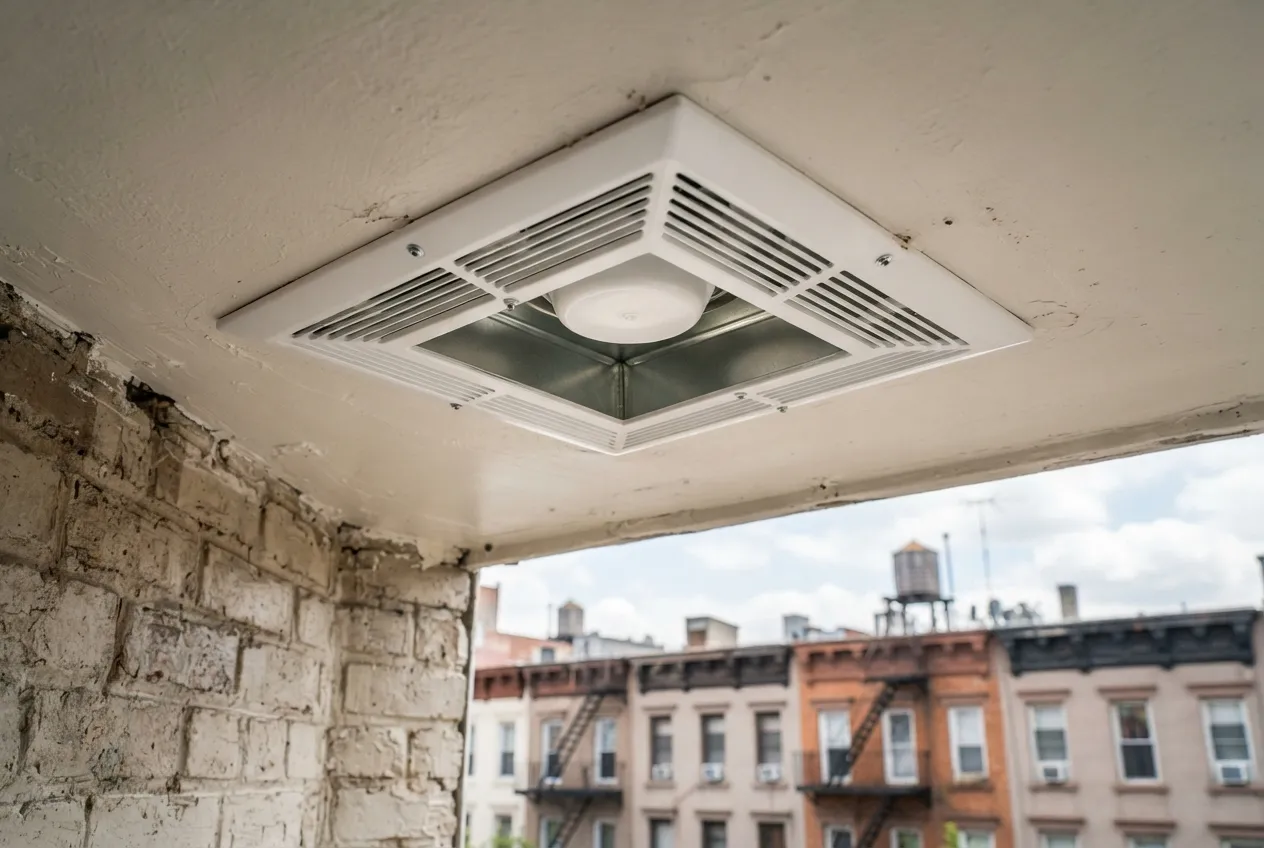
Bathroom and kitchen exhaust fans do a quiet, steady job: they pull moisture, cooking grease and odors out of your home. Over time the fan blades, housing and duct collect lint, dust and a sticky film, and the fan moves less air even though it sounds just as loud. In New York apartments and houses, many of these fans run through long or hard-to-reach ducts, so the buildup is easy to miss. NYC FreshAir Solutions cleans the grille, the fan, the housing and the duct run to the outside, then checks that air actually leaves the room.
Signs you need it
Most owners call us after noticing one of a few things. A fan that once cleared the mirror in a few minutes now leaves it fogged, or a range hood that used to pull smoke away lets it drift across the kitchen. Look for:
The EPA's guidance on duct cleaning points to the same practical triggers: substantial visible mold growth, vermin, or excessive dust and debris. If none of those apply and your fan still moves air well, a quick check may be all you need, and we will tell you so.
- Weak airflow: a tissue held to the grille barely moves, or steam lingers long after a shower.
- Dust or gray fuzz collecting on the grille and blowing back into the room when the fan shuts off.
- A musty smell in the bathroom, or a burnt or stale-grease smell when the range hood runs.
- Renovation dust from recent work in your unit or the building that settled into the fan and duct.
- Debris, nesting material or signs of pests in the duct, or scratching sounds from inside.
- A fan that runs louder, hums or rattles because buildup is throwing the blades off balance.
What's included
Every exhaust fan cleaning covers the full path the air takes, not just the part you can see from the room.
- Remove and wash the grille or cover, and degrease range hood filters.
- Clean the fan blades, motor housing and damper by hand and with a HEPA vacuum.
- Brush and vacuum the duct from the fan to the exterior termination wherever it can be reached.
- Clear lint, grease, debris or nesting material from the exterior cap or louver, and check that the damper opens and closes.
- Camera inspection of the duct where access allows, so you can see the before and after.
- Airflow check before and after cleaning.
- Written notes on problems we can't fix during the visit, such as a crushed duct, a disconnected section, or a duct that ends in an attic or wall cavity instead of outside.
- Cleanup of the work area before we leave.
How our crew works in your home
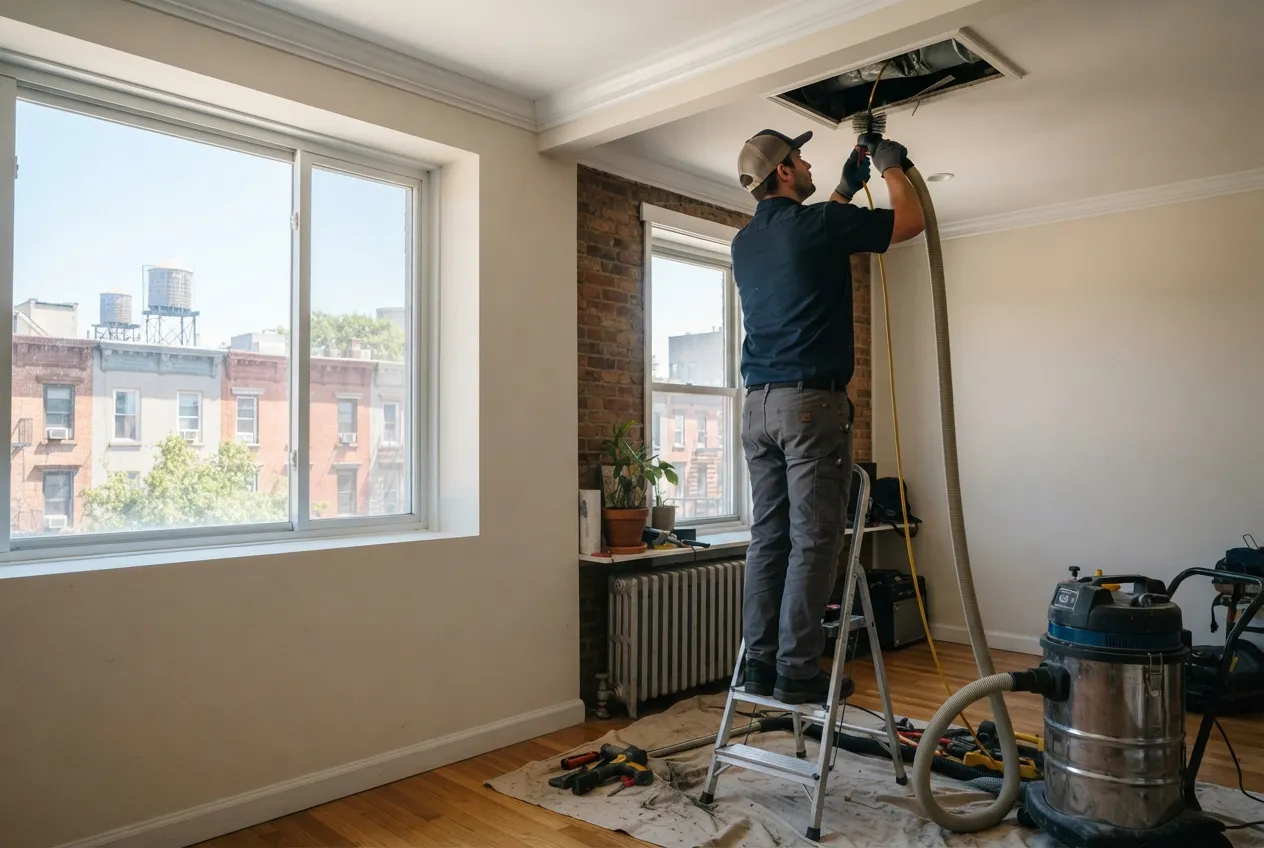
We treat an apartment or house like a finished space, because it is. Technicians lay drop cloths from the door to the work area and cover the vanity, tub, counters or stove beneath the fan. Nearby supply and return registers are sealed so loosened dust doesn't travel through the rest of your heating or cooling system.
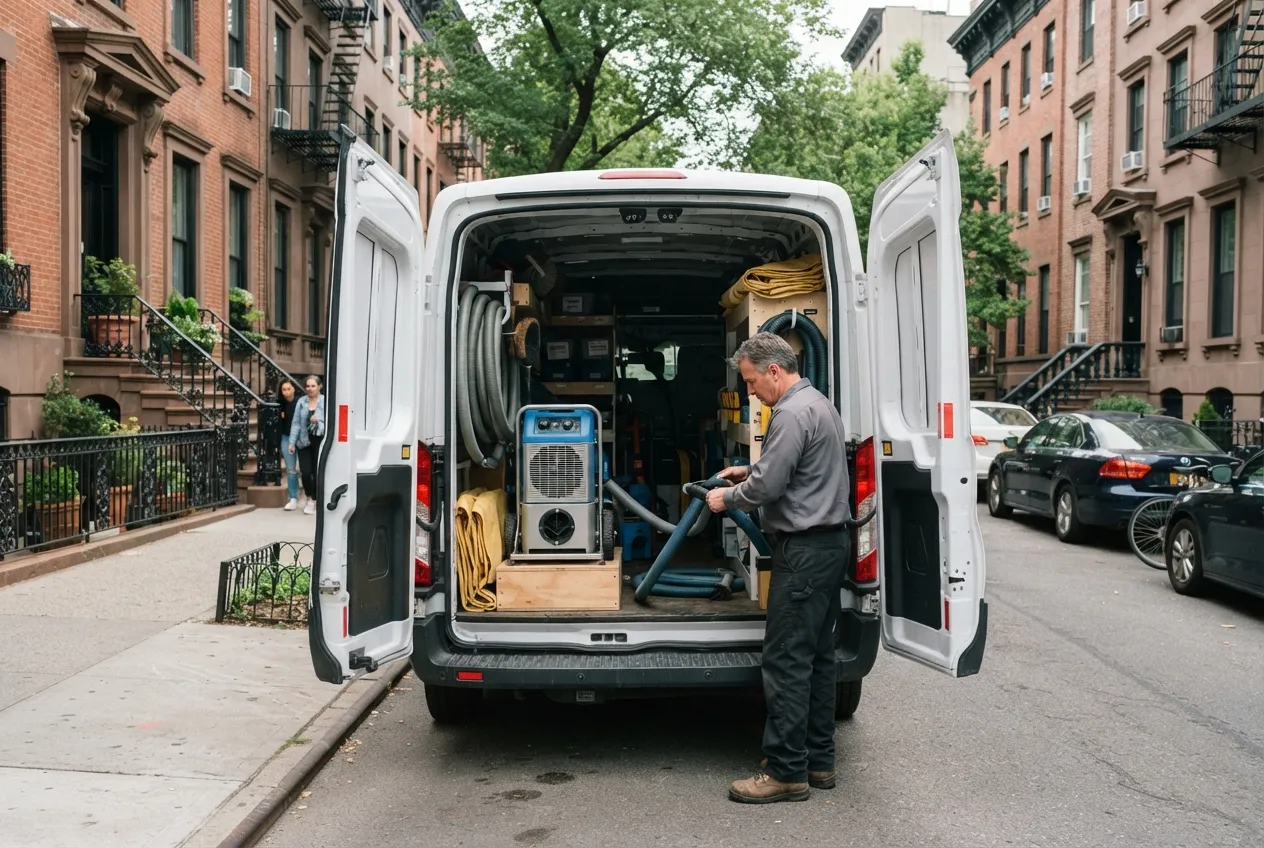
We connect a HEPA vacuum to the duct to keep it under negative pressure, so debris is pulled toward the vacuum instead of being pushed into the room. Then we work the duct with rotary brushes and air whips sized for its diameter and material. Flexible foil and vinyl ducts get gentler tools than rigid metal. Where the duct is long or turns corners, we run a camera through it to confirm the run is clear.
Our technicians are certified, and we don't use chemicals by default. If there is a reason, such as a lingering odor, pest activity or visible growth, we only use products registered for that use, and we tell you what we plan to apply before we apply it. We don't promise that any treatment will improve your health or kill germs.
Ready for cleaner ducts?
What affects the price
We quote once we understand the job, because exhaust fans vary more than people expect. The main factors are:
In many multifamily buildings, bathroom and kitchen exhaust connects to a shared riser that only the building can service. When that's the case, we clean what belongs to your unit and tell you what to raise with your super or managing agent.
- The number of fans, and whether nearby supply and return vents also need attention.
- Duct length and access: a short run straight through an exterior wall is quicker than a long run through a ceiling, attic or chase.
- Condition: heavy grease in a kitchen duct, nesting material or a damaged section takes more time.
- Building type: a single-family house, a co-op or condo unit and a brownstone each come with different access, roof and building-management rules.
How a visit works
When you reach out, we ask how many fans you have, what you've noticed, and what kind of building you live in. If you're in a co-op or condo, we can send the paperwork your management office needs before we arrive.
On the day of service, technicians walk the job with you, test airflow, and look into the duct before setting up. They protect the room, clean the fan and duct, and run the camera where it fits. Timing depends on the number of fans and the condition of the ducts.
Before leaving, we test airflow again, show you photos or camera footage, point out any repairs worth considering, and leave the area clean.