The short answer
A chimney sweep removes soot and creosote from your flue and includes a check of the damper, liner and cap. In the West Village, brownstones and rowhouses often have several fireplaces sharing one chimney stack. Plan on a yearly inspection in line with NFPA 211, with a sweep as needed before the burning season.
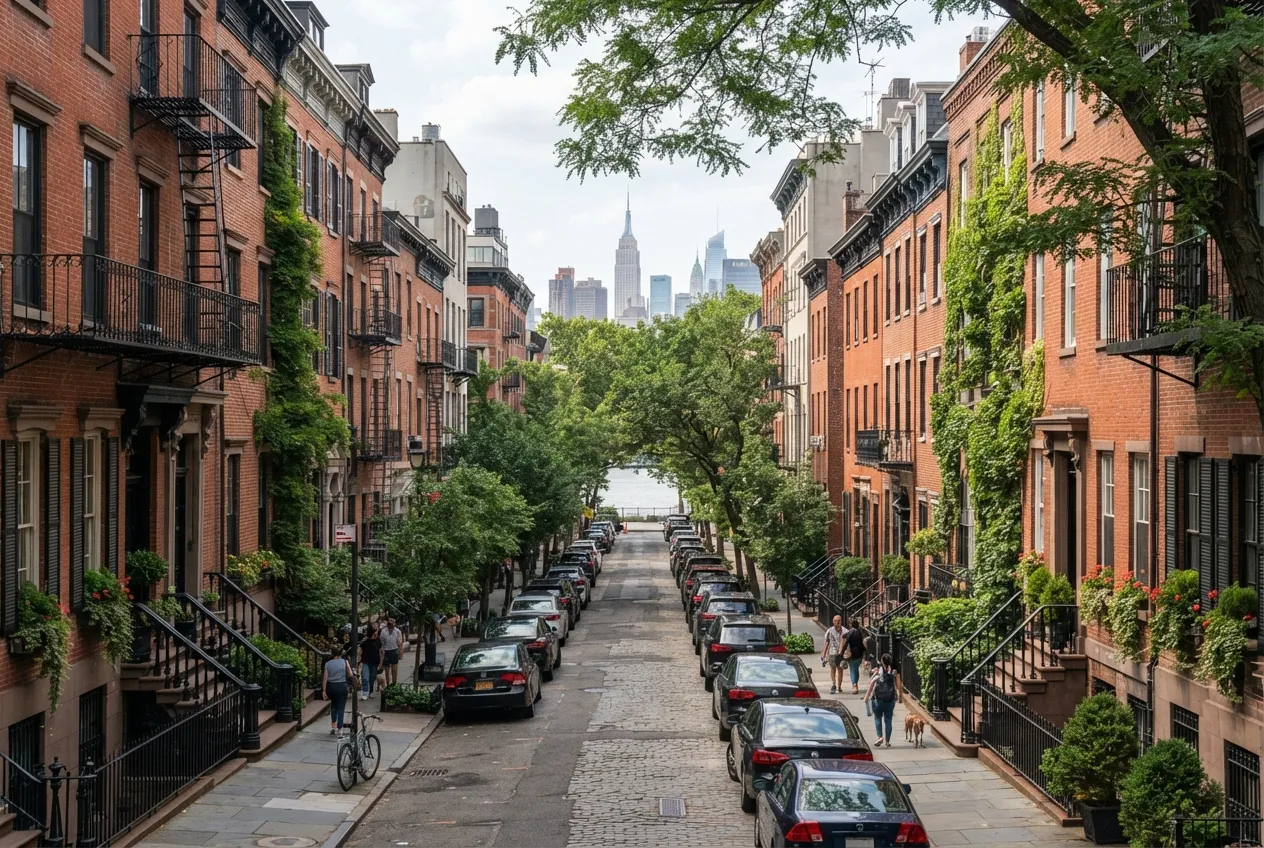
West Village homes tend to be older and built close together: brownstones, brick rowhouses and townhouses, along with pre-war walk-ups and apartment buildings. Many still have working wood-burning fireplaces, often several in one house, each with its own flue running up a shared masonry stack. Larger buildings send boiler exhaust up tall chimneys that get heavy use every winter. NYC FreshAir Solutions sweeps chimneys throughout ZIP code 10014 from our Manhattan office, about a mile to the southeast. Our certified technicians work the way these older homes require: slowly, cleanly and with a close look at the flue.
What a Chimney Sweep Includes
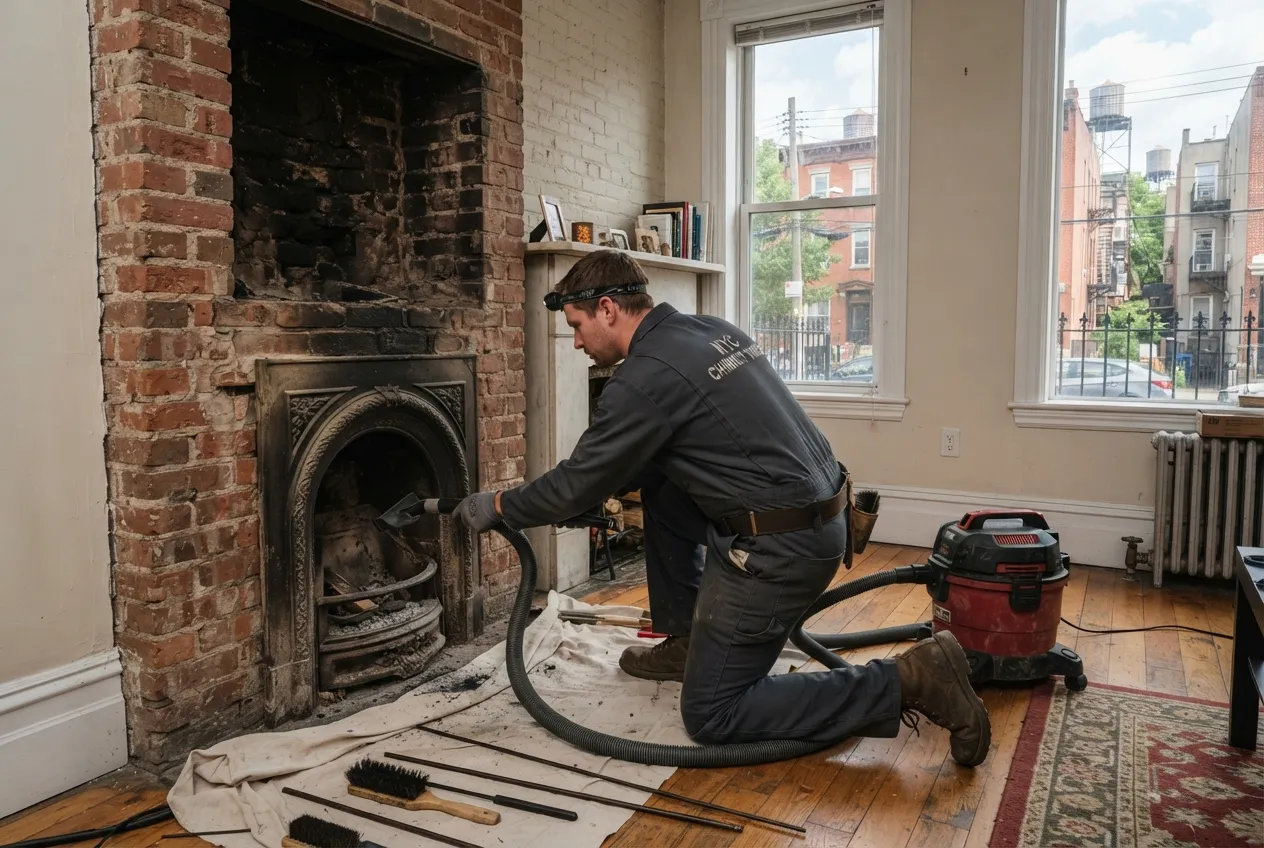
A sweep removes the soot and creosote that build up inside a flue every time you burn a fire. Creosote is a byproduct of wood smoke, and in heavy layers it can catch fire inside the chimney. Removing it also clears the path for smoke, so the fireplace draws better and is less likely to push smoke into the room. A typical visit includes these steps:
- Covering the hearth and nearby floors and furniture with drop cloths before work starts
- Brushing the flue from the firebox, the roof or both, depending on access
- Cleaning the firebox, the damper and the smoke chamber above the damper
- Collecting debris with HEPA-filtered vacuums to keep dust out of the living space
- Checking the damper, flue liner and chimney cap and explaining what we find
- Taking photos of anything that needs attention so you can see it yourself
Fireplaces in Brownstones and Rowhouses
Many West Village rowhouses were built with a fireplace on several floors. Each fireplace usually has its own flue, and those flues run side by side in the same chimney stack. That matters during a sweep. Before brushing, we confirm which flue serves which fireplace so we clean the right one and do not send debris into a neighboring opening. Some houses have a mix of fireplaces that are decorative, sealed or in use. In that case we focus on the ones you actually burn in and note the condition of the rest.
Older flues in these houses are often unlined brick, or they have clay tile liners that have cracked or shifted over time. A sweep is a good time to find that out. If we see gaps, missing mortar or heavy glazed creosote that brushing will not remove, we explain your options rather than pushing a repair on the spot. Roof access on attached rowhouses can be limited, so we work from inside when that is the safer choice.
Boiler Chimneys in Pre-War Buildings
In pre-war apartment buildings and larger townhouses, the main chimney often serves a heating boiler rather than a fireplace. New York City's heat season runs from October 1 through May 31. During those months, building owners have to keep apartments at the city's minimum temperatures, so a boiler flue gets steady use for most of the year. Soot buildup or a blockage in that flue can affect how the boiler vents and runs.
If your building is converting its boiler from oil to gas, the chimney has to be evaluated as part of that work. A new liner is often needed because gas exhaust produces acidic condensate, which can corrode a masonry flue that worked fine for oil. We can sweep and inspect the existing flue so you and your heating contractor know what you are working with before the conversion moves forward.
Ready for cleaner ducts?
How Often to Schedule a Sweep
The NFPA 211 standard calls for chimneys, fireplaces and vents to be inspected once a year. Whether the flue also needs a sweep depends on what the inspection finds and how often you burn. Inspections come in three levels:
For most West Village homeowners, late summer or early fall is a practical time to book. That puts the visit ahead of regular fires and the start of the heat season.
- Level 1: for a chimney in regular use when nothing about the system has changed
- Level 2: when the system changes, such as a new appliance or a switch of fuel, or when the home is being sold
- Level 3: when a suspected hidden hazard can only be reached by opening part of the chimney or building
Signs Your Chimney Needs Attention
You do not have to wait for the yearly visit if something seems off. Contact us sooner if you notice any of the following.
We also sweep chimneys in nearby Greenwich Village, SoHo, Little Italy, Hudson Square and Gramercy.
- Smoke drifting into the room instead of going up the flue
- A strong smoky or tar-like smell from the fireplace, especially in humid weather
- Black, flaky or shiny deposits on the damper or inside the firebox
- Debris, nesting material or animal sounds in the flue
- Pieces of tile or brick falling into the firebox
- Water stains on walls or ceilings near the chimney
More services in West Village
- Air Duct Cleaning in West VillageLocal service & repairs
- Dryer Vent Cleaning in West VillageLocal service & repairs
- HVAC System Cleaning in West VillageLocal service & repairs
- Duct Sanitizing & Odor Removal in West VillageLocal service & repairs