The short answer
An East Village chimney sweep removes soot, creosote and blockages from fireplace and boiler flues and checks the chimney for damage. The NFPA 211 standard calls for a yearly inspection, and late summer or early fall is the best time for one, before the city's heat season starts on October 1.
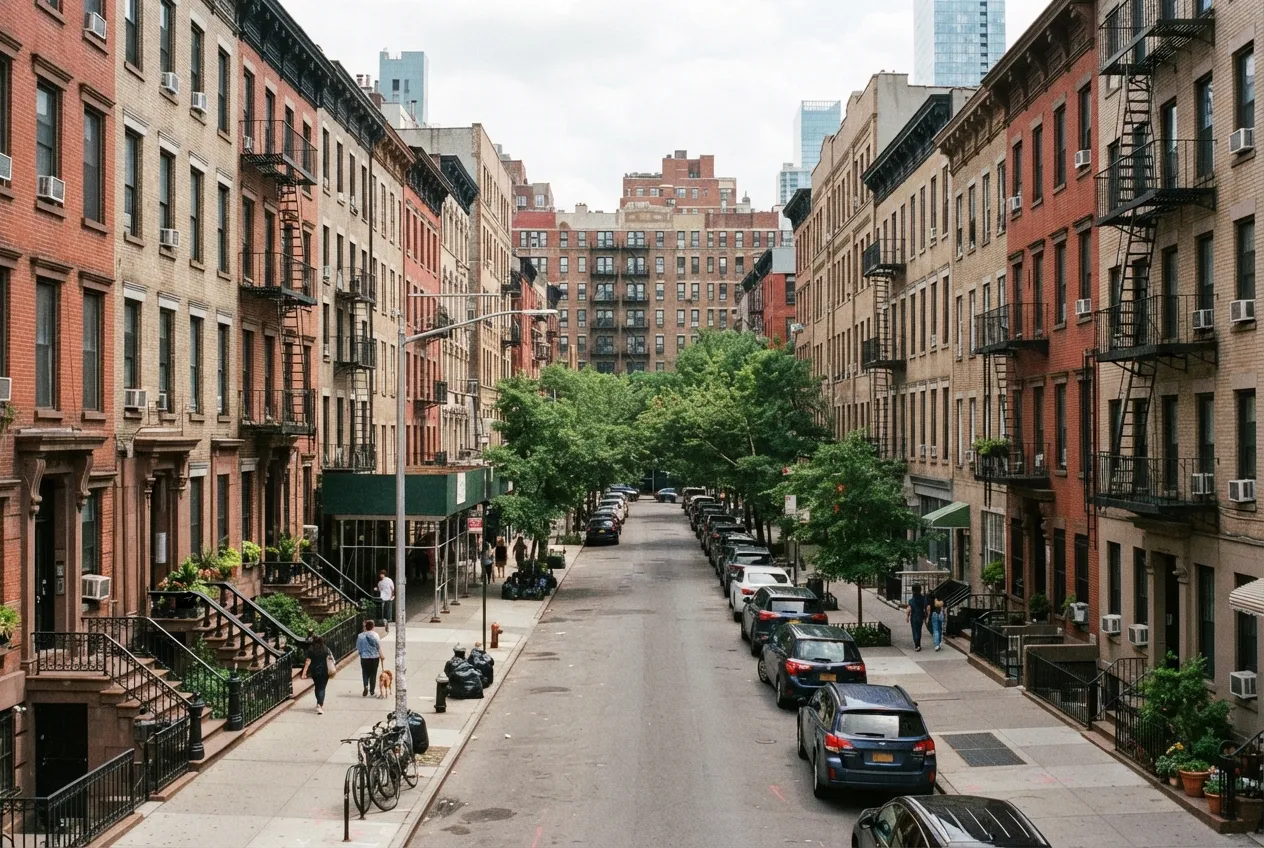
East Village homes range from nineteenth-century rowhouses and brownstones to pre-war walk-ups and larger apartment buildings. Many of them still depend on masonry chimneys, whether for a working fireplace, a building boiler, or both. Our certified technicians sweep and inspect these chimneys for owners and residents in ZIP codes 10003 and 10009. Our Manhattan office is about a mile west of the neighborhood, so getting a crew to your building is simple. This page explains what a chimney sweep involves in East Village buildings, what we check during a visit, and how to plan the work around New York City's heating season.
Chimneys in Older East Village Buildings
Many chimneys in the neighborhood are original brick flues that run up through several floors. Over decades, soot and creosote build up inside them, mortar joints wear down, and renovations can change how a flue is used. A fireplace that was sealed long ago may have been reopened. A flue that once carried coal or oil exhaust may now vent a gas boiler. Each of these changes affects how the chimney should be cleaned and what we look for.
Older buildings also bring practical challenges. These include narrow flues, stacks that rise above neighboring rooflines, and roof access through bulkheads or hatches. We confirm access with you or your building staff before the appointment, and we protect hallways, stairs and floors on the way in and out.
What a Chimney Sweep Visit Includes
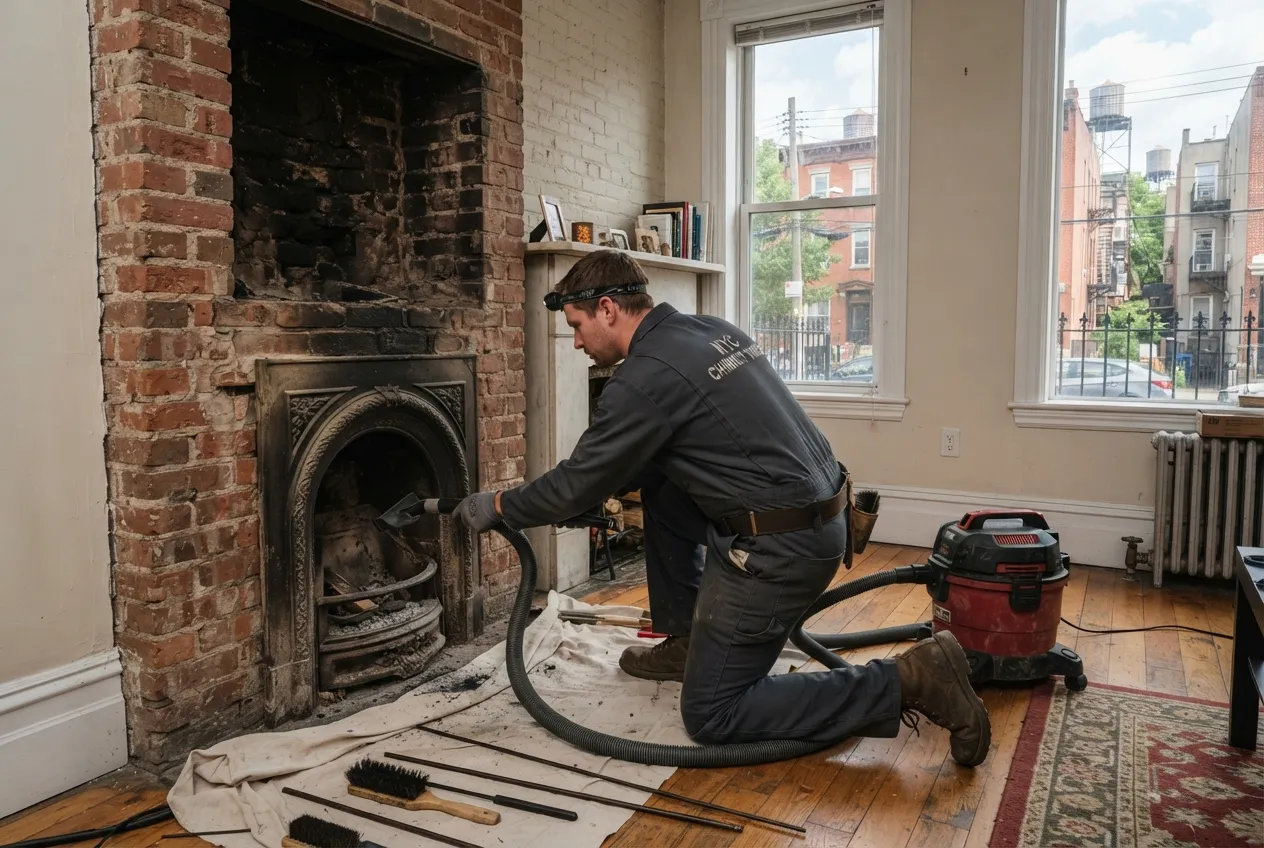
A sweep is more than running a brush up the flue. Here is what a typical visit covers for a fireplace or appliance chimney:
- Covering the hearth and nearby floor with drop cloths and containing dust with a vacuum system
- Brushing the flue from the firebox, the roof, or both, depending on access
- Removing soot, creosote and debris from the smoke chamber, smoke shelf and damper area
- Checking the damper, firebox and visible liner for cracks, gaps or missing sections
- Looking at the crown, cap and flashing from the roof when we can safely reach it
- Clearing nests, fallen masonry or other blockages that restrict draft
- Explaining what we found, with photos when possible, so you can decide on any next steps
Annual Inspections and the Three Levels
The NFPA 211 standard calls for chimneys, fireplaces and vents to be inspected once a year. A sweep is a natural time to do that inspection. Chimney professionals use three levels:
- Level 1: for a chimney whose use and setup have not changed since the last inspection
- Level 2: when the system changes, such as a new appliance or a switch of fuel, or when the home is sold
- Level 3: when a suspected hidden hazard can only be reached by opening part of the chimney or the building
Ready for cleaner ducts?
Boiler Chimneys, Gas Conversions and Heat Season
New York City's heat season runs from October 1 through May 31. During those months, building owners must keep apartments heated to the city's minimum temperatures. A blocked or deteriorating boiler flue can force a shutdown in the middle of winter, so late summer and early fall are the best times to have the chimney swept and inspected.
When a New York City building converts its boiler from oil to gas, the chimney has to be evaluated as part of the work. A new liner is often needed because gas exhaust produces acidic condensate that can corrode a masonry flue. We can inspect the flue, show you its condition, and explain whether relining is likely before you plan the conversion. In East Village buildings, these conversions and renovations are common reasons for a Level 2 inspection.
Preparing for Your Visit and Nearby Areas
To get ready, stop using the fireplace at least a day ahead so the ashes are cold. Clear furniture and decor from around the hearth, and let your super or building manager know when we are coming, especially if we need roof or boiler room access. If you have noticed smoke backing into the room, a strong odor, or debris falling into the firebox, tell us when you book so we can plan for it.
Besides East Village, we sweep chimneys in the nearby Lower East Side, Gramercy, Greenwich Village, SoHo and Little Italy.
More services in East Village
- Air Duct Cleaning in East VillageLocal service & repairs
- Dryer Vent Cleaning in East VillageLocal service & repairs
- HVAC System Cleaning in East VillageLocal service & repairs
- Duct Sanitizing & Odor Removal in East VillageLocal service & repairs