The short answer
A chimney sweep removes soot, creosote and debris from your flue and checks that it can safely carry smoke or exhaust out of the building. In Chinatown that often means boiler flues in pre-war buildings as well as fireplaces, and the NFPA 211 standard calls for an inspection once a year.
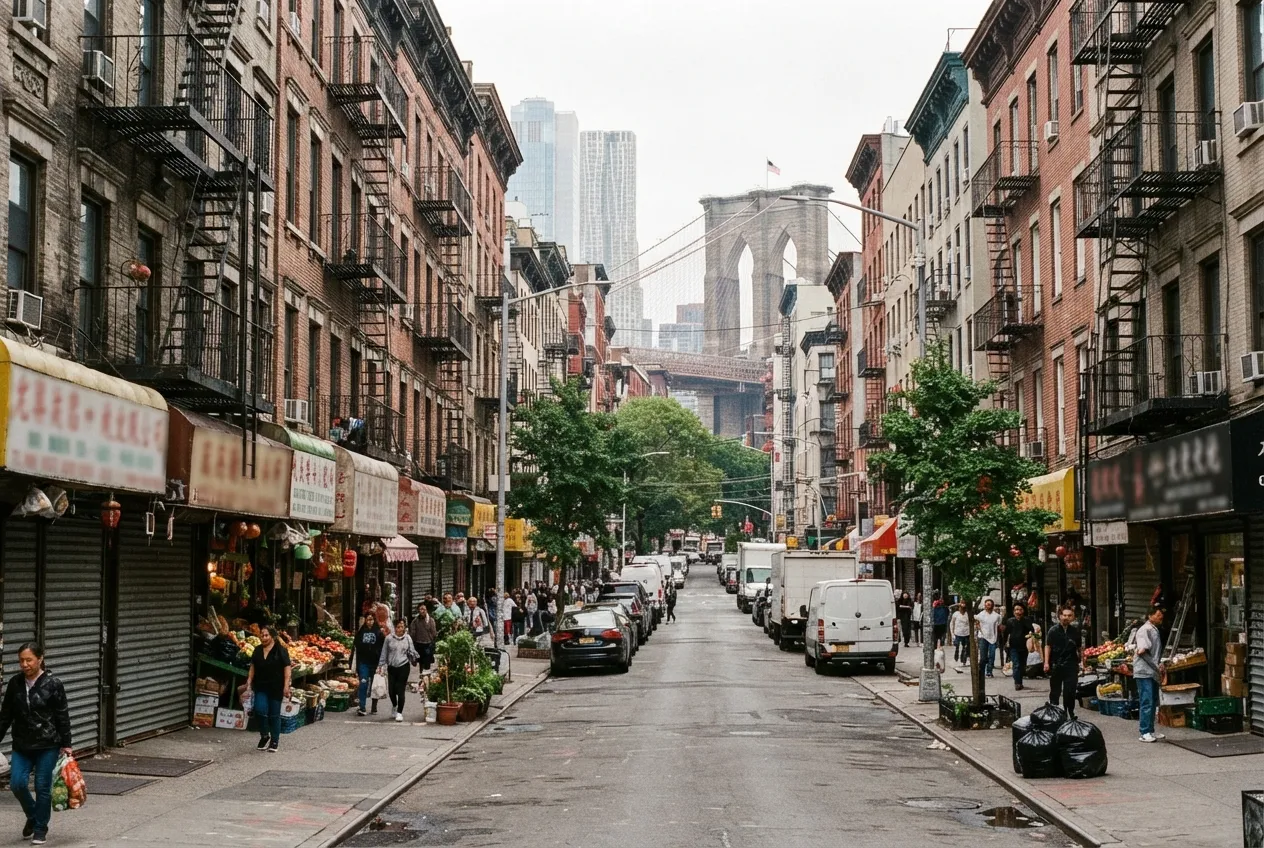
Many homes in Chinatown are older pre-war walk-ups, tenement-style apartment buildings, mixed-use buildings with shops on the ground floor, and a few rowhouses. A lot of these buildings have chimneys that have been in service for generations. Some flues serve a working fireplace, but many serve the boiler or water heater that keeps the whole building warm. NYC FreshAir Solutions is based in Manhattan, about a mile north of Chinatown. Our certified technicians clean and inspect chimneys here and in nearby Two Bridges, the Lower East Side, Tribeca, Civic Center and SoHo. This page covers what a chimney sweep involves in this part of Manhattan and when to schedule one.
What Chimneys Look Like in Chinatown Buildings
Most chimneys in Chinatown are masonry flues built into older walk-up and mixed-use buildings. Over the decades many have been reused for different equipment. A flue built for a coal stove or fireplace may now vent an oil or gas boiler, and some buildings have both a heating flue and one or more fireplace flues sharing the same chimney stack.
Because these buildings sit close together, the chimney often runs through several floors of occupied apartments before it reaches the roof. A blocked or cracked flue in that setup can affect more than one household. That is why we look at the whole run during a sweep, from the appliance connection to the cap, and not only the part you can reach from the hearth.
What Our Chimney Sweep Includes
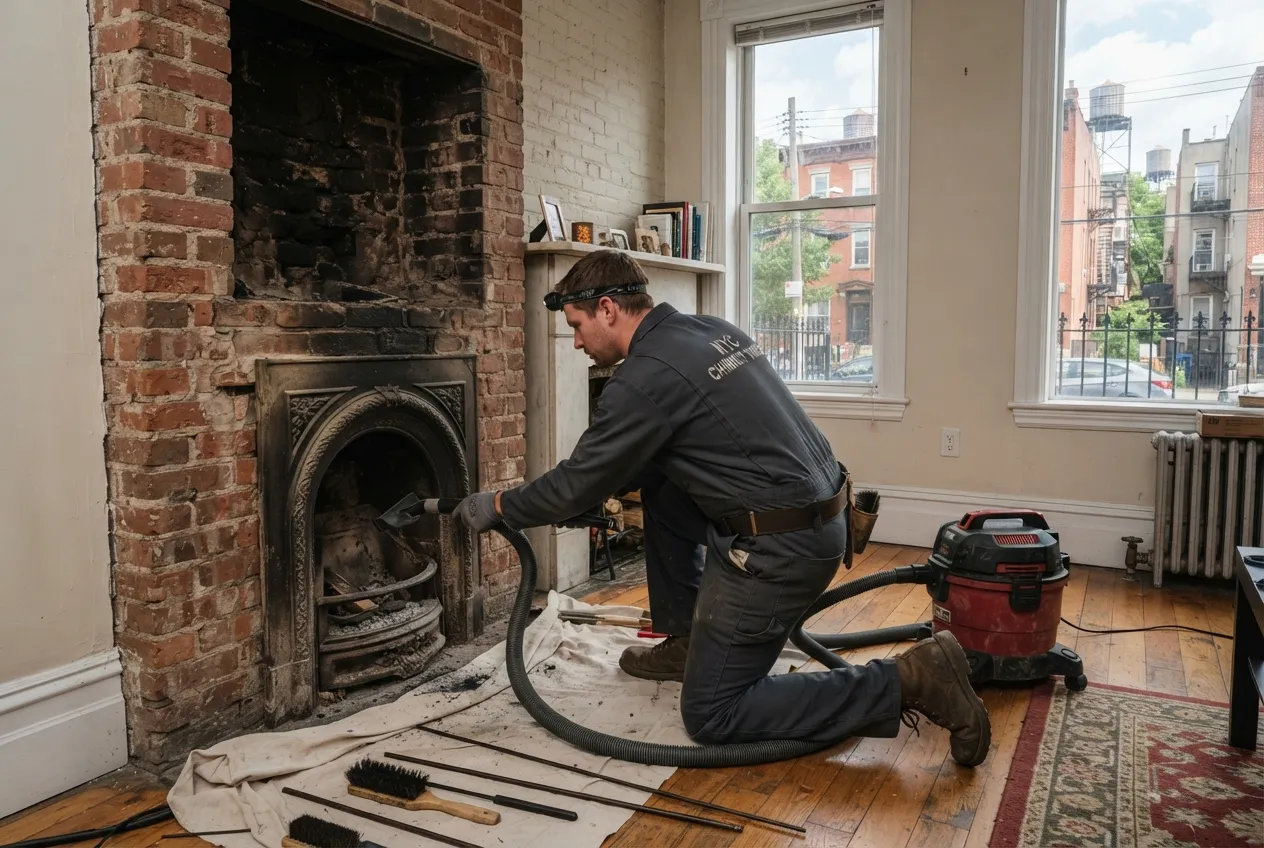
Every chimney is different, but a standard sweep in a Chinatown home or building usually covers the following:
- Protecting floors and furniture near the fireplace or boiler room before work begins
- Brushing and vacuuming soot, creosote and loose debris from the flue
- Clearing nesting material, fallen masonry and other blockages
- Checking the smoke chamber, damper and firebox on fireplaces
- Checking the connector pipe and breach on boiler and water heater flues
- Looking at the chimney crown, cap and visible exterior masonry from the roof where access allows
- Explaining what we found, with photos when they help, so you can decide on next steps
Inspection Levels and When You Need Each One
The NFPA 211 standard calls for chimneys, fireplaces and vents to be inspected once a year. Chimney professionals use three inspection levels. A Level 1 inspection fits a chimney where nothing has changed since the last check. A Level 2 inspection is called for when the system changes, such as a new appliance or a switch of fuel, or when the home is sold. A Level 3 inspection is used when a hidden hazard has to be reached by opening part of the chimney or the building.
For most Chinatown homeowners, a yearly sweep paired with a Level 1 inspection is the routine. If you are buying or selling a unit or building, or replacing your boiler, plan for a Level 2.
Ready for cleaner ducts?
Oil-to-Gas Conversions and Flue Liners
Many older Manhattan buildings have moved, or are moving, from heating oil to gas. When a New York City building converts its boiler from oil to gas, the chimney has to be evaluated as part of the work. A new liner is often needed because gas exhaust produces acidic condensate that can corrode a masonry flue.
If your building is planning a conversion, it helps to have the chimney swept and inspected early. That gives you a clear picture of the flue's condition before the new equipment goes in. We can tell you whether the existing flue shows signs of wear and whether a liner is likely to be part of the job.
Timing Your Sweep Around Heat Season
New York City's heat season runs from October 1 through May 31. During those months, building owners must keep apartments heated to the city's minimum temperatures. A boiler that cannot vent properly because of a blocked or damaged flue can mean a shutdown at the worst possible time.
The best window for a chimney sweep is late spring through early fall, after the boiler has finished its heavy season and before it starts again. Fireplace owners benefit from the same timing, since creosote from the past winter can be cleared before the next one. If you notice smoke backing up, strong odors or debris falling into the firebox at any time of year, schedule a visit then rather than waiting.
More services in Chinatown
- Air Duct Cleaning in ChinatownLocal service & repairs
- Dryer Vent Cleaning in ChinatownLocal service & repairs
- HVAC System Cleaning in ChinatownLocal service & repairs
- Duct Sanitizing & Odor Removal in ChinatownLocal service & repairs