The short answer
Air duct repair and sealing fixes separated joints, crushed or sagging runs and leaky seams so more of your heated and cooled air reaches the rooms it's meant for. We inspect, repair, seal and check airflow before and after, and we clean affected runs first only when dirt or debris would keep the seal from holding.
Ducts that leak, sag or come apart at the joints send heated and cooled air into basements, attics, closets and wall cavities instead of the rooms you want to keep comfortable. Gaps on the return side can also pull basement air, dust and insulation fibers back into the system. NYC FreshAir Solutions repairs and seals residential ductwork in houses, townhouses and apartments across New York and nearby neighborhoods. Our certified technicians find the damaged sections, fix or replace them, and seal the joints and seams we can reach. When the ducts are dirty enough that sealant won't hold, we clean them first. This page covers what to watch for, what the work includes, how we protect your home and how a visit goes.
Signs you need it
Duct problems usually show up as uneven comfort, dust or odd smells long before anyone looks at the ductwork itself. If you notice any of the following, it's worth having the system checked.
- Dust blowing out of supply registers when the system starts, or settling on furniture soon after you clean
- Weak airflow at some registers while others blow hard
- Rooms at the end of a run that never get as warm or as cool as the rest of the home
- Fine dust left in the ducts after a renovation, especially if registers weren't covered during the work
- Debris, nesting material or droppings behind a register cover, or sounds of animals in the ductwork
- Musty smells when the system runs, which can point to moisture getting in through a gap or a damp basement run
- A burnt or dusty smell that lingers well past the first few minutes of the heating season (if it smells like something is actively burning, shut the system off and call your heating contractor first)
- Visible gaps, crushed flex duct, sagging runs or tape peeling off joints in a basement, attic or utility closet
What's included
Every repair and sealing visit follows the same checklist. If we find a problem outside the ductwork, such as an issue with the furnace, air handler or coil, we'll point it out so you can have the right contractor look at it.
- Visual inspection of accessible ductwork, plenums and register boots
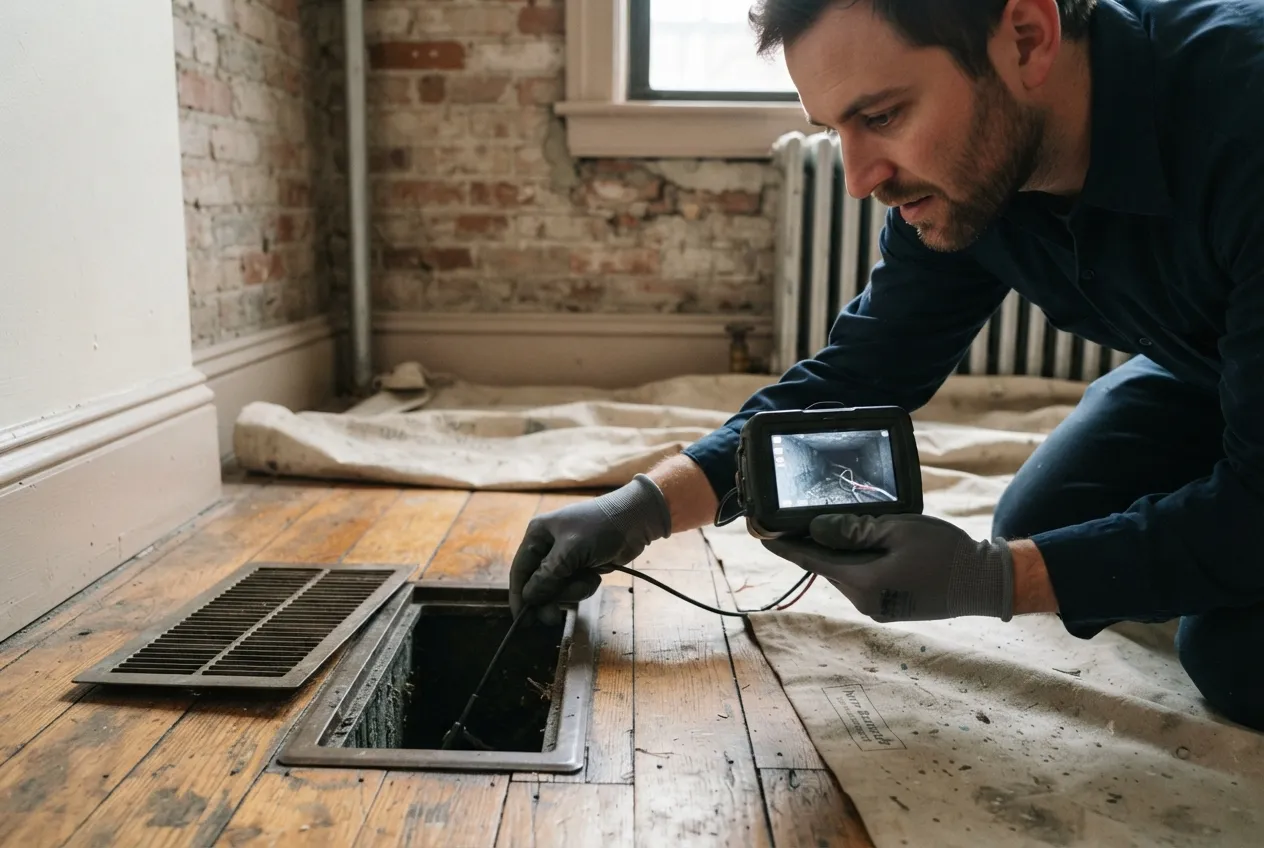
- Camera inspection of runs we can't see directly, where the layout allows it
- Airflow check at supply and return registers before and after the work
- Reconnecting separated joints and refastening sections with sheet metal screws
- Replacing crushed, torn or kinked flexible duct and damaged sections of rigid duct
- Rehanging sagging runs with proper straps or hangers
- Sealing seams, joints and boot connections with duct mastic or foil tape made for ductwork
- Sealing gaps between register boots and the floor, wall or ceiling
- Cleaning affected runs first when dust, debris or renovation residue would keep sealant from bonding
- Photos and a written summary of what we found and what we did
How we work inside your home or apartment
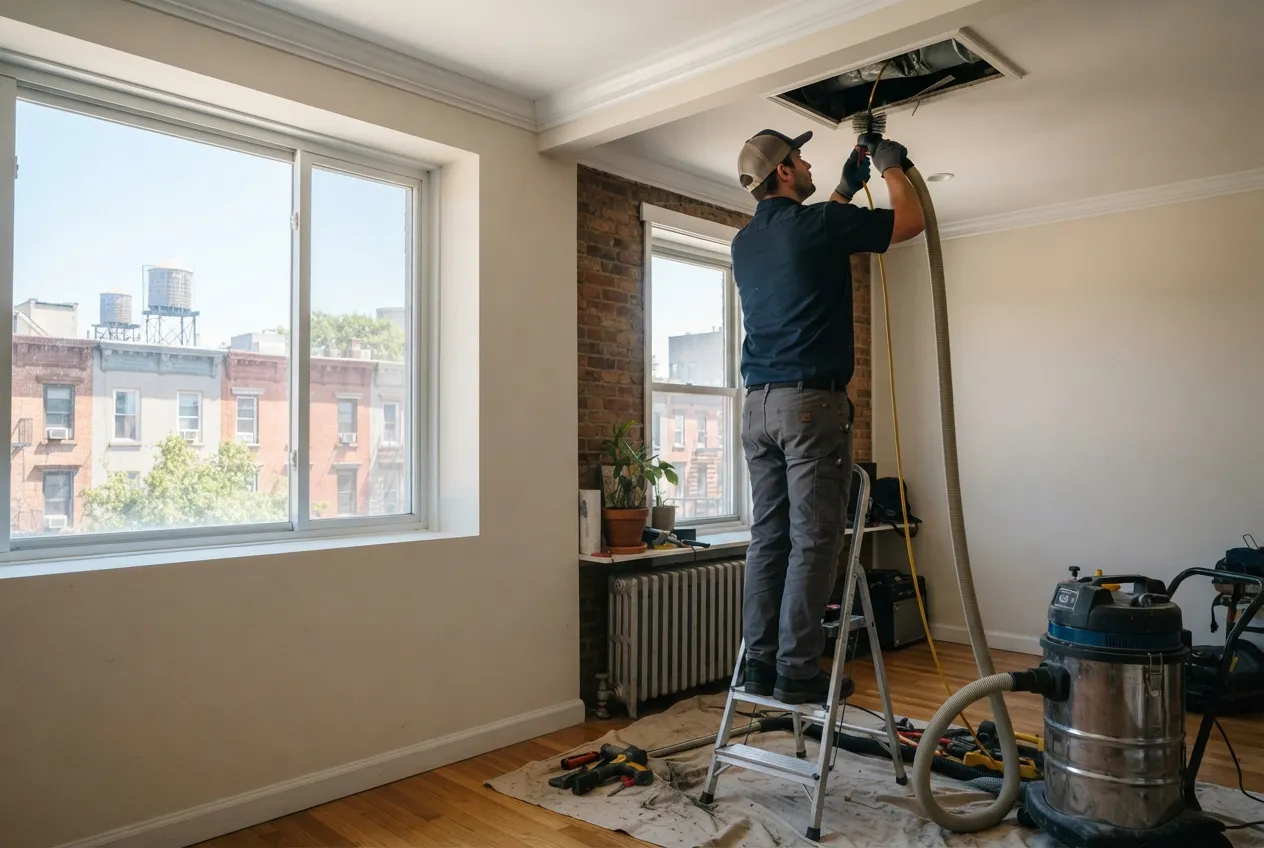
We treat your home like a job site that people still have to live in. Before any work starts, the crew lays drop cloths along the path from the door to the work areas and around each register we open. Registers we aren't working on are sealed so dust doesn't travel through the system into other rooms.
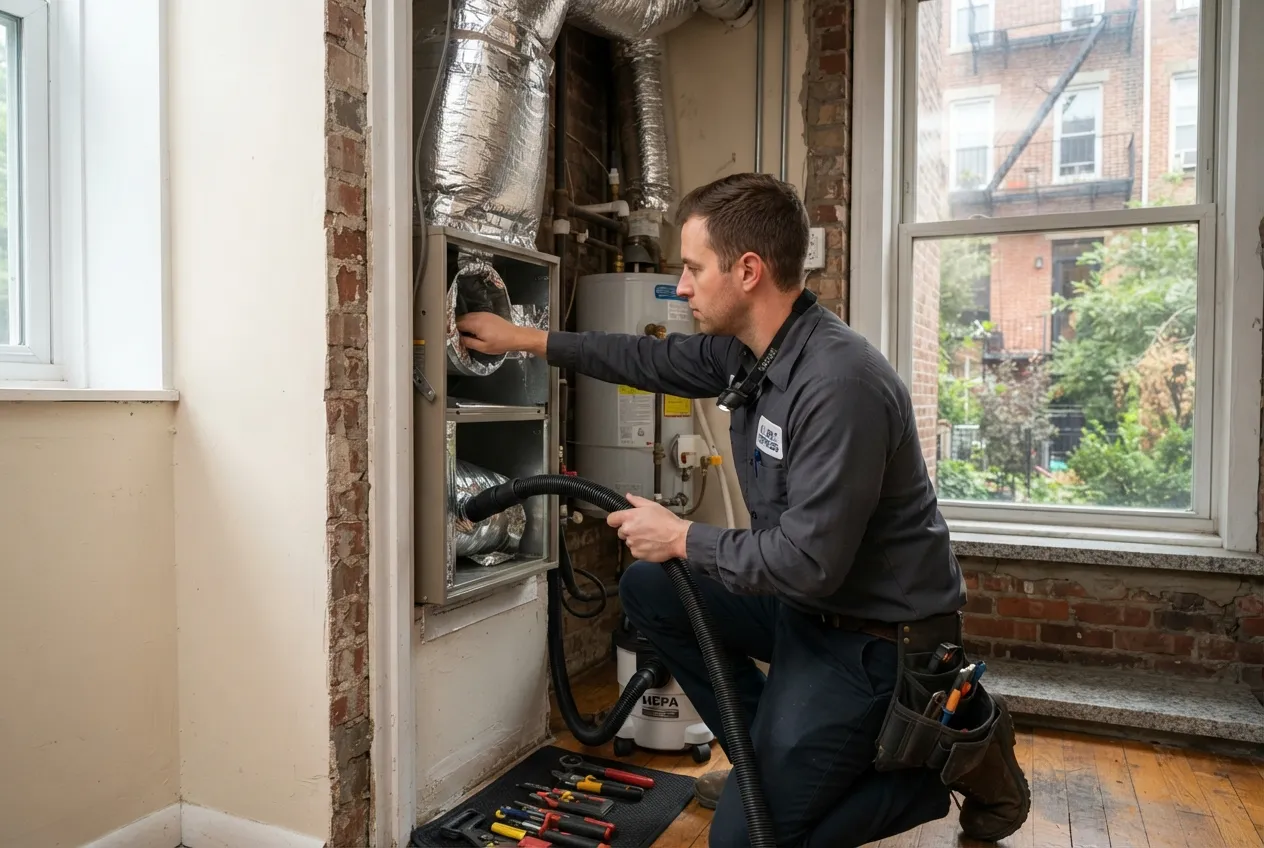
When a run needs cleaning before it can be sealed, we connect a HEPA-filtered vacuum to the system so the ducts stay under negative pressure. That means loosened dust is pulled toward the vacuum rather than pushed out into your rooms. We then work the ducts with rotary brushes and air whips to break debris off the walls. Where a run can't be seen from an opening, a camera lets us check its condition and confirm our work.
In apartments and co-ops, we work within building rules on hours, elevator use and access to shared spaces. Repairs are limited to the ductwork serving your unit unless building management arranges otherwise.
Ready for cleaner ducts?
When cleaning is part of the job
Not every repair needs a full cleaning. The U.S. EPA advises cleaning air ducts when there is substantial visible mold growth, vermin, or excessive dust and debris. It also notes that duct cleaning has not been shown to prevent health problems, so we don't sell it that way. We recommend cleaning when it's needed for the repair to hold or when one of those conditions is present, and we'll show you what we see before you decide.
The EPA also suggests researching the process before responding to very cheap advertised offers and being careful with chemical treatments. We agree. We don't apply sanitizers or coatings as a routine add-on. If there's a specific reason, such as a lingering odor, pest contamination or visible growth, we'll talk it through with you and only use products registered for that use. Where visible growth is tied to a moisture problem, the moisture source has to be fixed too, or the growth is likely to return.
What affects the price
Every home is different, so we quote after seeing the system or reviewing photos and details with you. These are the main factors:
- The number of supply and return vents in the system
- Total duct length and how easy it is to reach, such as an open basement versus runs behind finished ceilings or walls
- The condition of the ducts, including how many sections need to be replaced rather than resealed
- Whether cleaning is needed before sealing
- Building type: a single-family house, townhouse, multi-family building or apartment with access limits
How a visit works
First, you tell us what you're noticing and what kind of home you have. Photos of registers, the basement or the equipment area help us plan. We'll schedule a time and let you know roughly how long the work should take.
On the day of the visit, the crew sets up drop cloths and seals registers, then inspects the system and checks airflow. We explain what we found and what we recommend before starting any repairs. After the repairs and sealing are done, we check airflow again, put registers back, clean up the work areas and walk you through the photos and summary. If we see anything that needs another trade, we'll tell you plainly.