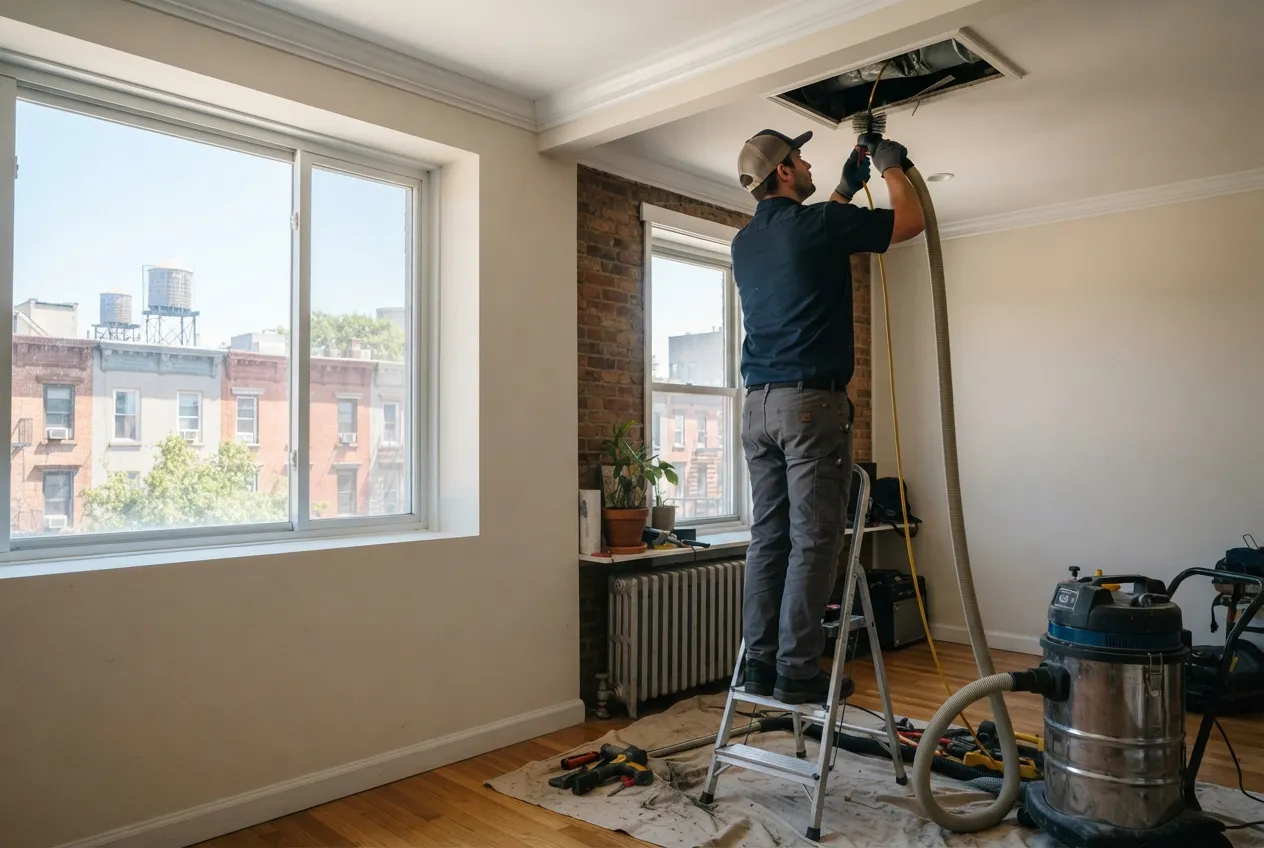

The short answer
Duct odors in Chinatown homes usually come from trapped cooking grease, dust, moisture, or pest debris, and the fix is to find and physically remove that source. Sanitizing is an optional follow-up step for specific problems like confirmed mold or vermin contamination, not a substitute for cleaning.
If a smell comes back every time the heat or air conditioning turns on, the source is usually inside the ductwork: dust that has soaked up cooking odors, moisture that let mold take hold, or debris left behind by pests. NYC FreshAir Solutions cleans and, when it makes sense, sanitizes duct systems for homes in Chinatown, Manhattan, about a mile south of our Manhattan office. Our certified technicians find what is causing the odor, remove it, and only then talk with you about whether a treatment is needed. Cleaning comes first. A spray or fogger never replaces removing the source.
Why Ducts in Chinatown Homes Hold Onto Odors
Most homes in Chinatown are in pre-war walk-ups, older tenement-style apartment buildings, and mixed-use buildings with shops or restaurants on the lower floors, along with some newer condo and rental buildings. Many older apartments are heated by radiators, so the ductwork that does exist often serves a central air system added during a renovation, a ducted split system, or kitchen and bathroom exhaust.
Those systems tend to have short, tightly packed runs, long vertical shafts, and few access points. Air carrying cooking vapor, humidity, and dust moves through them every day, and whatever settles inside keeps releasing odor long after it was first deposited.
- Grease and cooking residue built up in kitchen exhaust and nearby return ducts
- Dust and lint that absorb smells and release them when the system runs
- Moisture from bathrooms, cooling coils, or condensation that leads to musty odors or mold
- Droppings, nesting material, or remains left by mice, rats, or insects
- Leftover renovation dust or debris in ducts that were never cleaned out
What We Check Before Recommending Sanitizing
The U.S. EPA advises cleaning air ducts when there is substantial visible mold growth, signs of vermin, or excessive dust and debris. It also notes that duct cleaning has not been shown to prevent health problems, and it urges homeowners to be careful with chemical treatments. We follow the same thinking. We won't tell you that sanitizing will improve your health, and we won't apply a product just because it's available.
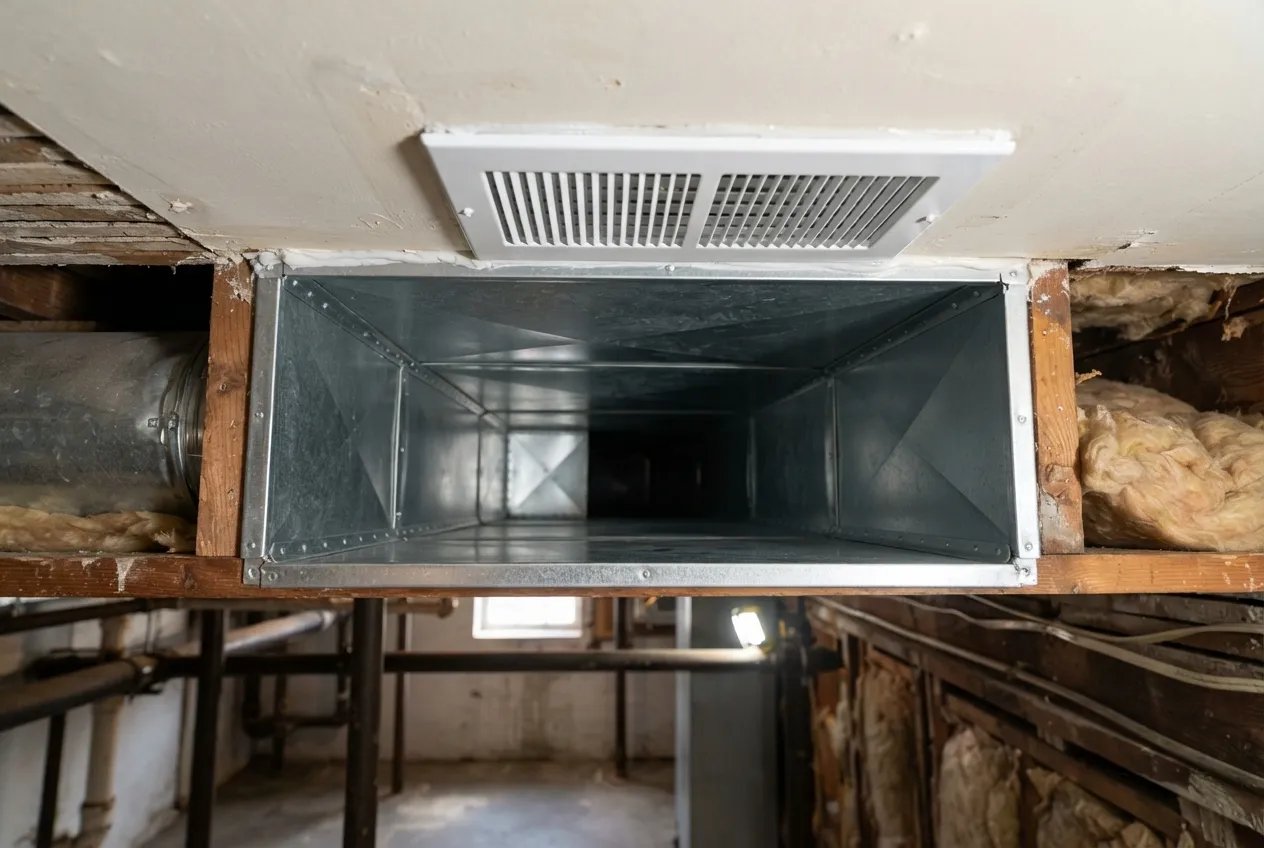
Before any recommendation, a technician inspects registers, accessible duct sections, and the air handler or fan housing where we can reach them. We look for the actual source of the smell, then explain what we found and what removing it will involve. If the odor is coming from somewhere other than the ducts, such as a drain, a wall cavity, or a neighboring unit, we'll tell you that too.
How Odor Removal and Sanitizing Work
Every job starts with source removal. Sanitizing is a targeted step for specific conditions, not a default add-on.
- Inspect the system and identify the odor source
- Protect floors and furnishings and seal off registers in the work area
- Mechanically clean ducts, registers, and reachable components under negative pressure to remove dust, grease, and debris
- Remove pest contamination and nesting material where present
- Apply a sanitizing treatment only for a confirmed problem such as mold growth or vermin contamination, using a product suited to ductwork, after you agree to it
- Point out related issues, like a moisture source, that will bring the odor back if not fixed
Ready for cleaner ducts?
Timing Around New York City's Heat Season
New York City's heat season runs from October 1 through May 31, when building owners must keep apartments heated to the city's minimum temperatures. If your heat runs through ducts, the start of the season is often when a stale or burnt-dust smell first shows up.
Many residents prefer to schedule cleaning in late summer or early fall, before the system runs every day. Musty odors from cooling systems tend to appear in humid summer months, so that's a good time to address moisture-related smells.
Working in Apartments and Shared Buildings
In co-ops, condos, and rental buildings, some ducts and exhaust shafts are shared or controlled by the building. We can work with your building manager or super to confirm what belongs to your unit, arrange access, and plan around building rules for work hours and equipment.
Besides Chinatown, we serve homes in Two Bridges, the Lower East Side, Tribeca, Civic Center, and SoHo.
More services in Chinatown
- Air Duct Cleaning in ChinatownLocal service & repairs
- Dryer Vent Cleaning in ChinatownLocal service & repairs
- HVAC System Cleaning in ChinatownLocal service & repairs
- Chimney Sweep in ChinatownLocal service & repairs