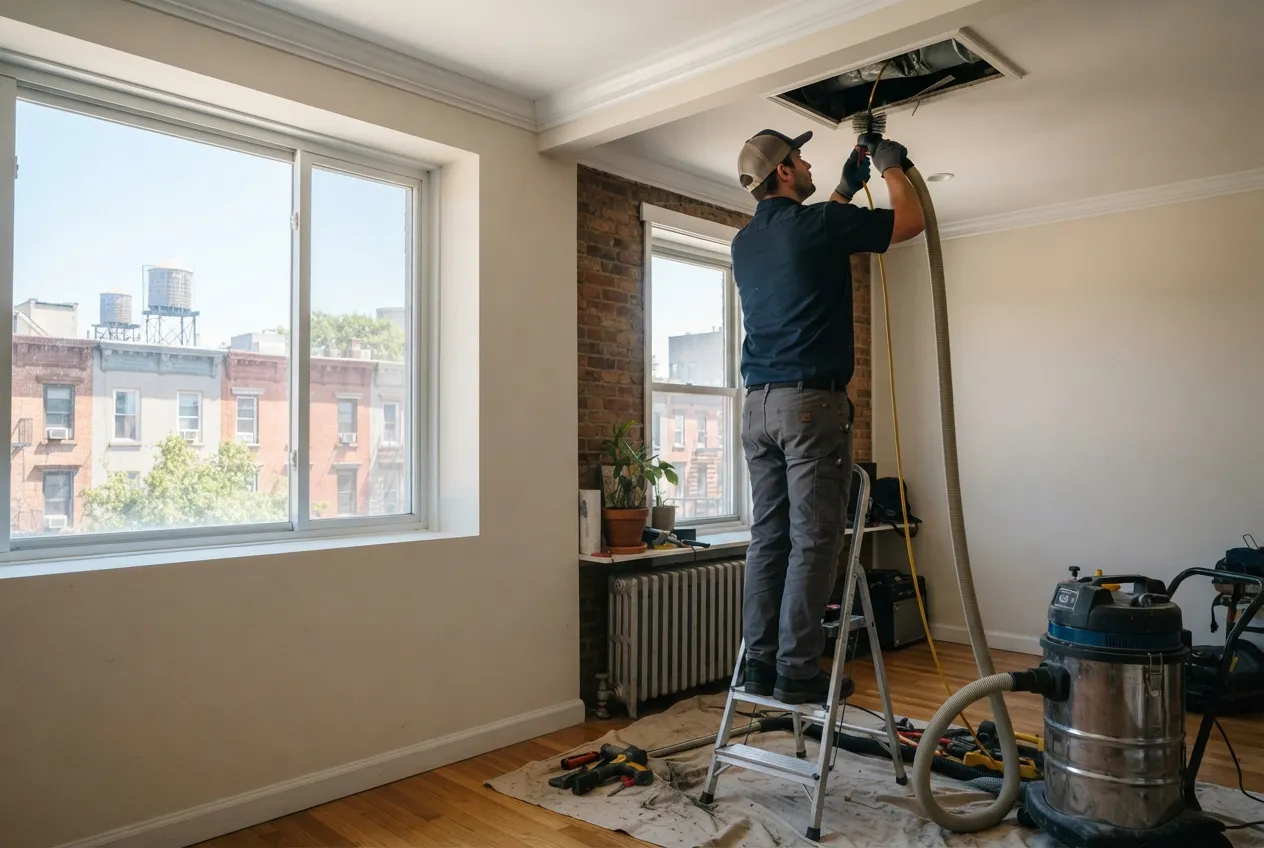

The short answer
Lasting duct odors usually come from something inside the system, such as mold, a damp drain pan, rodent debris or built-up dust. We find the source, clean the ducts and equipment mechanically, and use a sanitizing treatment only where there is a clear reason and you agree to it.
Hudson Square homes with forced-air heating or central air can develop odors that don't go away no matter how often you clean. You might notice a musty smell when the AC starts, a stale or smoky note in winter, or something worse after a mouse got into a return. Duct sanitizing and odor removal goes after the source inside the ductwork instead of covering it up. NYC FreshAir Solutions has its office in the neighborhood on Prince Street. We work in these buildings regularly and can usually look at a problem before it gets worse.
Where Duct Odors Come From in Hudson Square Homes
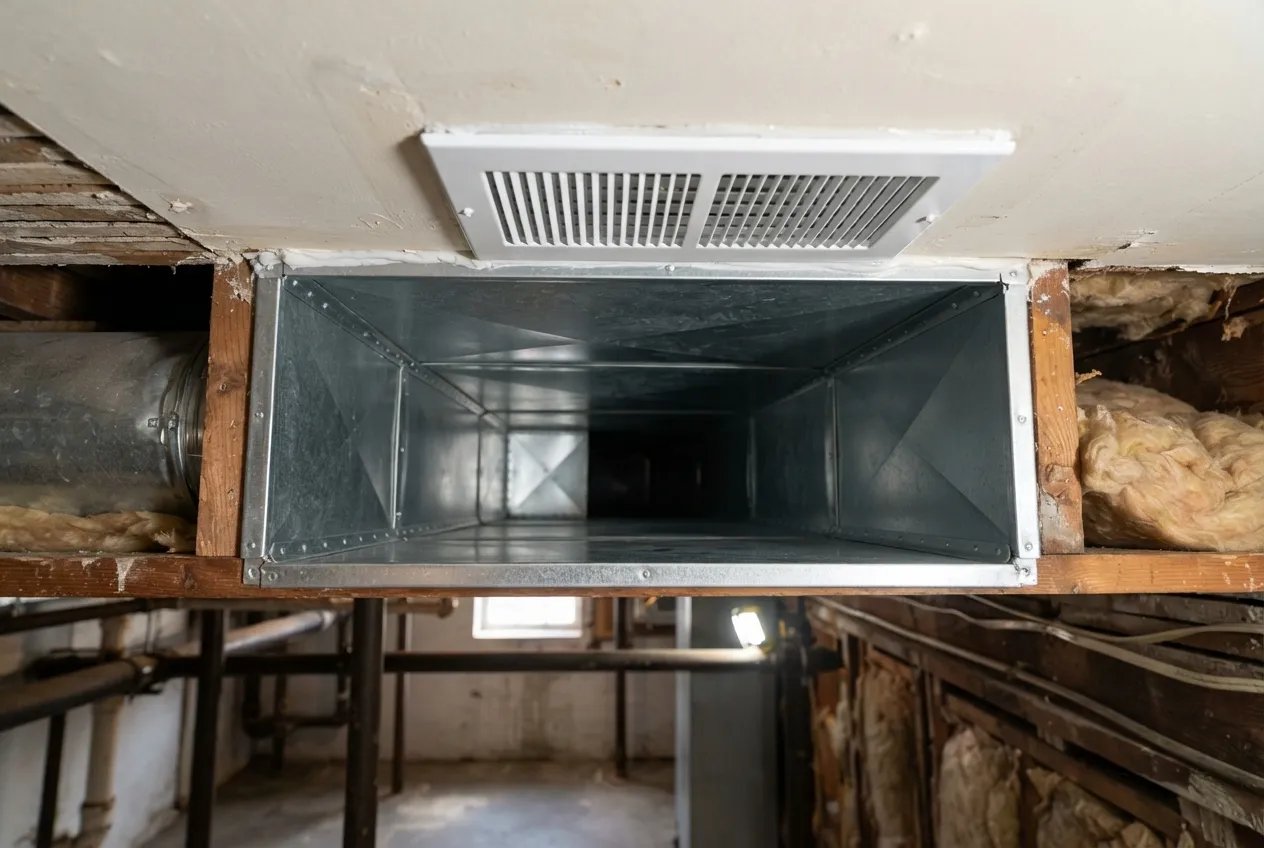
Many apartments and lofts here were converted from commercial or industrial space. Their ductwork was often added or rerouted during renovation. Long horizontal runs above dropped ceilings, tight soffits and air handlers tucked into closets are common. Those spots collect dust. If condensation from the cooling coil or a slow drain pan keeps them damp, they can grow mold and start to smell.
Other common sources include:
- Condensate drain pans that hold standing water
- Mold growth on coils, insulation or the inside of duct lining
- Rodent or insect activity, including droppings or nesting material
- Smoke, cooking grease or pet odor absorbed into dust on duct walls
- Construction dust left behind after a renovation
Cleaning Comes Before Sanitizing
Spraying a product into dirty ducts does not fix an odor. It just adds a new smell on top of the old one. The U.S. EPA advises cleaning air ducts when there is substantial visible mold growth, vermin, or excessive dust and debris, and it urges homeowners to be careful with chemical treatments. We follow that order. First we clean the ducts mechanically. We only discuss a sanitizer or deodorizer when there is a specific reason, such as confirmed mold or contamination from animals.
The EPA also notes that duct cleaning has not been shown to prevent health problems, and we won't tell you otherwise. What cleaning and targeted treatment can do is remove the material causing the smell and the debris you can see coming out of the vents.
If we recommend a product, we tell you what it is, where we will apply it and how long to keep the space ventilated. Then you decide whether you want it used in your home.
What a Sanitizing and Odor Visit Includes
Every job starts with finding the source. Our certified technicians inspect the system before recommending any treatment.
Sometimes the smell comes from somewhere else, like a dryer vent packed with lint or a bathroom exhaust fan. If so, we'll tell you. Lint buildup matters for more than odor: the U.S. Fire Administration identifies failure to clean as the leading factor in home clothes dryer fires.
- Inspecting registers, returns, the air handler, coil and drain pan, using a camera where access allows
- Protecting floors and furniture and covering open registers
- Using negative-pressure equipment with brushes or air whips to loosen and capture debris
- Cleaning the blower, coil surfaces and drain pan, which are frequent odor sources
- Applying a treatment only to affected areas, and only with your agreement
- Showing you what we found and pointing out repairs a cleaning won't solve, such as a clogged drain line
Ready for cleaner ducts?
Timing and Building Considerations
In pre-war apartment buildings and brownstones, heat often comes from radiators while cooling runs through a separate ducted system. In those homes, odor work focuses on the cooling equipment and any ventilation ducts. In converted lofts and newer condos with full forced-air systems, heating and cooling share the same ductwork, so the whole system gets attention.
New York City's heat season runs from October 1 through May 31. Many people first notice a smell when the heat comes on in the fall or the air conditioning starts in late spring. Scheduling a cleaning just before either switch is a practical choice. In co-ops and condos, we can coordinate access, elevator use and work hours with building management.
Serving Hudson Square and Nearby Neighborhoods
We work throughout Hudson Square in ZIP code 10012 and across Manhattan, including SoHo, Little Italy, Tribeca, Civic Center and Greenwich Village. Our office is close by, so a follow-up visit is easy to arrange if an odor comes back and needs a second look.
More services in Hudson Square
- Air Duct Cleaning in Hudson SquareLocal service & repairs
- Dryer Vent Cleaning in Hudson SquareLocal service & repairs
- HVAC System Cleaning in Hudson SquareLocal service & repairs
- Chimney Sweep in Hudson SquareLocal service & repairs