
The short answer
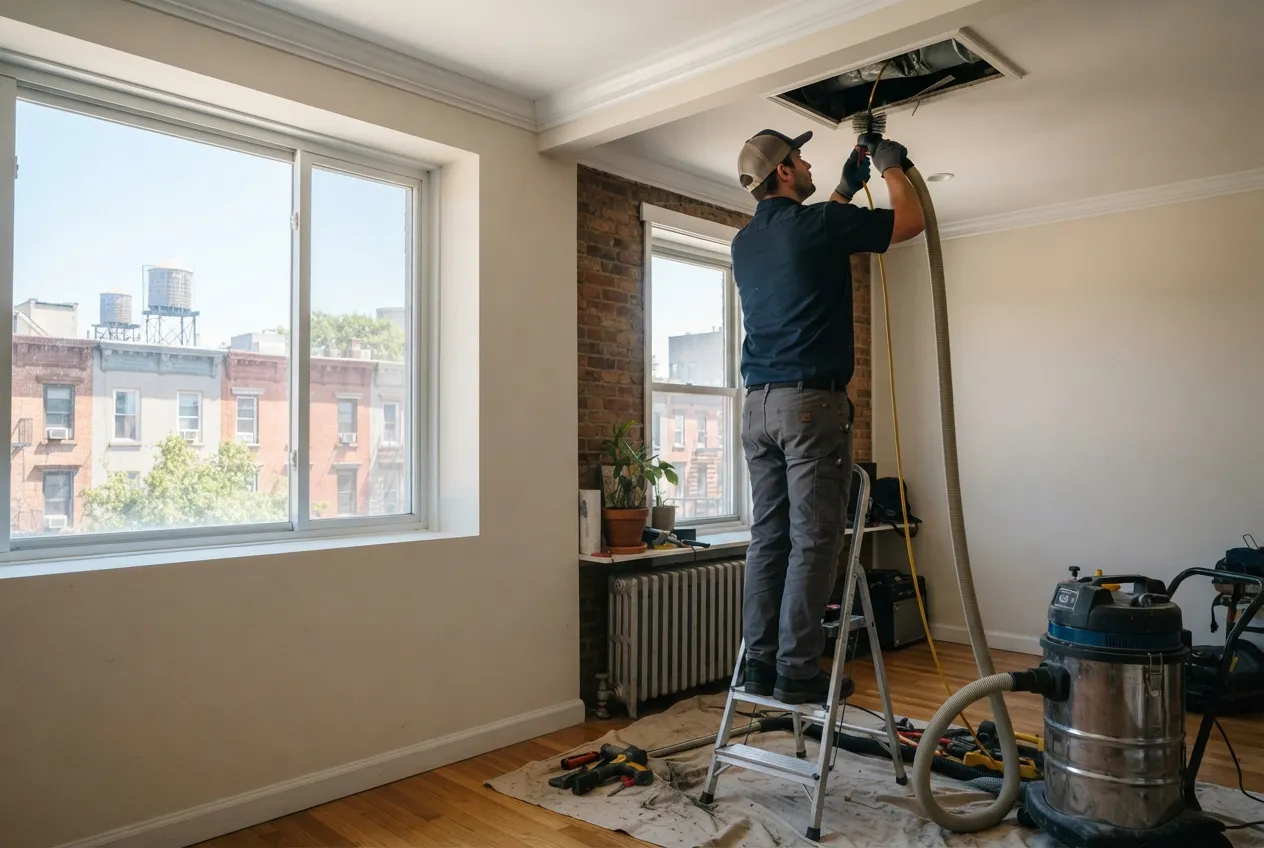
Duct odors in SoHo homes usually come from mold, vermin, smoke residue, or built-up debris, so the fix starts with finding and removing that source. We clean first. We use sanitizing products only when there's a clear reason, and we explain what we'll apply and why before we use it.
If a smell comes out of the vents every time the heat or air conditioning turns on, it usually has a source you can find. Common causes are mold growth, a dead rodent, smoke residue, cooking grease, or years of dust sitting in the ductwork. NYC FreshAir Solutions provides duct sanitizing and odor removal for SoHo homes from our office at 110 Prince St, so this is our own neighborhood. Our approach is simple. We find what's causing the smell and physically clean it out. Then we decide with you whether a sanitizing treatment makes sense for your system.
What Causes Duct Odors in SoHo Homes
SoHo's housing is a mix of converted loft buildings, pre-war apartment buildings, and older walk-ups. Many of them had ductwork added long after the building went up. Those retrofitted runs often snake through tight ceilings and chases, which creates low spots where dust and moisture settle. In a dense neighborhood with shared walls and restaurants nearby, odors have plenty of ways in. The type of smell often points to the cause:
- Musty smell: often mold or mildew growing where condensation collects near the air handler or in low duct runs
- Rotten or sour smell: a rodent or bird that got into the ductwork and died
- Stale smoke smell: tobacco, candle, or fireplace residue clinging to dust inside the ducts
- Cooking or grease smell: residue pulled in through return vents, especially in open kitchen layouts
- Dusty or burnt smell at startup: debris sitting on the heating coil or inside supply runs
Why We Clean Before We Sanitize
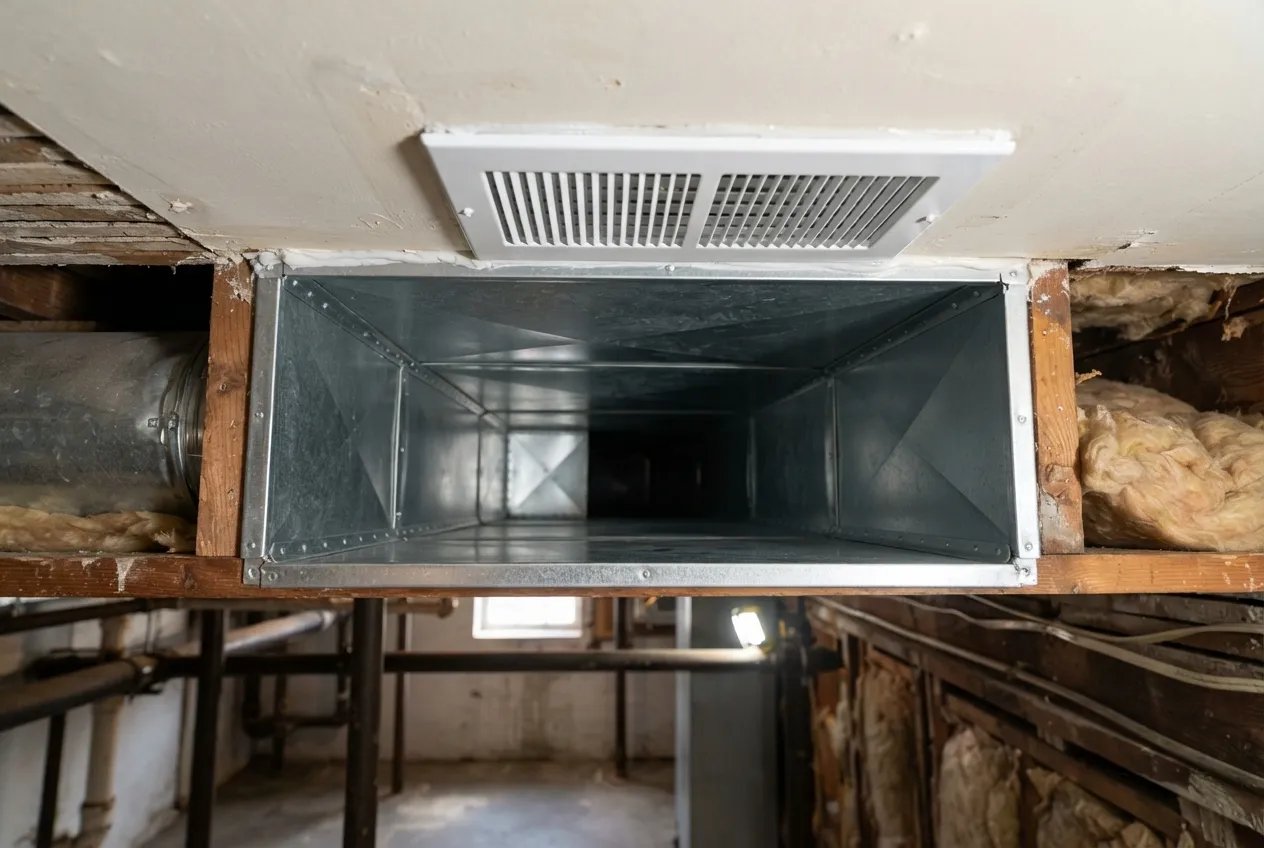
Spraying deodorizer into dirty ductwork only masks the problem for a while. The U.S. EPA advises cleaning air ducts when there is substantial visible mold growth, vermin, or excessive dust and debris. Those are the same conditions behind most lasting odors. Our first step is always mechanical cleaning. We put the system under negative pressure, loosen material from the duct walls with brushes and air whips, and pull the debris into a collection unit.
The EPA also urges caution with chemical treatments in ductwork, and we take that seriously. A sanitizer or antimicrobial may be appropriate, for example after we remove mold or a dead animal. In that case, we tell you which product we plan to use, where it goes, and why. We apply it only to surfaces that have already been cleaned. If cleaning alone takes care of the smell, we stop there.
How an Odor Removal Visit Works
Many SoHo homes are in co-ops and condos, so we work within building rules for access, elevator reservations, and work hours. Let us know your building's requirements when you book. A typical visit goes like this:
- We ask when the smell started, when it's strongest, and whether it changes between heating and cooling
- We inspect registers, return vents, the air handler, and accessible duct runs, using a camera where we can't see directly
- We clean the supply and return ducts, registers, grilles, and the blower area as needed
- We remove the odor source itself, whether that's mold, nesting material, or a carcass
- If it's warranted and you agree, we apply a sanitizing treatment to the cleaned surfaces
- We show you before-and-after images and point out anything that needs repair, such as a leaking condensate line
Ready for cleaner ducts?
What Duct Sanitizing Can and Can't Do
Cleaning and sanitizing are good at removing an odor source and the residue it leaves behind. They are not a medical treatment. The EPA notes that duct cleaning has not been shown to prevent health problems, so we won't tell you it will cure allergies or headaches. If you have health concerns, talk with your doctor.
Odors also come back if their cause comes back. Ongoing condensation, a gap that lets rodents in, or indoor smoking will put the smell back into the system. Our technicians will point out what they find so you can fix the root problem. That might mean a repair from your building's super or an HVAC contractor.
The EPA also suggests researching the process before you respond to very cheap advertised duct cleaning offers. A real odor job takes time, and you should know exactly what's being done in your home.
Serving SoHo and Nearby Neighborhoods
Our office is at 110 Prince St in the 10012 ZIP code, so SoHo appointments are close to home for us. We also provide duct sanitizing and odor removal in Little Italy, Hudson Square, Tribeca, Civic Center, and Greenwich Village. Our certified technicians bring equipment sized for apartment and loft systems, and they protect your floors and furnishings while they work.
More services in SoHo
- Air Duct Cleaning in SoHoLocal service & repairs
- Dryer Vent Cleaning in SoHoLocal service & repairs
- HVAC System Cleaning in SoHoLocal service & repairs
- Chimney Sweep in SoHoLocal service & repairs