
The short answer
Duct odors in East Village homes usually come from moisture, cooking grease, smoke residue, pets or pests inside the ductwork. We find the source, clean the ducts first, and apply a sanitizer or deodorizer only where it is warranted and you have agreed to it.
If your East Village apartment or rowhouse smells musty when the air conditioning turns on, or a stale cooking or smoke odor keeps coming back no matter how often you clean, the source may be inside the ductwork. NYC FreshAir Solutions cleans duct systems in homes across ZIP codes 10003 and 10009 and sanitizes them when there is a real reason to. Our Manhattan office is about a mile west, so getting to you is easy. Every visit starts with finding where the odor comes from, because spraying a sanitizer into a dirty duct only covers the smell for a while.
Why East Village Homes Develop Duct Odors
Much of the neighborhood is pre-war walk-ups, older apartment buildings, rowhouses and brownstones. Many of these homes were built without ductwork and had central air, ducted mini-splits or mechanical ventilation added during a renovation. Those ducts often run through tight chases, closets and dropped ceilings, close to kitchens and bathrooms, where odors and moisture have easy access.
Shared walls and older building cavities also let smells and pests travel between units. A smell that seems to come from your vents may start in your system, or it may be pulled in from somewhere else in the building.
- Musty or damp smells during cooling season, often linked to moisture at the coil or drain pan
- Cooking grease that has built up in kitchen exhaust ducts
- Tobacco or other smoke residue left on duct surfaces
- Pet odors and hair collected in return ducts
- Droppings or nesting material from rodents or insects
- A burnt-dust smell when dusty ducts first carry warm air
Cleaning First, Sanitizing Only When It Makes Sense
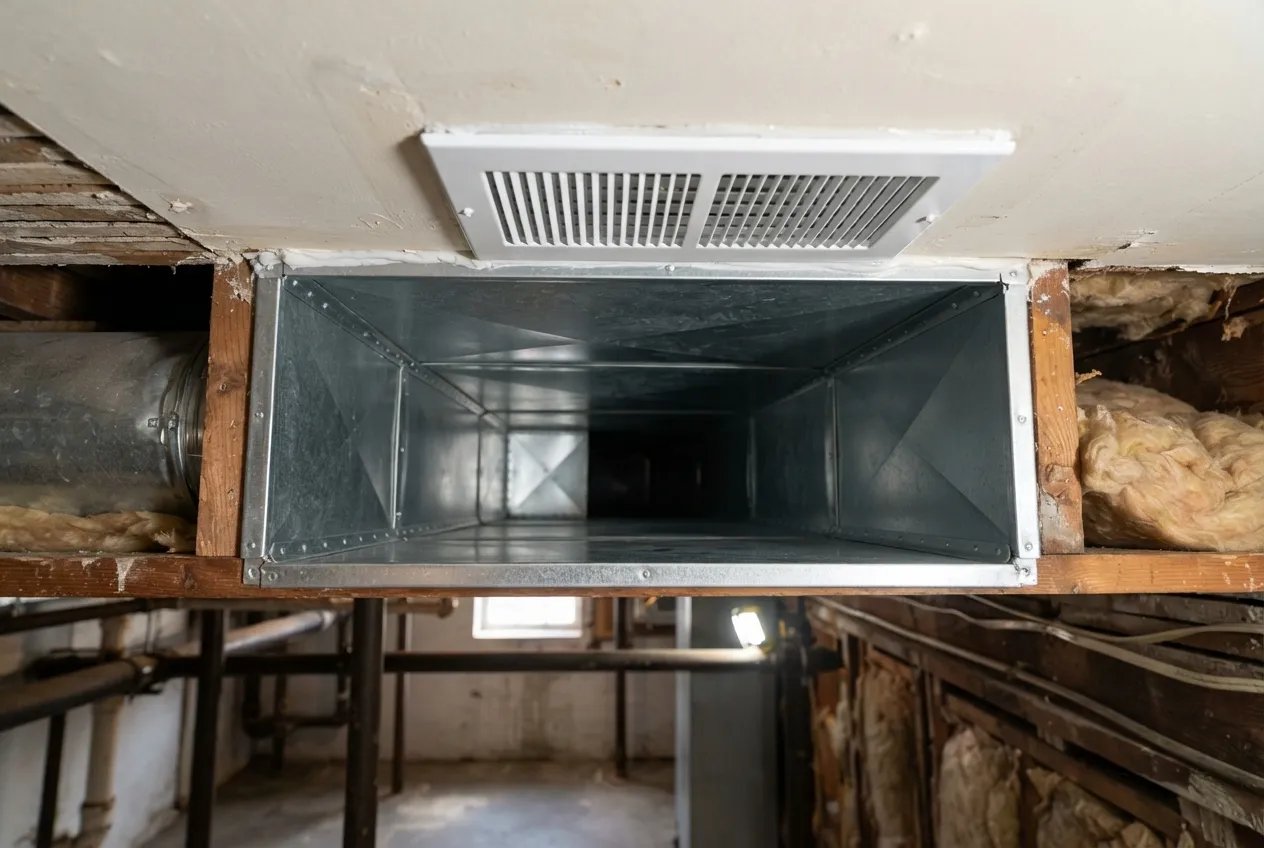
The U.S. EPA advises cleaning air ducts when there is substantial visible mold growth, signs of vermin, or excessive dust and debris. It also says duct cleaning has not been shown to prevent health problems, so we do not sell it as a health treatment. We sell it as a way to remove the material that is causing the smell.
The EPA also urges caution with chemical treatments in ducts. We follow that advice. We recommend a sanitizer or deodorizer only when there is a clear reason, such as cleaned-up mold or pest contamination, and only after the surfaces have been cleaned. We tell you what product we plan to use and where, apply it according to its label, and skip it if you would rather we didn't.
What a Visit Looks Like
Most visits follow the same steps, adjusted for the size and layout of your system.
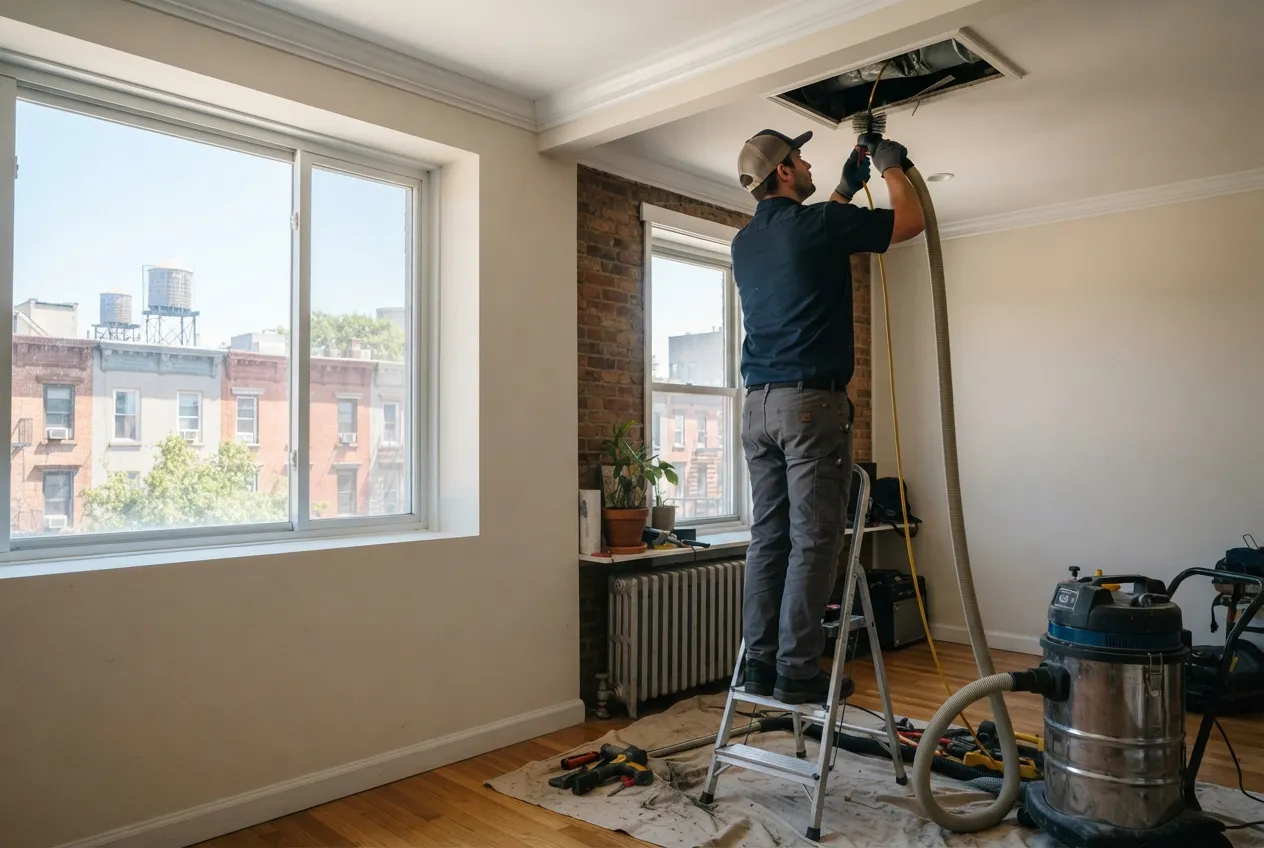
- Inspect registers, returns, the air handler and the drain pan area, using a camera where ducts are out of sight
- Pinpoint the likely odor source and explain what we found before any work begins
- Cover floors and furniture near the work area and seal registers
- Loosen and remove debris with agitation tools while a negative-pressure vacuum collects it
- Flag coil or drainage problems that need an HVAC technician, so moisture doesn't bring the smell back
- Apply a sanitizer or deodorizer only in the sections we agreed on, with the space ventilated
- Show you photos or camera footage of the ducts after cleaning
Ready for cleaner ducts?
When the Smell Isn't Coming From the Ducts
Sometimes the vents are only where you notice the odor. A clogged dryer vent can give off a hot, linty smell, and it is also a safety issue: according to the U.S. Fire Administration, failure to clean is the leading factor contributing to home clothes dryer fires. We can check and clean dryer vents on the same visit.
In older homes with a working fireplace, a smoky or sooty smell in humid weather often comes from the chimney, not the ducts. The NFPA 211 standard calls for chimneys, fireplaces and vents to be inspected once a year, and our certified technicians can do that inspection too. If the odor is coming from a neighbor's unit or a building shaft, we'll tell you, so you can raise it with building management.
Timing and Working in Your Building
New York City's heat season runs from October 1 through May 31. Many East Village buildings heat with radiators, so their ducts are used mainly for cooling and ventilation. Spring, before the air conditioning goes on, is a good time to deal with musty odors, and early fall works well for smells that show up when ducted heat starts.
Co-ops and condos often have rules about work hours, elevator use and contractor paperwork. Check with your managing agent, and we will schedule around what the building needs. We also serve the Lower East Side, Gramercy, Greenwich Village, SoHo and Little Italy.
More services in East Village
- Air Duct Cleaning in East VillageLocal service & repairs
- Dryer Vent Cleaning in East VillageLocal service & repairs
- HVAC System Cleaning in East VillageLocal service & repairs
- Chimney Sweep in East VillageLocal service & repairs