The short answer
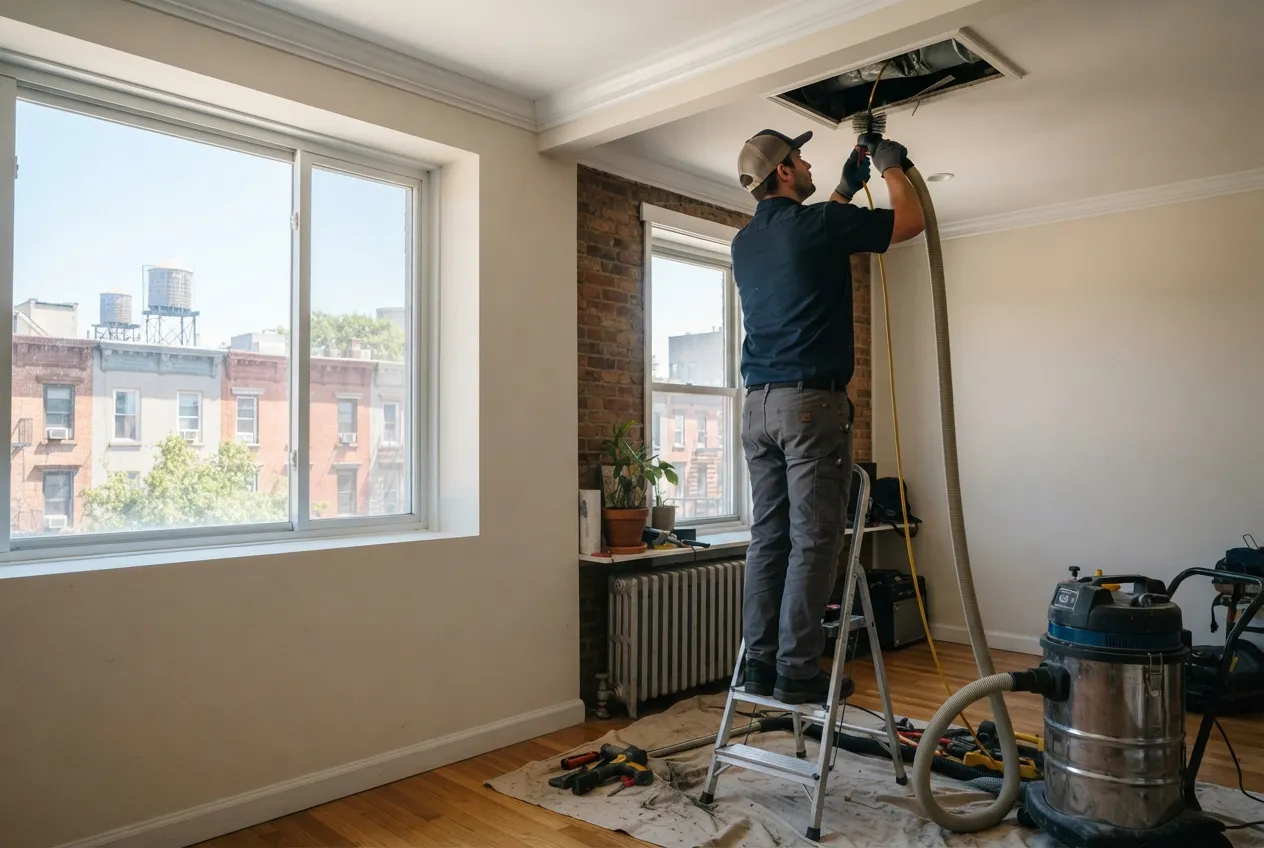
Air duct cleaning is worth doing in a Little Italy apartment when you can see mold growth, signs of pests, or heavy dust and debris inside the ducts or blowing from the vents. Our certified technicians inspect first, clean the whole system under negative pressure, and show you the before-and-after condition.
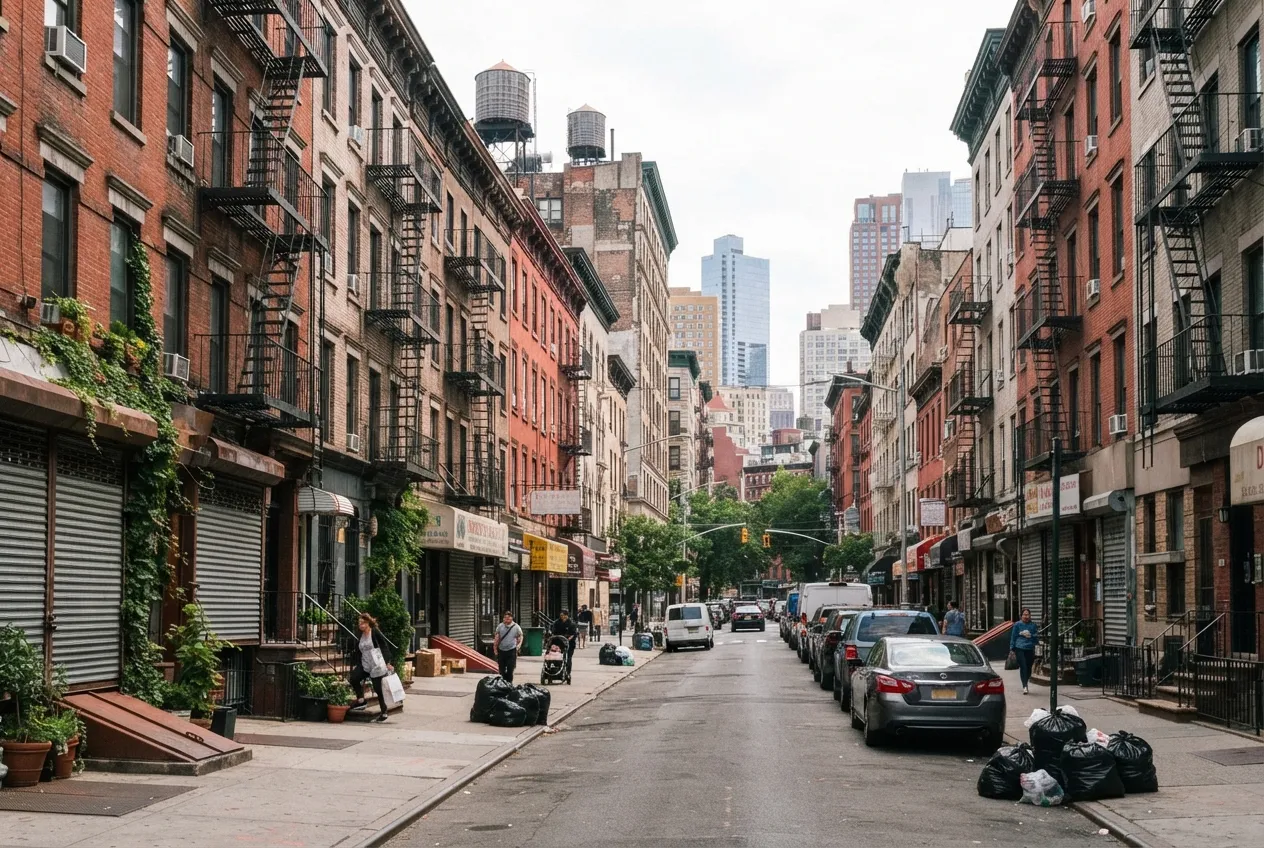
Our office is at 110 Prince St, so homes in Little Italy are close by for us. Most residential buildings here are pre-war walk-ups and mixed-use buildings with storefronts on the ground floor. Their ductwork is rarely original. It was usually added during a renovation for central air, a ducted mini-split, or bathroom and kitchen exhaust. As a result, ducts in this neighborhood tend to be compact, routed through tight chases and dropped ceilings, and easy to forget about. We clean them carefully, show you what we find, and tell you plainly when cleaning isn't needed.
When duct cleaning makes sense in a Little Italy home
The U.S. EPA recommends cleaning air ducts when there is substantial visible mold growth, vermin, or excessive dust and debris. It also notes that duct cleaning has not been shown to prevent health problems. We follow the same approach: if your ducts don't need cleaning, we'll tell you so.
These are the situations we see most often in apartments and walk-ups around 10012:
- Dust or debris puffing out of supply registers when the system starts
- Visible mold on the inside of ducts, on the air handler, or around the coil
- Droppings, nesting material, or insect activity in the ductwork
- Heavy drywall or plaster dust left behind after a renovation
- A musty smell that returns each time the air conditioning comes on
What ductwork looks like in buildings around here
Many older Manhattan buildings are heated with radiators. New York City's heat season runs from October 1 through May 31, and during those months the building's boiler handles the heat. In these apartments, the ducted system often runs only for cooling and sits unused for much of the year. Dust settles while the system is off, and moisture from summer cooling can leave the coil and drain pan damp. Together, those conditions can lead to the growth the EPA describes.
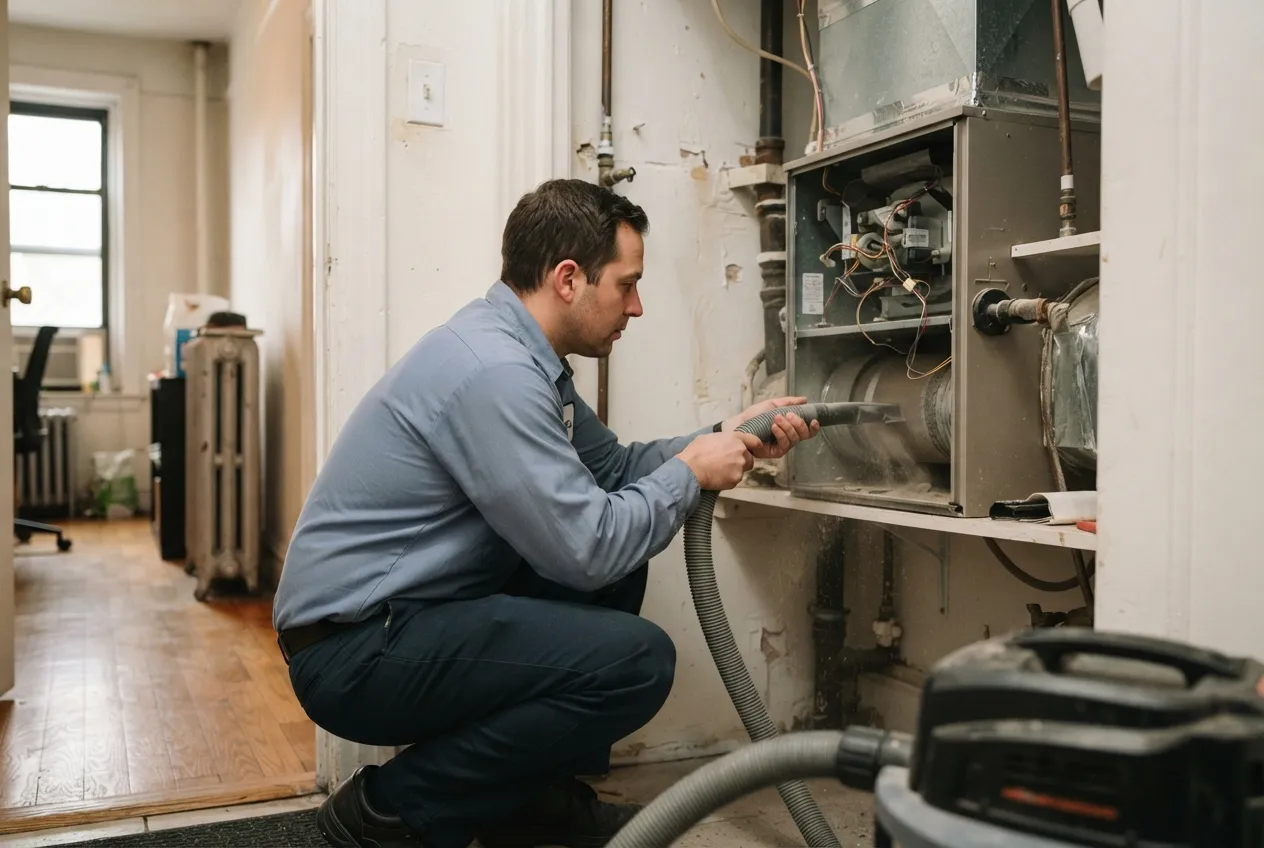
Ducts in these buildings are usually short runs packed into soffits, closets, and ceiling cavities, with the air handler tucked above a bathroom or in a utility closet. Gut renovations are common in this area, and they often leave construction dust inside ducts that were installed before the walls were closed up.
How we clean ducts in apartments and walk-ups
We plan each visit around the building as well as the apartment. Our crew carries equipment up the stairs, protects hallways and floors, and works within the hours your building allows. If your management company or super needs advance notice or paperwork, let us know and we'll coordinate with them.
A typical cleaning includes:
- An inspection of the ducts, air handler, and registers before any work starts, with photos
- Sealing the registers and putting the system under negative pressure with a HEPA-filtered collection unit
- Using brushes and air whips to loosen debris from every reachable run
- Removing, washing, and reinstalling the grilles and diffusers
- Checking the blower, coil face, and drain pan, and pointing out any problems
- Photos after cleaning, so you can compare the condition of the system
Ready for cleaner ducts?
Chemical treatments and very cheap offers
The EPA advises homeowners to research the process before responding to very cheap advertised duct cleaning offers, and to be careful with chemical treatments. We don't add sanitizers or coatings by default. If you ask about a product, we'll explain what it is, why someone might use it, and what the EPA says about it, and the decision is yours.
The cleaning itself is mechanical: we remove debris with brushes and suction. A quick vacuum at the vent openings doesn't clean the ductwork behind them.
Exhaust ducts, dryer vents, and nearby neighborhoods
Bathroom and kitchen exhaust ducts in older buildings collect lint, grease, and dust just like supply ducts do. If you have an in-unit dryer, keep its vent in mind too. The U.S. Fire Administration identifies failure to clean as the leading factor contributing to clothes dryer fires in homes. We can inspect these on the same visit.
From our Prince St office we also serve SoHo, Hudson Square, Tribeca, Civic Center, and Greenwich Village. Those neighborhoods have a similar mix of pre-war apartment buildings, converted lofts, and rowhouses, and we handle their ductwork the same way.
More services in Little Italy
- Dryer Vent Cleaning in Little ItalyLocal service & repairs
- HVAC System Cleaning in Little ItalyLocal service & repairs
- Duct Sanitizing & Odor Removal in Little ItalyLocal service & repairs
- Chimney Sweep in Little ItalyLocal service & repairs